16 Realistic Pantry Organization Ideas That Actually Work
A cluttered pantry can make even the most beautiful kitchen feel stressful and hard to manage. That’s why realistic pantry organization ideas are so helpful for creating a space that feels calmer, cleaner, and easier to use every single day. The best part is that you do not need a luxury pantry makeover or expensive custom shelving to make a noticeable difference.
This collection shares practical ideas that combine function with visual appeal so your pantry works better while still looking Pinterest-worthy. From clear storage bins to hidden paper storage and prep counters, these solutions focus on real-life usability instead of unrealistic perfection. In my experience, small organization upgrades often create the biggest transformation because they simplify everyday routines naturally. Whether your pantry is large or compact, these ideas can help you maximize space, reduce clutter, and create a kitchen environment that feels more organized, welcoming, and enjoyable to maintain long term.
Clear Storage Bins
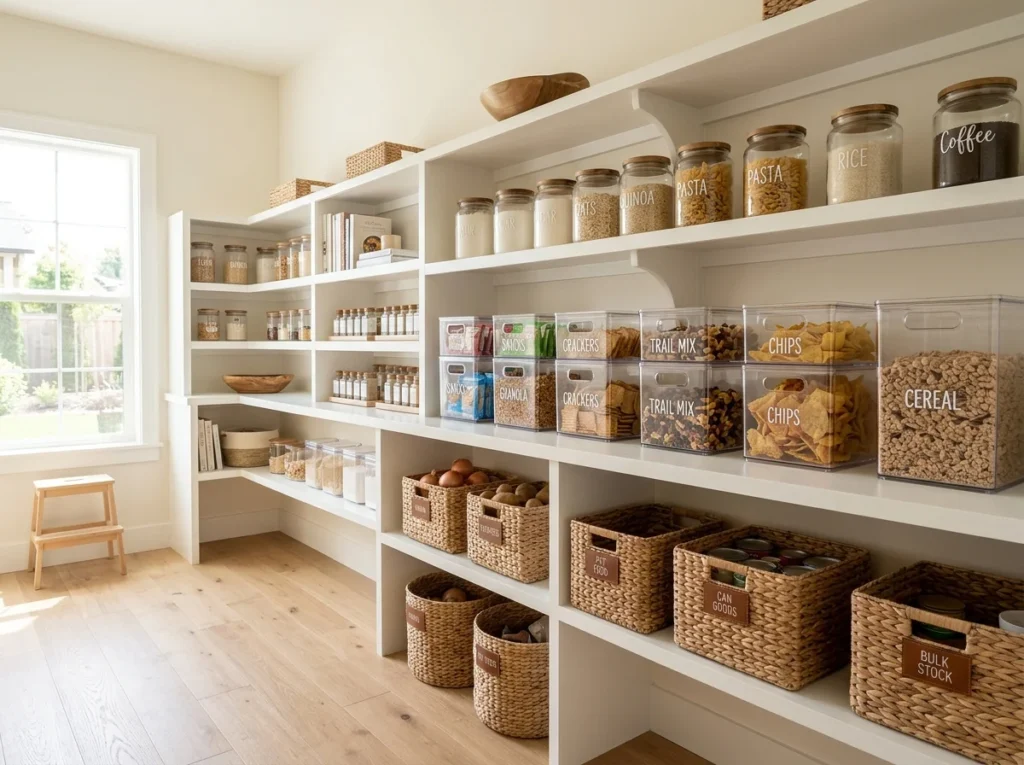
Nothing feels more frustrating than digging through crowded shelves searching for one simple ingredient before dinner. Clear storage bins completely change that experience by creating visibility and structure without making the pantry feel overly styled or unrealistic. I’ve noticed that transparent containers naturally encourage people to stay organized because everything remains easy to see at a glance. They also work well for families since snacks, baking supplies, and packaged foods stay grouped together logically. Even a small pantry instantly feels brighter, cleaner, and more spacious when bulky packaging gets replaced with matching clear organizers and consistent shelf spacing throughout.
One reason this setup works so well is because it blends practicality with a polished appearance that feels achievable for everyday homes. Instead of creating perfection that becomes difficult to maintain, clear bins simplify daily routines and reduce visual stress. They also make grocery restocking much easier because empty spaces become obvious immediately. In my experience, combining stackable bins with simple labels creates the biggest transformation without requiring a full pantry renovation. The clean lines and transparent materials reflect light beautifully, helping darker pantry corners feel more open while still keeping frequently used items accessible for quick meal preparation during busy weekdays.
Lazy Susan Corners
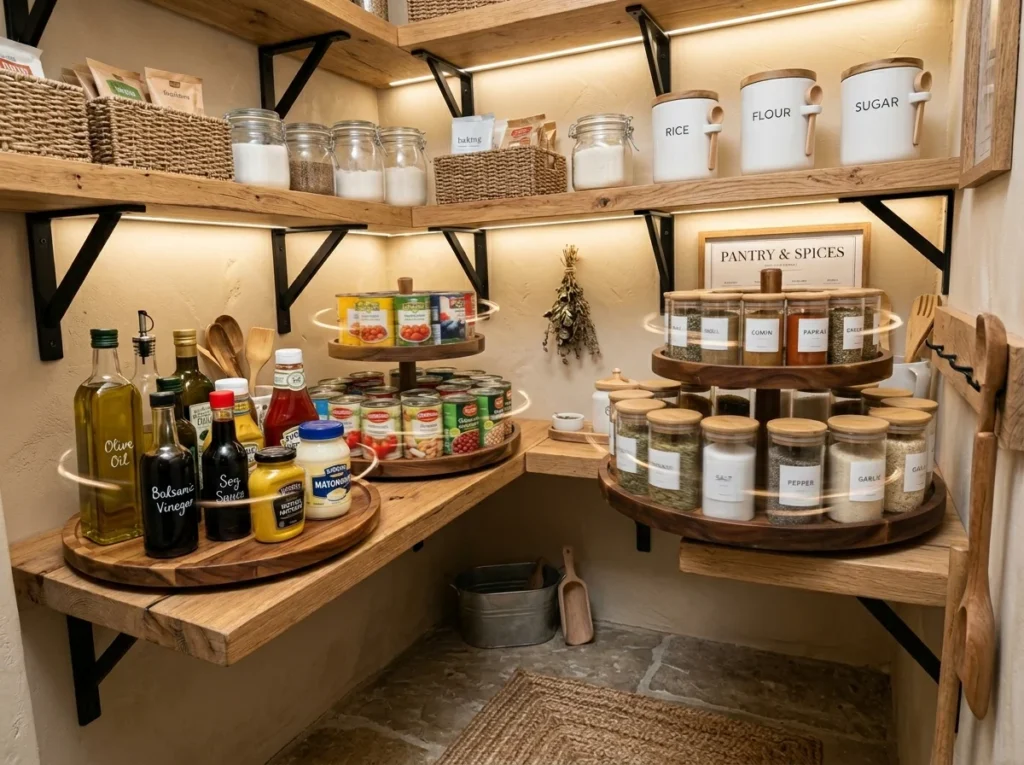
Awkward pantry corners often become messy catch-all spaces where small bottles and jars disappear for months at a time. Lazy Susans solve that problem beautifully by turning difficult corners into functional storage zones that feel intentional and easy to use. A rotating tray keeps everything visible with one quick spin, which saves time during cooking and prevents wasted duplicate purchases. I’ve tried this setup in smaller pantries, and it immediately improves accessibility without requiring expensive upgrades. Wooden or acrylic turntables also add a softer layered look that keeps pantry shelving from feeling stiff, crowded, or overly utilitarian throughout the space.
Beyond organization, rotating storage adds a more relaxed flow to daily kitchen routines because nothing feels hidden or hard to reach anymore. This idea works especially well for households that use lots of sauces, spices, canned goods, or baking ingredients regularly during the week. Instead of moving multiple items around to reach one bottle, everything stays accessible from every angle. That simple convenience makes the pantry easier to maintain over time. Many designers recommend incorporating circular storage shapes because they visually soften long rows of shelves while also improving movement within compact pantry layouts that need smarter, more efficient organization solutions for realistic daily living.
Woven Basket Shelves
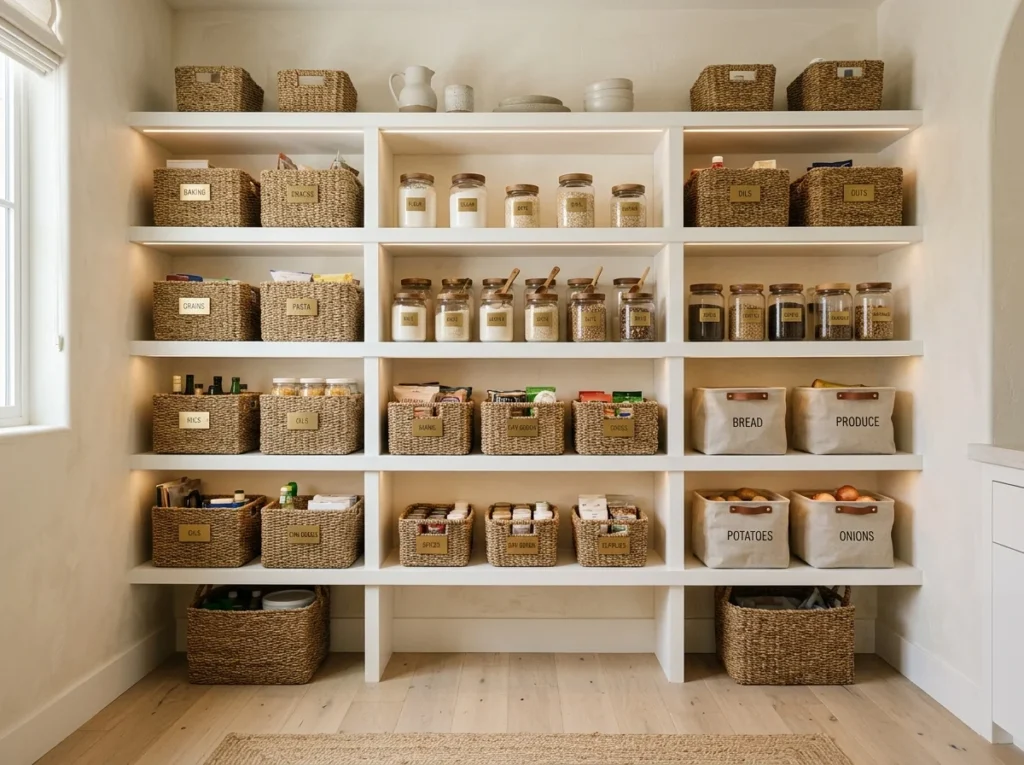
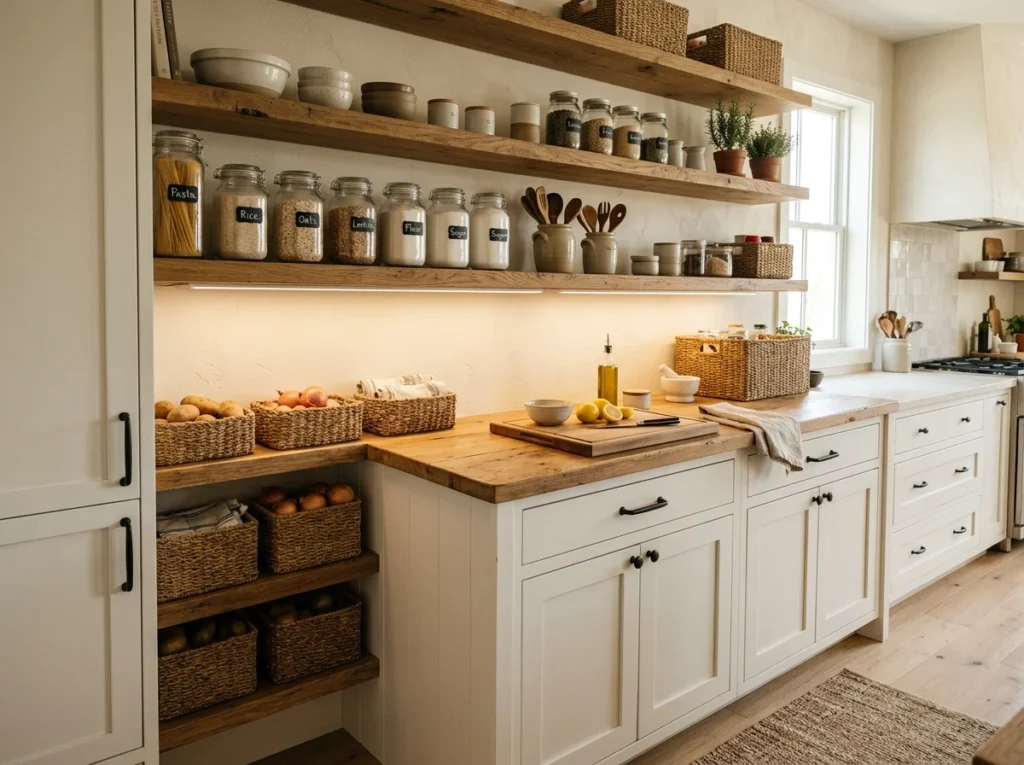
Open pantry shelving can quickly start looking chaotic when colorful packaging and mismatched products pile together across every shelf. Woven baskets help soften that visual clutter while creating a warmer, more welcoming atmosphere that feels calm and lived-in. They work especially well for storing irregular items like snack bags, produce, and pantry overflow that rarely stack neatly. I’ve seen this approach work beautifully in both modern and farmhouse-inspired kitchens because natural textures instantly add depth and balance. The baskets also make shelves appear more intentional while still keeping everyday essentials easy to grab during busy mornings or quick dinner preparation.
Another reason woven storage feels so effective is because it combines flexibility with timeless visual appeal that does not rely on trends. Unlike rigid plastic systems, baskets adapt naturally to changing household needs and seasonal pantry items. They also create a softer layered look that keeps functional storage from feeling cold or overly structured. In realistic pantry organization, hidden storage often works better than fully exposed shelves because it reduces mental clutter and simplifies upkeep. That balance between beauty and practicality is exactly why woven baskets remain one of the easiest ways to upgrade pantry storage without making the space feel complicated or difficult to maintain daily.
Tiered Can Racks
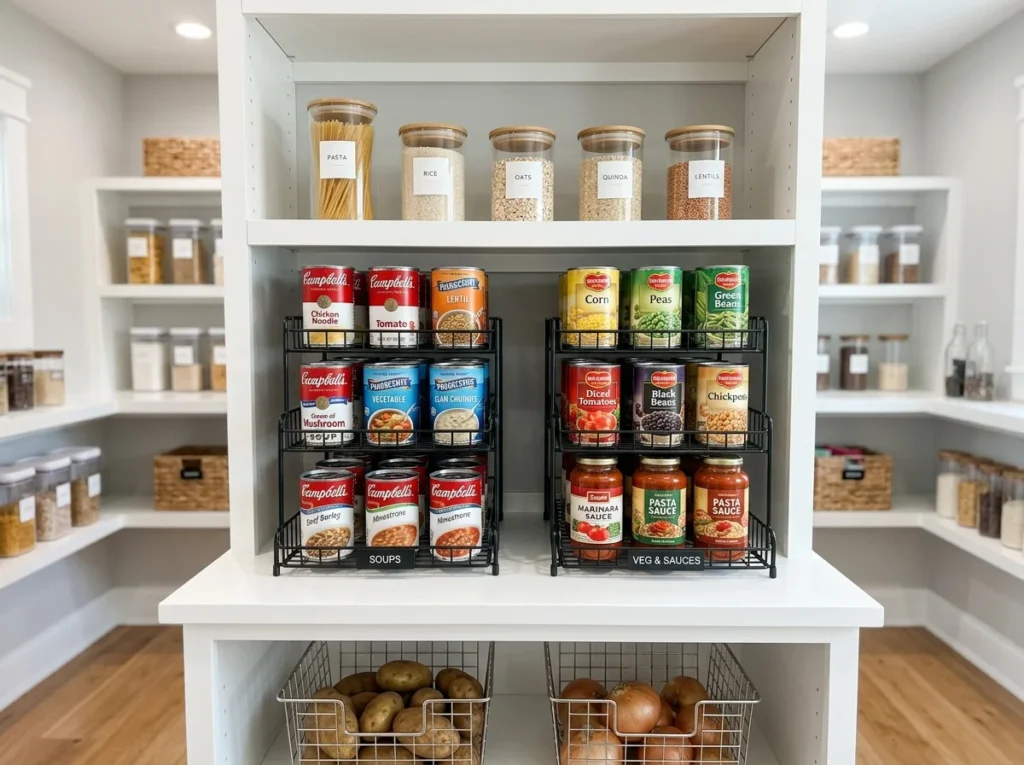
Deep pantry shelves often become frustrating when canned goods disappear behind each other and expire unnoticed over time. Tiered organizers fix that problem by lifting every row slightly higher, making labels easy to see instantly without moving multiple items around. This setup feels especially practical for families who stock soups, beans, sauces, or vegetables regularly throughout the week. I’ve noticed that stepped storage naturally keeps shelves looking neater because products stay aligned instead of stacking unevenly. Even inexpensive metal or acrylic risers can dramatically improve visibility while helping the pantry feel more efficient, organized, and visually balanced during everyday kitchen routines.
Another reason tiered racks work so well is because they simplify grocery restocking and reduce wasted food from forgotten duplicates. When every can remains visible, it becomes easier to track inventory before shopping or meal planning. The shelves also feel less visually heavy because items stay organized in clean horizontal rows instead of crowded piles. In my experience, this system works best when categories stay grouped together consistently, such as soups on one level and vegetables on another. That simple structure saves time daily while creating a more polished pantry appearance that still feels completely realistic for active households with constantly changing storage needs.
Label Everything
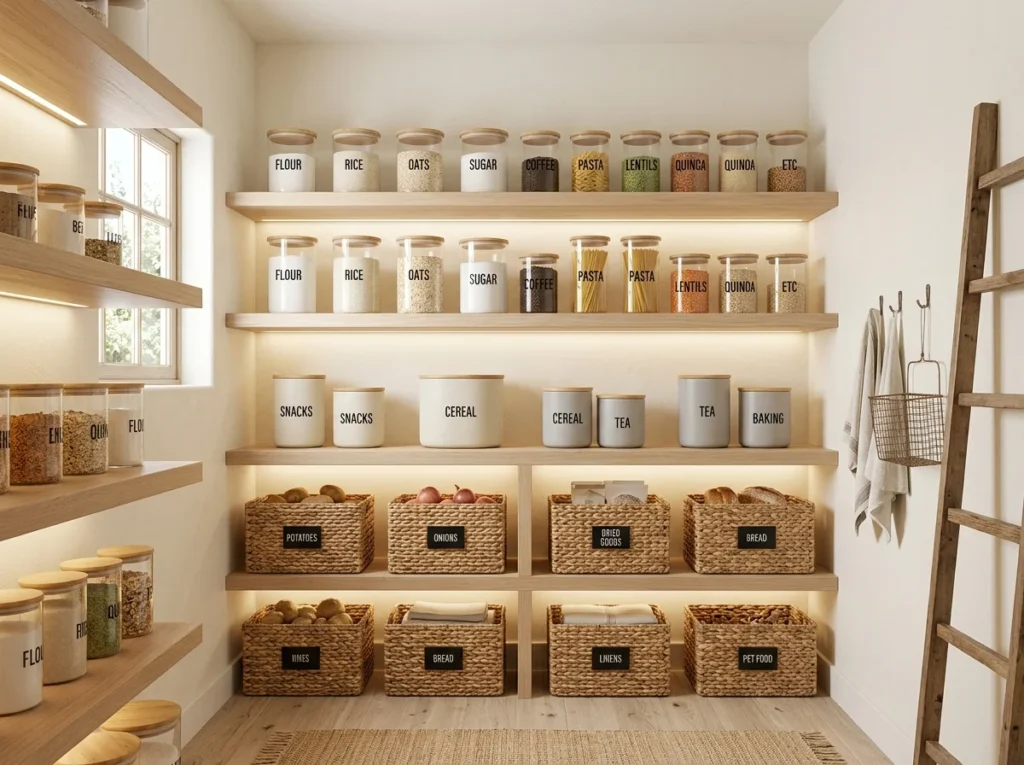
A labeling system may seem small at first, but it creates one of the biggest visual transformations inside a pantry. Clear labels immediately make shelves feel intentional, coordinated, and easier to navigate during busy cooking routines. They also remove confusion when transferring ingredients into jars or baskets, especially for baking staples and snacks. I’ve found that even simple handwritten labels can make everyday storage feel calmer and more manageable without requiring expensive organizers. Consistent labeling also helps the entire household maintain the system naturally because everyone knows exactly where items belong after shopping trips or meal preparation throughout the week.
Beyond appearance, labels improve long-term organization because they reduce decision fatigue and encourage consistent upkeep over time. Instead of guessing where products should go, every shelf and container already has a defined purpose. That small detail makes realistic pantry organization much easier to maintain in everyday life. Many designers recommend using subtle neutral labels because they create visual cohesion without overwhelming the shelves with unnecessary decoration. In my experience, the most successful pantry systems are usually the simplest ones to follow daily. Labels support that simplicity beautifully while helping even compact spaces feel cleaner, brighter, and far more functional for real household routines.
Door Shelf Storage
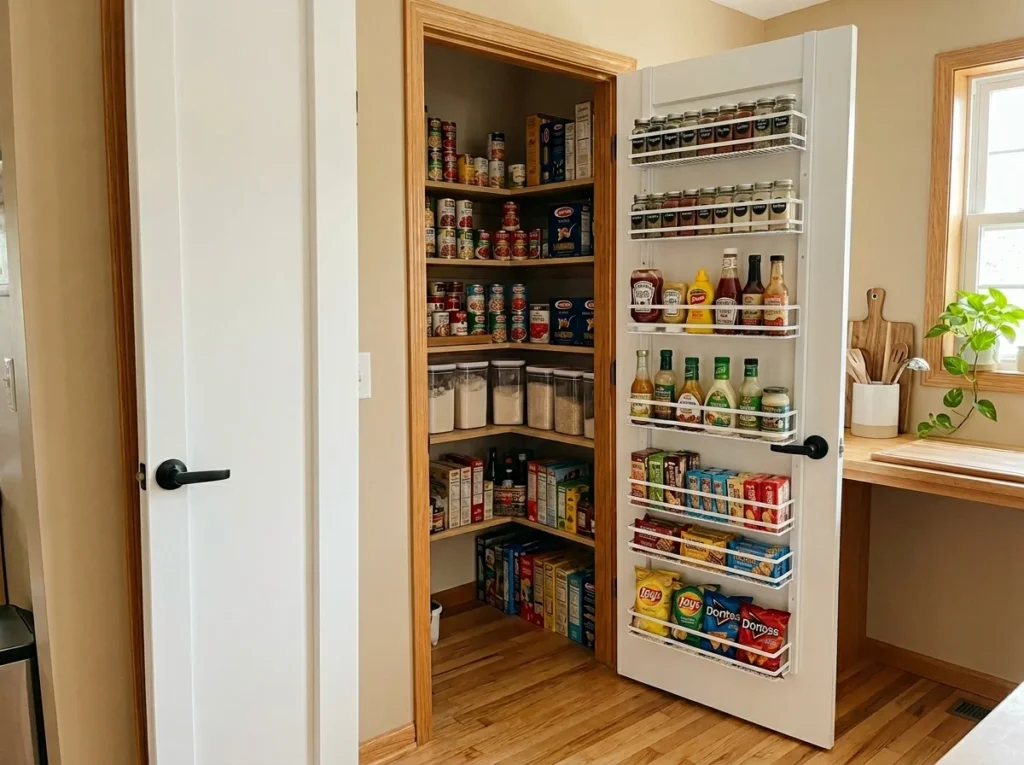
The back of a pantry door is often wasted space, even though it offers valuable storage potential for smaller everyday items. Slim mounted shelves instantly add function without making the pantry feel crowded or difficult to navigate. This setup works especially well for spices, condiments, snack packs, and baking supplies that normally scatter across shelves. I’ve seen this solution completely improve small pantry layouts where every inch matters. Keeping frequently used items on the door also creates faster access during cooking while freeing larger shelves for bulk goods, appliances, and storage baskets that require more depth and stability throughout the pantry.
One reason door shelving feels so practical is because it improves organization without requiring a full pantry makeover or expensive cabinetry changes. The added vertical storage naturally spreads items out, helping shelves appear less packed and visually overwhelming. It also keeps smaller products from getting lost behind larger containers or stacked bins. In my experience, adjustable door racks work best because storage needs tend to change throughout the year with seasonal cooking and grocery habits. That flexibility makes the pantry easier to maintain long term while creating a smarter layout that supports realistic everyday use instead of purely decorative organization trends often seen online.
Glass Jar Pantry
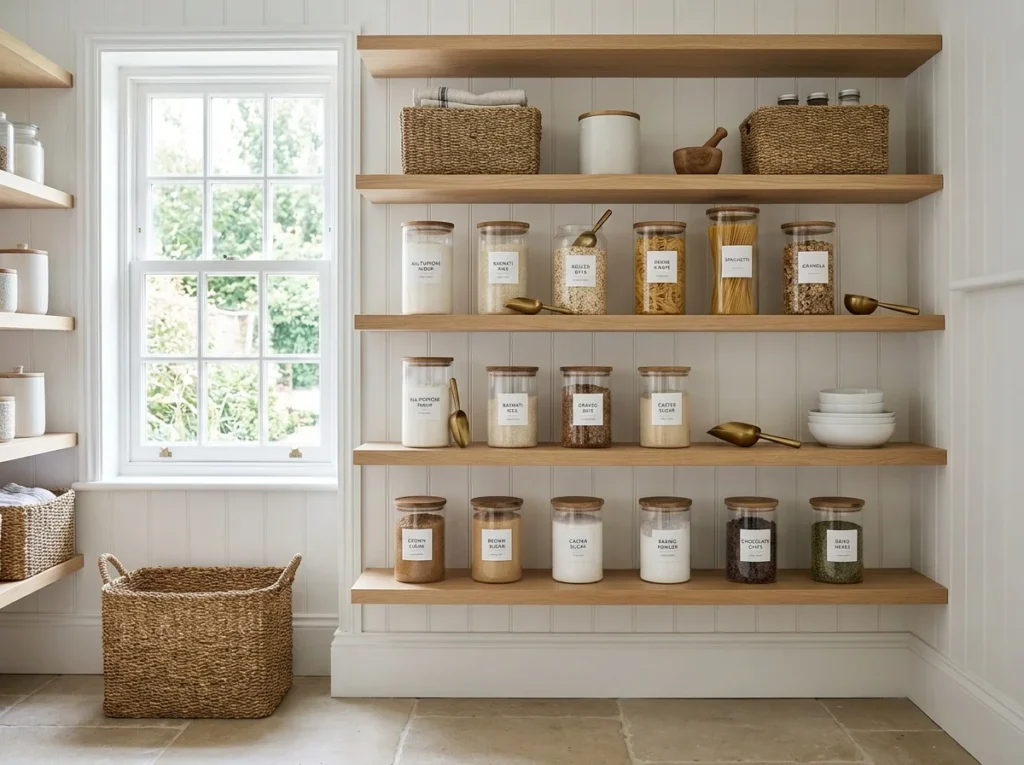
Few pantry upgrades feel as instantly satisfying as transferring dry goods into matching glass jars. The shelves immediately appear brighter, calmer, and more cohesive because colorful packaging no longer competes visually across the space. Glass containers also make ingredients easier to identify quickly during cooking and baking without searching through crowded cabinets. I’ve noticed this setup naturally encourages tidier habits because the pantry always looks partially organized, even during busy weeks. Large jars filled with grains, pasta, flour, or cereal also create subtle texture and layering that make everyday pantry storage feel decorative while still remaining highly practical for realistic family routines.
Another reason glass jar storage works so well is because it combines beauty with long-term functionality in a very approachable way. Unlike complicated organizing systems, simple jars are easy to maintain and adapt as grocery habits change over time. They also help reduce food waste because ingredient levels stay visible at all times. In my experience, mixing multiple jar sizes creates the most balanced look while supporting different storage needs naturally. That flexibility allows the pantry to feel customized instead of overly perfect. The reflective glass surfaces also brighten darker shelves, helping even smaller pantry spaces feel cleaner, more spacious, and thoughtfully arranged for everyday use.
Snack Drawer Zones
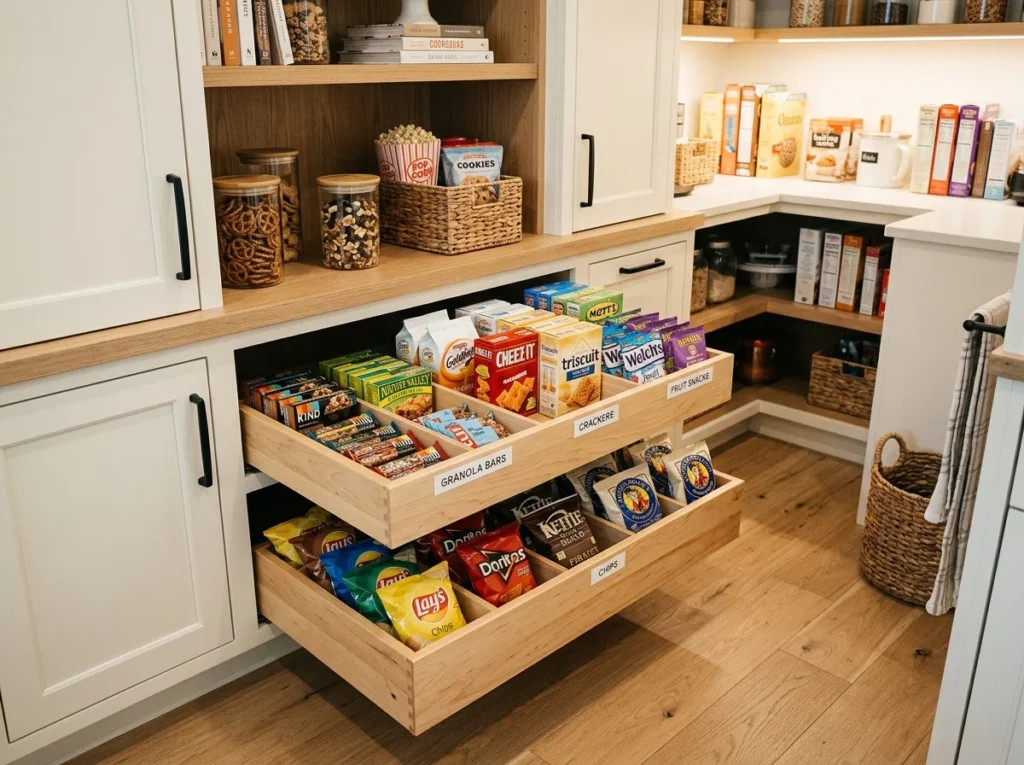
Snack storage can quickly become messy when boxes, bags, and wrappers pile together across pantry shelves without any structure. Dedicated snack drawer zones solve that problem by giving every category a clear place while keeping smaller items contained neatly. This setup works especially well for busy families because children can grab snacks independently without disrupting the rest of the pantry. I’ve seen pull-out drawers completely reduce shelf clutter in smaller kitchens where packaged foods easily overwhelm the space. Dividers also make lunch packing faster since everything stays grouped together logically instead of scattered throughout multiple shelves or baskets during hectic mornings.
One of the biggest advantages of drawer storage is how clean and streamlined the pantry looks even during busy weeks with constant grocery turnover. Closed or partially hidden snack zones reduce visual clutter significantly while still keeping items easy to access daily. In my experience, shallow organizers work best because snacks remain visible instead of disappearing underneath larger packages. That visibility also helps families avoid overbuying duplicates unnecessarily. Many designers recommend creating designated zones for different household needs because simple structure improves long-term organization naturally. Snack drawers support that approach perfectly while helping the pantry feel calmer, more efficient, and far easier to maintain realistically over time.
Vertical Baking Station
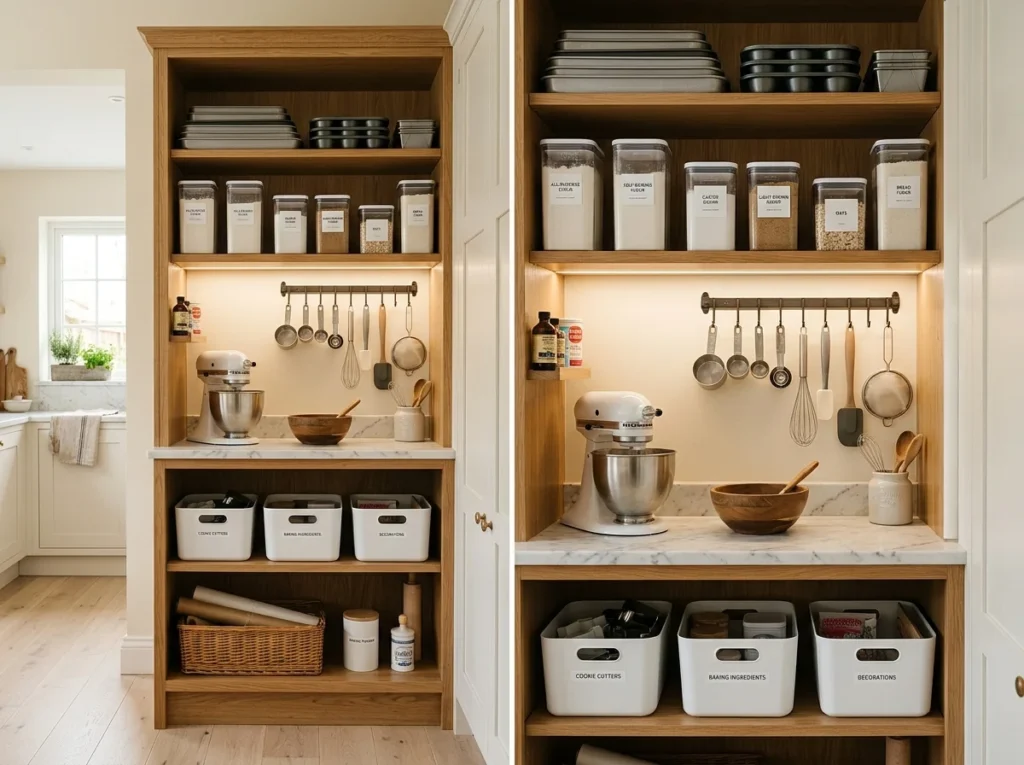
Baking supplies often become difficult to manage because trays, mixing tools, and ingredients all require different types of storage. Creating a vertical baking station helps organize everything into one efficient area that feels easy to use during meal prep or weekend baking sessions. Upright dividers for cutting boards, baking sheets, and cooling racks instantly save shelf space while reducing heavy stacked piles. I’ve tried this approach in narrow pantry sections, and it dramatically improved accessibility without requiring custom cabinetry. Keeping flour, sugar, measuring cups, and baking tools nearby also creates a smoother workflow that feels more practical and less stressful during everyday kitchen routines.
Another reason this setup works beautifully is because zoning naturally improves both organization and visual balance throughout the pantry. Instead of storing baking supplies randomly across multiple shelves, everything stays contained within one purposeful area. That structure reduces clutter while making cleanup much faster after cooking sessions. In my experience, vertical storage systems also protect delicate trays and pans from scratches caused by constant stacking. Many realistic pantry organization ideas succeed because they focus on convenience first rather than perfection. A dedicated baking station reflects that perfectly by creating a pantry layout that supports real daily habits while still looking polished, tidy, and thoughtfully designed.
Pull-Out Wire Baskets
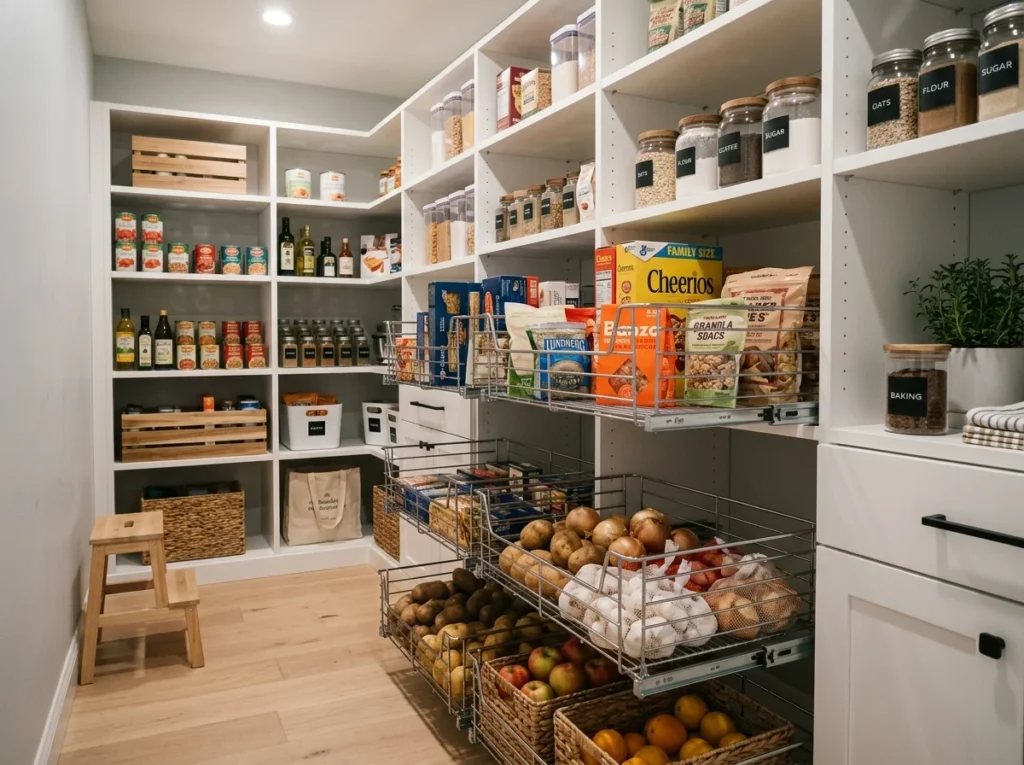
Deep pantry shelves can easily become frustrating when products disappear into the back and remain unused for months. Pull-out wire baskets solve that issue by bringing everything forward with one simple motion, making storage far more accessible and practical. This setup works especially well for potatoes, onions, snacks, or bulk groceries that tend to pile together messily. I’ve noticed that sliding storage instantly improves everyday usability because nothing feels hidden anymore. The open wire design also keeps the pantry visually lighter while allowing airflow around produce and packaged foods, helping shelves appear cleaner, more functional, and less overcrowded during busy household routines.
One reason pull-out baskets remain so popular is because they combine flexibility with realistic long-term functionality. Unlike fixed shelving, sliding storage adapts naturally to changing grocery habits and different pantry layouts over time. It also reduces the frustration of constantly rearranging heavy products just to reach smaller items behind them. In my experience, wider pull-out baskets create the biggest transformation in compact pantries where accessibility matters most. Many designers recommend movable storage systems because they improve organization without making spaces feel rigid or overly styled. That balance between convenience and visual simplicity helps pantries feel easier to maintain realistically throughout daily family life and seasonal changes.
Color-Coded Zones
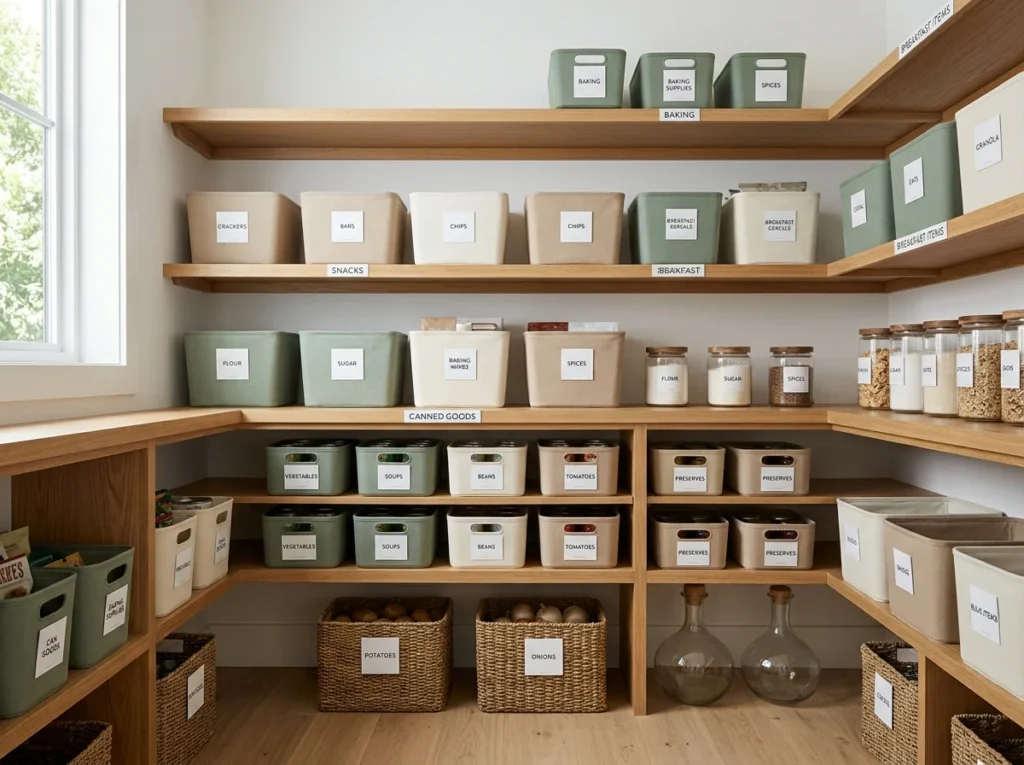
A pantry becomes much easier to navigate when similar items are grouped visually instead of scattered randomly across shelves. Color-coded zones create quick visual recognition that simplifies both cooking routines and grocery restocking throughout the week. Soft neutral tones usually work best because they create gentle organization without making the pantry feel overly busy or artificial. I’ve seen this method work especially well for larger families where multiple people access the pantry daily. Coordinating baskets, labels, or containers by category also helps maintain long-term structure naturally because everyone can identify designated storage areas immediately without needing constant reminders or complicated organization systems.
Another reason color zoning feels effective is because it reduces visual overwhelm while creating a more polished and intentional pantry layout. Even simple variations in basket tones or labels can guide the eye smoothly throughout the shelves. In my experience, subtle coordination works far better than bright rainbow storage because it keeps the pantry calm and timeless visually. Many realistic pantry organization systems succeed because they simplify decision-making instead of adding unnecessary complexity. Color-based categories support that goal beautifully while helping busy households maintain order more consistently. The result feels organized, approachable, and visually balanced without requiring perfectly styled shelves every single day of the week.
Appliance Garage Shelf
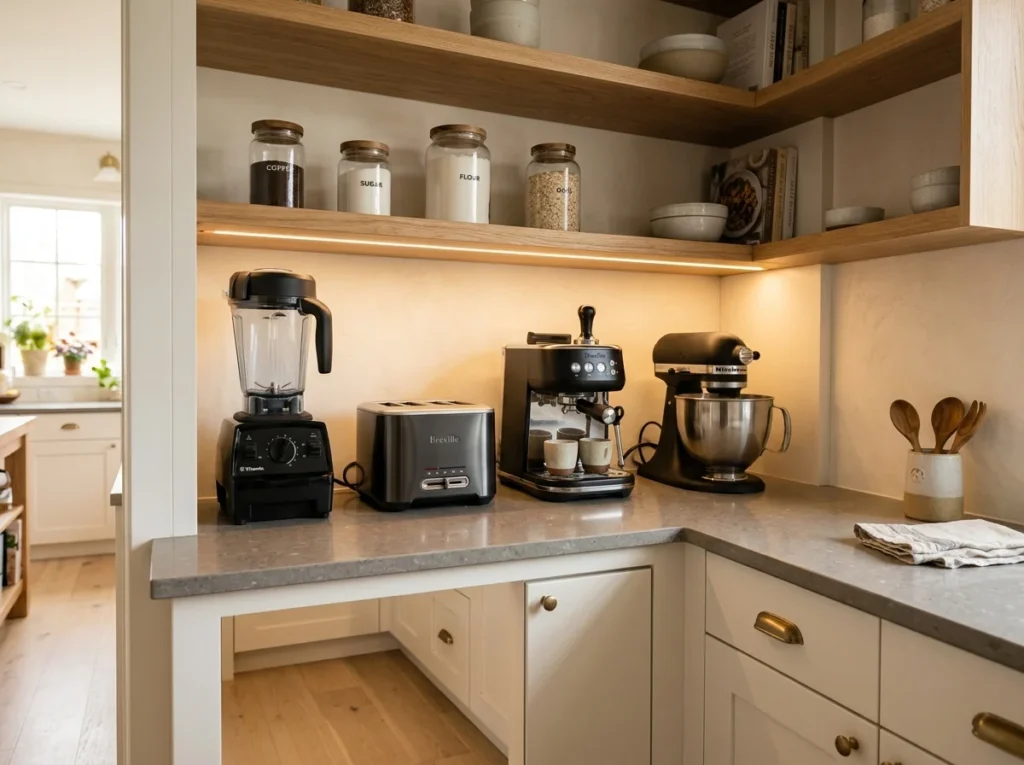
Kitchen appliances often take over countertops quickly, making the entire kitchen feel crowded and visually heavy. Creating a dedicated appliance garage shelf inside the pantry helps free up valuable counter space while keeping everyday tools easy to reach. This setup works especially well for coffee makers, blenders, mixers, and toasters that get used regularly but do not need permanent display space. I’ve noticed that storing appliances behind pantry doors instantly creates a calmer kitchen atmosphere without sacrificing convenience. The pantry also feels more functional because larger items stay grouped together neatly instead of competing for room beside cooking and meal preparation areas.
Another reason this storage solution works beautifully is because it supports realistic everyday habits while improving the overall flow of the kitchen. Appliances remain accessible without requiring awkward lifting from high cabinets or deep lower storage areas. In my experience, adding one dedicated shelf with nearby outlets creates the most practical setup for daily use. Many designers recommend hidden storage for bulky kitchen equipment because it reduces visual clutter dramatically while maintaining functionality. An appliance garage shelf reflects that perfectly by helping the pantry serve as an extension of the kitchen, creating a cleaner, more spacious, and thoughtfully organized environment for busy households.
Open Shelf Styling
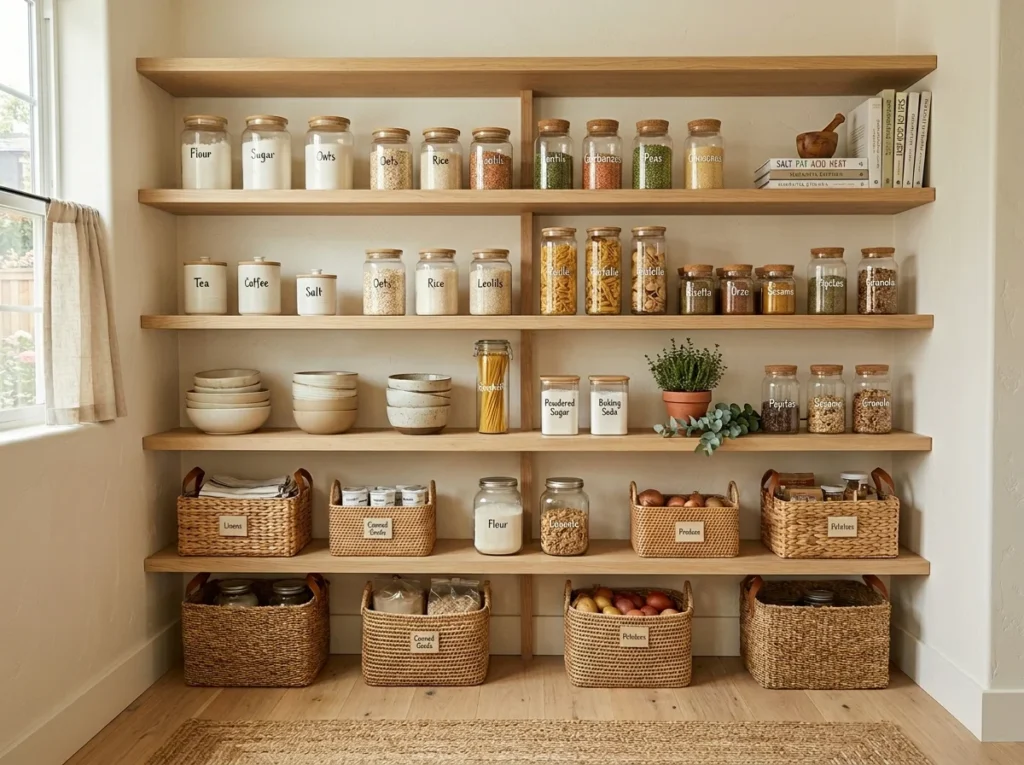
Open shelving can completely transform the atmosphere of a pantry when it balances functionality with thoughtful visual styling. Instead of hiding everything behind doors, carefully arranged shelves create a lighter and more welcoming space that feels connected to the kitchen. I’ve noticed that combining practical storage with decorative touches keeps open shelves from feeling cold or overly utilitarian. Glass jars, woven baskets, and stacked dishes help create natural texture while still supporting daily routines. The pantry also feels easier to maintain because frequently used ingredients remain visible and accessible instead of disappearing behind crowded cabinet doors or deep storage compartments throughout the space.
Another reason this idea works beautifully is because it encourages intentional organization without demanding unrealistic perfection every day. Open shelves naturally motivate people to keep items tidy since everything remains visible at all times. In my experience, leaving small empty spaces between objects creates the cleanest and calmest visual effect while preventing shelves from feeling cluttered. Many designers recommend mixing storage materials to create warmth and depth within functional spaces. That layered approach helps the pantry feel more personal and inviting while still supporting efficient meal preparation, grocery organization, and realistic daily kitchen habits that evolve naturally throughout changing seasons and household routines.
Bulk Food Bins
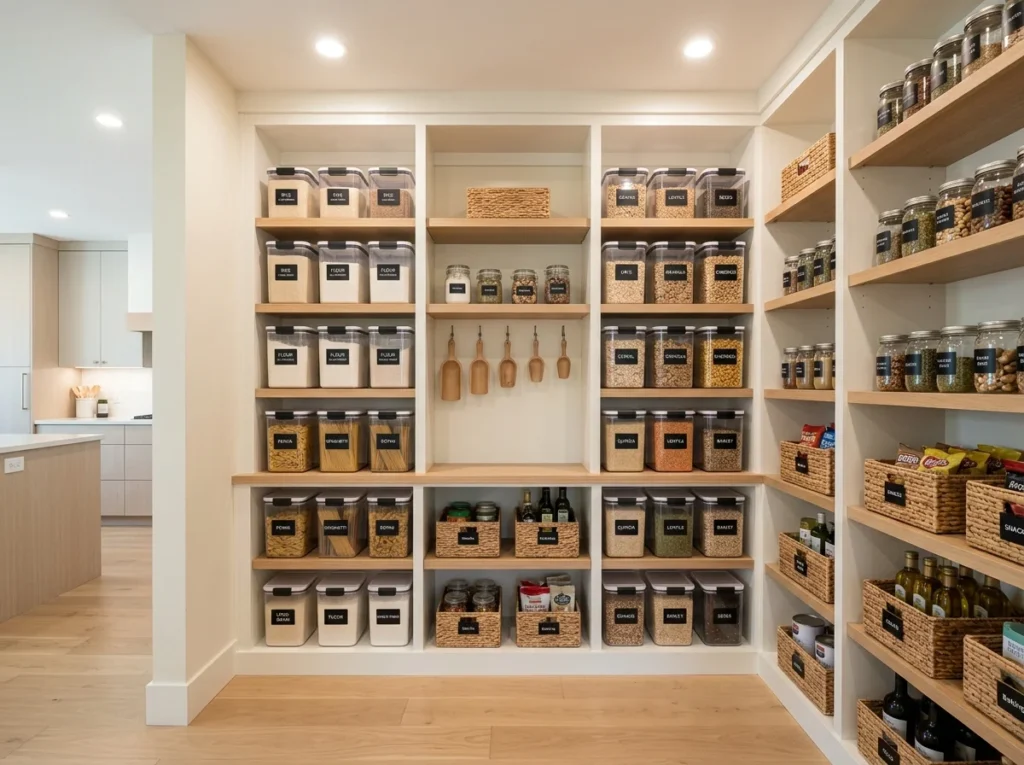
Buying pantry staples in larger quantities often saves money, but bulky packaging can quickly overwhelm shelves and create visual chaos. Bulk food bins help solve that issue by consolidating ingredients into cleaner, more manageable storage containers that stack neatly and efficiently. This setup works especially well for flour, rice, cereal, oats, and pasta that households use frequently throughout the week. I’ve found that uniform bins instantly make pantries feel calmer and more spacious because shelving appears less crowded visually. Clear or lightly tinted containers also help monitor food levels easily, reducing unnecessary grocery purchases and simplifying meal planning during busy routines.
One reason bulk storage feels so practical is because it supports both organization and long-term convenience without requiring complicated systems. Stackable bins maximize vertical shelf space while keeping heavy pantry staples accessible and easy to pour during cooking. In my experience, airtight containers work best because they help maintain freshness while protecting dry goods from moisture and spills. Many realistic pantry organization setups succeed because they simplify repetitive daily tasks instead of focusing only on appearance. Bulk bins support that perfectly by making storage more functional, visually balanced, and easier to maintain consistently, especially for active households that rely heavily on pantry staples for everyday meals.
Hidden Paper Storage
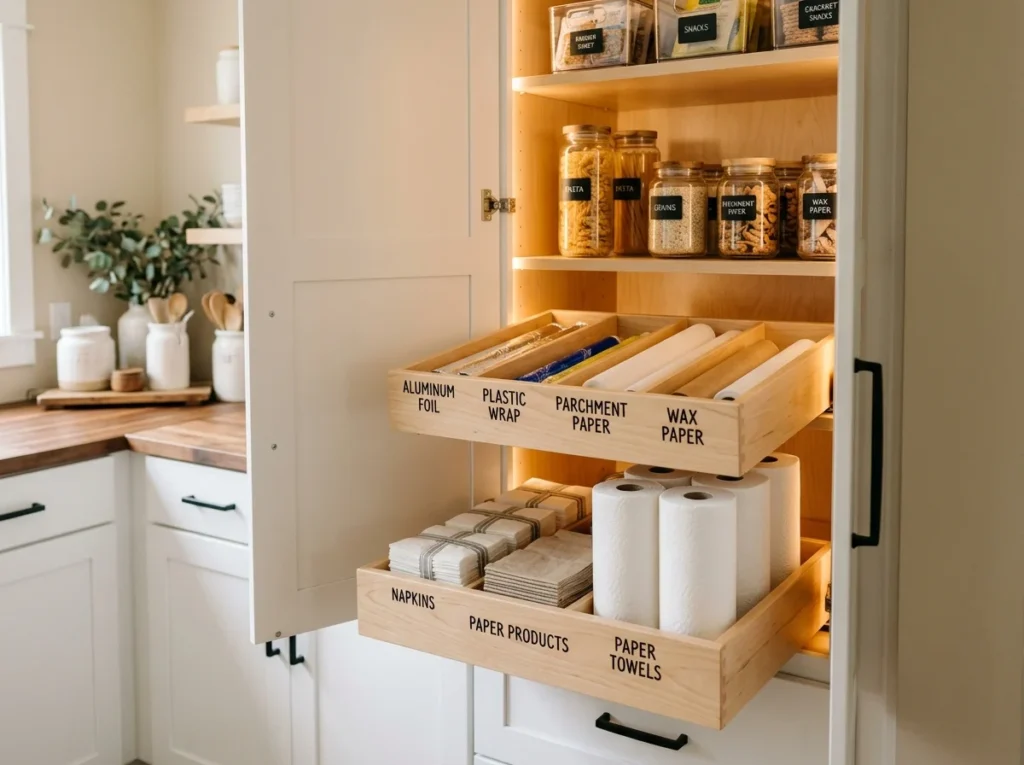
Paper products and kitchen wraps often create unnecessary visual clutter because their packaging tends to feel bulky, colorful, and difficult to stack neatly. Hidden storage bins or pull-out drawers solve that problem beautifully by keeping everyday household supplies accessible without dominating the pantry visually. This setup works especially well for paper towels, napkins, foil, and plastic wrap that households use constantly but rarely want displayed openly. I’ve noticed that simply hiding these bulkier items instantly makes the pantry feel cleaner and more organized overall. The shelves also become easier to style because functional supplies no longer interrupt the visual flow.
Another reason concealed paper storage works so effectively is because it creates separation between household essentials and food organization zones. That distinction helps the pantry feel more structured while reducing the crowded appearance many busy kitchens develop over time. In my experience, lower pull-out bins are especially practical for larger paper products because they stay easy to access without occupying prime shelf space. Many designers recommend hidden storage solutions because they simplify the visual environment and create a calmer atmosphere naturally. That balance between accessibility and minimal visual clutter helps realistic pantry organization feel far more achievable and sustainable for everyday family life.