16 Easy DIY Wood Trellis Ideas for Climbing Garden Plants
A beautiful diy wood trellis can completely change the look and feel of an outdoor space without requiring a massive garden makeover. Vertical garden features instantly add height, texture, and personality while helping climbing plants grow healthier and more naturally. Whether you love cosy cottage gardens, modern backyard layouts, or productive vegetable spaces, the right trellis design can make everything feel more organized, lush, and visually inviting.
In my experience, even simple wood structures can create a dramatic transformation when paired with greenery and flowering vines. They help small gardens feel layered, make patios feel more private, and turn empty fences into decorative focal points. This collection of inspiring ideas includes practical setups, stylish designs, and space-saving solutions that work beautifully for beginners and experienced gardeners alike. If you want a garden that feels warmer, greener, and Pinterest-worthy, these ideas offer plenty of inspiration to start creating your own outdoor retreat.
Rustic Ladder Frame
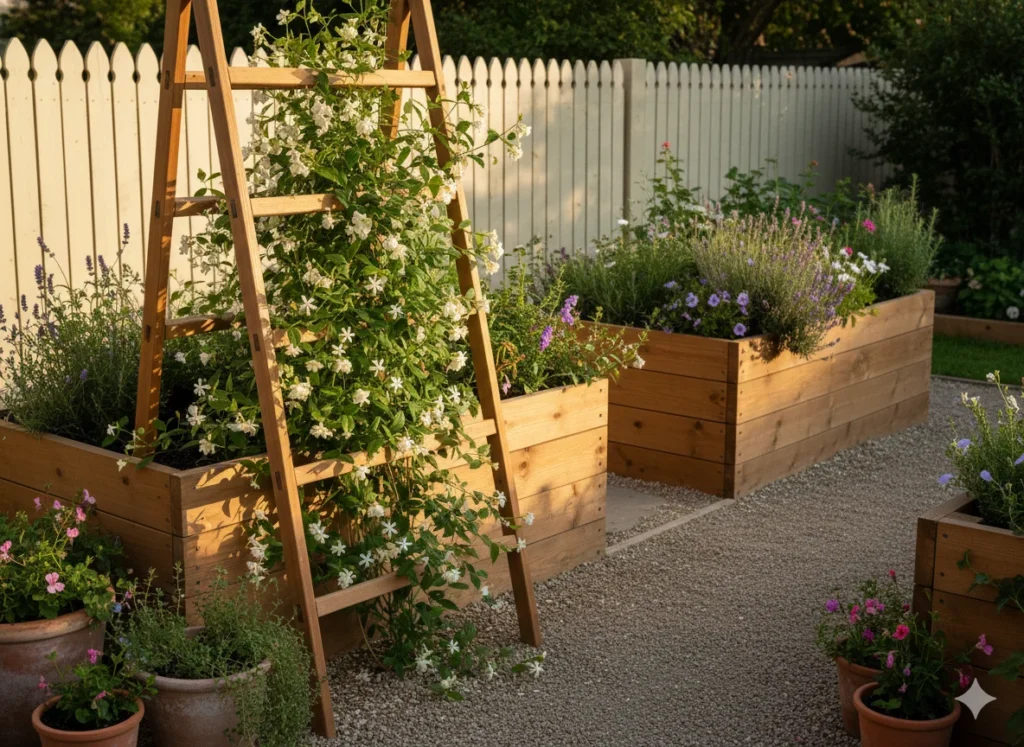
Nothing makes a garden corner feel more charming than a diy wood trellis wrapped with climbing vines and soft greenery. The slim vertical shape fits beautifully beside raised beds, fences, or narrow walkways without overwhelming the space. I’ve noticed this style works especially well in smaller backyards because it adds height while keeping the layout open and airy. Weathered wood creates a relaxed cottage look that blends naturally with flowers, herbs, and vegetable plants. The open frame also allows sunlight and airflow to reach delicate stems, helping climbing plants stay healthier throughout warm growing seasons.
A simple ladder structure can completely change the visual balance of a garden while adding practical support for growing plants. The evenly spaced wooden slats give vines plenty of room to weave naturally, creating a fuller and more layered appearance over time. Many gardeners love this setup because it feels decorative even during colder months when plants are dormant. You can stain the wood for a polished finish or leave it unfinished for a softer rustic texture. In my experience, adding a ladder trellis near patios or seating areas instantly makes outdoor spaces feel warmer, greener, and more inviting.
Garden Archway
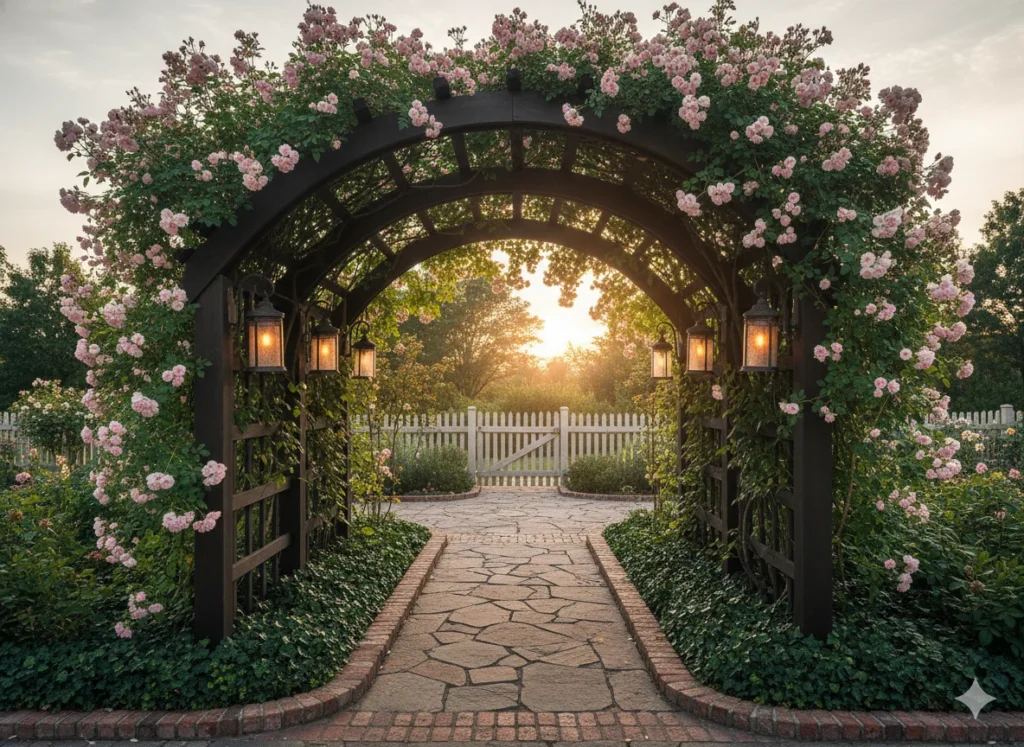
Few garden features create a stronger focal point than an arched diy wood trellis covered with climbing flowers and trailing greenery. The curved design naturally draws the eye upward, making even modest outdoor spaces feel larger and more polished. I’ve seen this style work beautifully near entryways, vegetable beds, and backyard paths because diy wood trellis frames surrounding plants without feeling bulky. The shape softens hard landscaping like stone or gravel while adding graceful movement throughout the yard. As vines mature and spread across the arch, the entire space starts feeling more private, layered, and visually balanced during every season.
An arched frame brings both structure and softness into outdoor spaces, especially when paired with flowering vines or fragrant climbing plants. The rounded silhouette creates a welcoming transition between separate garden zones while adding noticeable height and texture. Many homeowners love this setup because it instantly feels custom and thoughtfully designed without requiring expensive materials. Cedar and redwood are especially popular choices since they age beautifully outdoors and resist moisture naturally. In my experience, placing an arch near a pathway or seating area creates one of the most photogenic spots in the entire garden, especially during golden evening light.
Modern Grid Panels
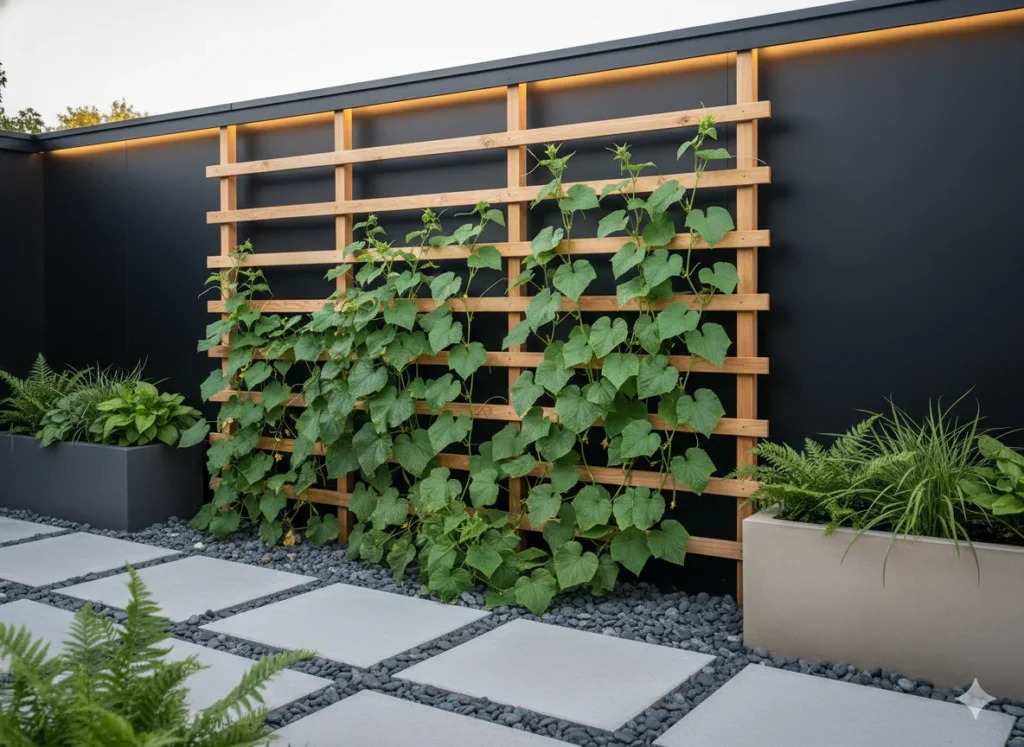
Clean lines and evenly spaced wooden grids can make climbing plants look intentionally styled instead of loosely scattered around the yard. This modern trellis approach works especially well for vegetables, ivy, or flowering vines that need reliable support while maintaining a tidy appearance. The symmetrical layout adds structure without making the garden feel rigid or overly formal. I’ve noticed grid patterns pair beautifully with contemporary patios, black fencing, and neutral outdoor furniture because they create a balanced visual backdrop. As plants begin filling the open squares, the entire setup gains texture, movement, and a professionally landscaped appearance.
A wooden grid trellis offers impressive flexibility because it can function as both a decorative feature and a practical plant support system. The simple geometric design allows vines to spread evenly, reducing overcrowded growth and making harvesting easier for edible plants. Many gardeners appreciate how this style keeps outdoor spaces feeling organized while still adding plenty of natural greenery and softness. You can customize the spacing depending on the plants you want to grow and the amount of privacy needed. I’ve tried similar layouts near patios before, and they instantly made the backyard feel cleaner, brighter, and more intentional.
Crisscross Wall Trellis
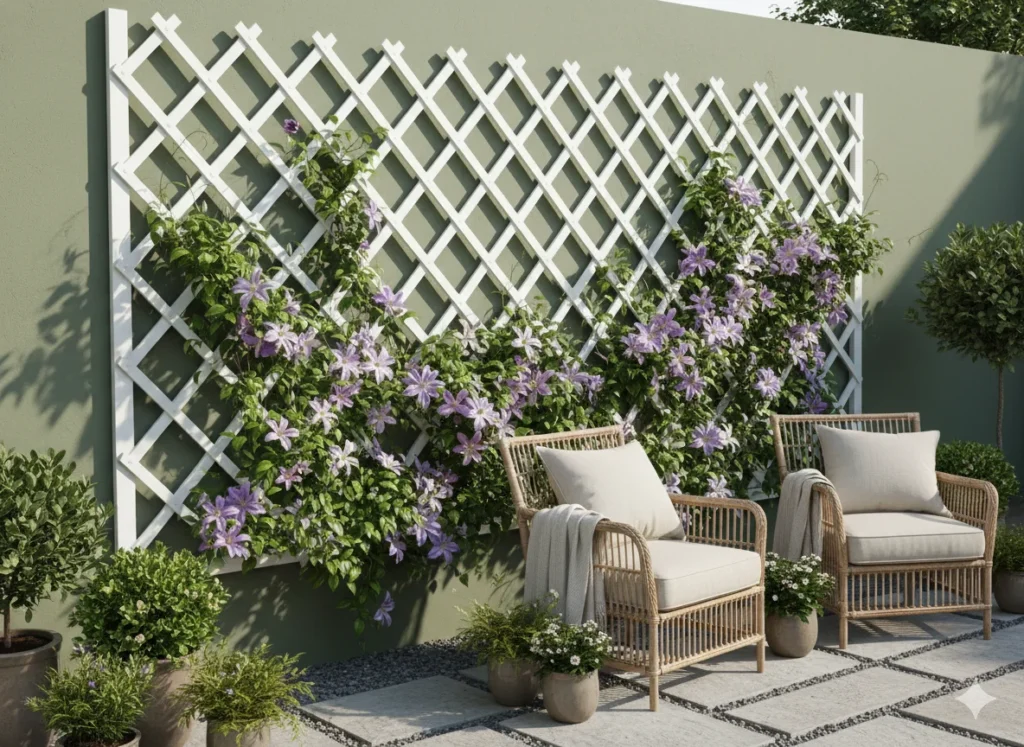
A crisscross wall trellis instantly makes blank fences and empty walls feel more finished and visually inviting. The diamond-shaped pattern creates gentle movement that pairs beautifully with flowering vines, leafy climbers, and even trailing herbs. I’ve seen this design transform dull backyard corners into charming focal points without requiring major landscaping changes. Painted white or soft neutral shades, the wooden frame reflects sunlight and helps gardens appear brighter and more open. The layered greenery softens hard surfaces naturally while adding texture that changes beautifully through each season as climbing plants continue to grow and spread.
This style works especially well in smaller outdoor spaces because it adds depth without occupying valuable ground area. The evenly spaced openings guide vines naturally, preventing overcrowded growth and helping plants receive better airflow and sunlight exposure. Many gardeners also love how customizable the design feels since it works with rustic, cottage, farmhouse, and modern outdoor aesthetics. In my experience, adding a crisscross trellis behind a bench or patio seating area creates a cosy backdrop that instantly makes the garden feel more relaxing. It is a simple upgrade that delivers both decorative charm and practical plant support.
Raised Bed Trellis
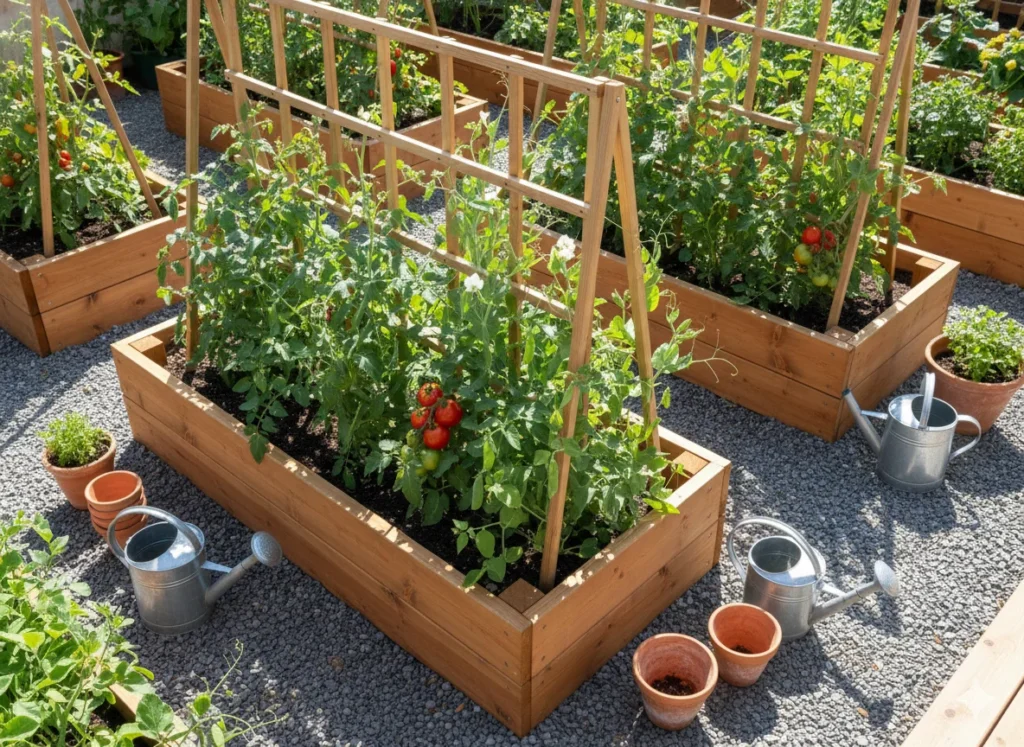
A raised bed trellis is one of the smartest ways to combine functionality with a clean, organized garden layout. Attaching a wood frame directly to elevated planting beds keeps climbing vegetables upright while freeing valuable ground space for additional crops. I’ve noticed this setup works especially well for peas, cucumbers, beans, and tomatoes because it improves airflow and keeps produce cleaner during watering or rainy weather. The vertical growth also makes harvesting easier and more comfortable. Warm wood tones paired with healthy greenery create a productive garden space that feels both practical and visually polished throughout the growing season.
The combination of raised beds and climbing supports helps gardens feel more intentional and manageable, especially in smaller backyards or urban spaces. Structured vertical growth prevents tangled vines from spreading across pathways, keeping the area tidy and easier to maintain. Many gardeners appreciate how this design naturally encourages healthier plant development while adding visual height and texture to vegetable gardens. Cedar and pine are popular material choices because they blend beautifully with surrounding greenery and age naturally outdoors. In my experience, a well-built raised bed trellis can make even beginner gardens feel more productive, organized, and professionally designed.
Corner Fan Design
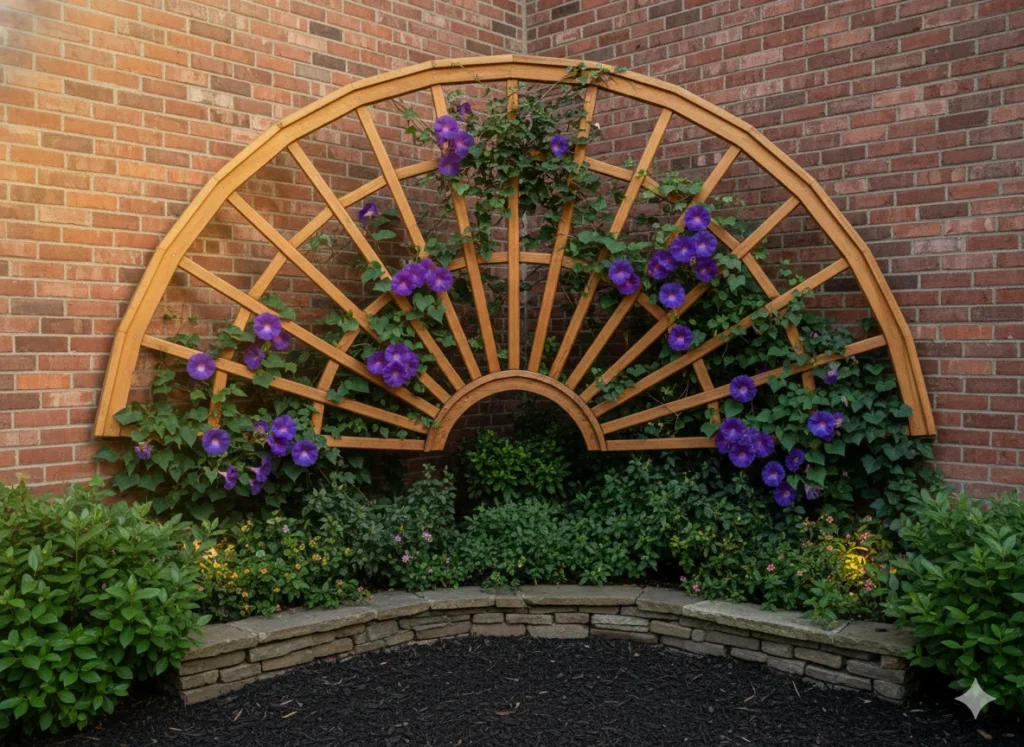
Unused garden corners often feel awkward or disconnected, but a fan-shaped wood trellis can completely change that visual imbalance. The spreading design fills empty vertical space gracefully while creating a striking backdrop for flowering vines and leafy climbers. I’ve seen this setup work beautifully beside patios, sheds, and brick walls because it softens hard edges without making the space feel crowded. The open angled pattern also allows plants to spread naturally while maintaining a neat appearance. As greenery expands across the frame, the corner becomes more integrated with the rest of the landscape and visually much more inviting.
A fan trellis brings decorative structure into outdoor spaces while remaining lightweight and airy compared to heavier privacy panels or fencing. The shape naturally guides climbing plants outward, creating fuller coverage and a more balanced garden display over time. Many homeowners love using this style to highlight overlooked spaces that need texture, height, or colour variation. Natural wood tones pair especially well with stone planters, mulch pathways, and layered greenery for a cohesive backyard design. In my experience, corner trellises often become unexpected focal points because they make the entire garden layout feel more complete and thoughtfully styled.
Pergola Side Panels
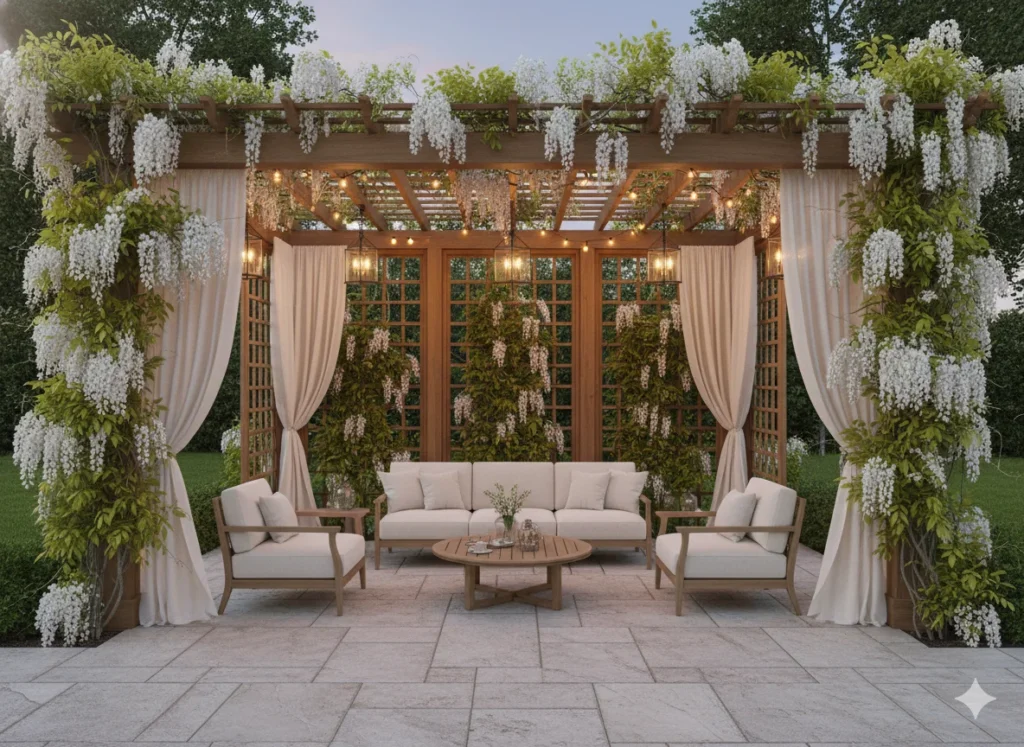
Pergola side panels covered with climbing greenery can make an outdoor seating space feel instantly softer and more inviting. The vertical wood structure adds gentle privacy while still allowing airflow and filtered sunlight to move comfortably through the area. I’ve noticed this design works especially well around patios because the layered vines create a calm garden atmosphere without needing bulky fencing. Flowering plants like wisteria or jasmine bring colour, fragrance, and texture that completely change the mood of the space. As the vines mature, the pergola starts feeling more like a peaceful outdoor retreat surrounded by natural greenery.
Wood side panels also help define larger backyards by creating a more intimate and visually connected seating zone. The structured framework gives climbing plants reliable support while adding architectural detail that complements both modern and rustic landscapes. Many homeowners appreciate how these panels provide a balance between openness and privacy, especially near neigh boring yards or busy outdoor areas. Cedar and pressure-treated wood are common choices because they hold up well against weather and moisture exposure. In my experience, adding climbing vines around a pergola instantly makes outdoor gatherings feel warmer, cosier, and far more visually memorable throughout the year.
Obelisk Tower
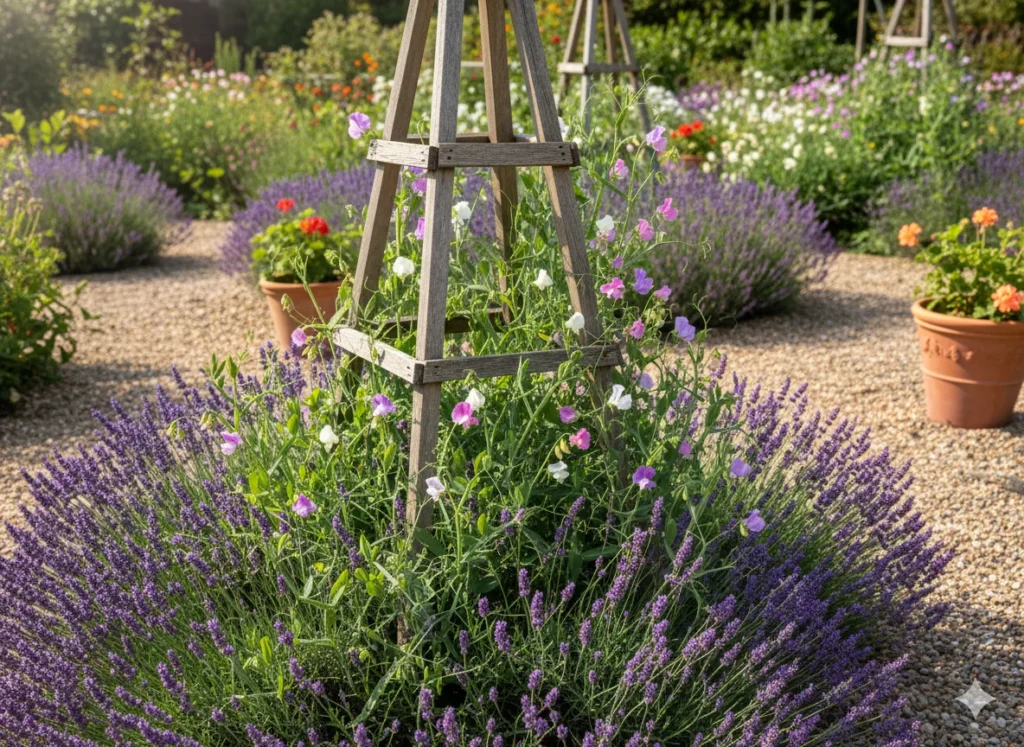
A wooden obelisk trellis brings dramatic height and elegant structure into flower beds without overwhelming surrounding plants. The tall pyramid shape naturally draws attention upward, creating a layered garden look that feels balanced and professionally styled. I’ve seen this design work especially well for sweet peas, clematis, and climbing vegetables because it supports upward growth while taking up very little ground space. The narrow footprint makes it ideal for smaller gardens, patios, and even large containers. Weathered wood textures also blend beautifully with flowers, herbs, and soft greenery throughout changing seasons and outdoor styles.
One of the best features of an obelisk tower is its versatility across different garden layouts and plant varieties. The open frame allows vines to weave naturally around the structure while maintaining good airflow and sunlight exposure. Many gardeners appreciate that this style remains decorative even when plants are not actively blooming, giving the garden year-round visual structure. You can stain the wood for a polished appearance or leave it raw for a relaxed cottage-inspired finish. In my experience, a tall obelisk instantly makes garden beds feel fuller, taller, and much more visually dynamic without requiring complicated installation work.
Horizontal Slat Frame
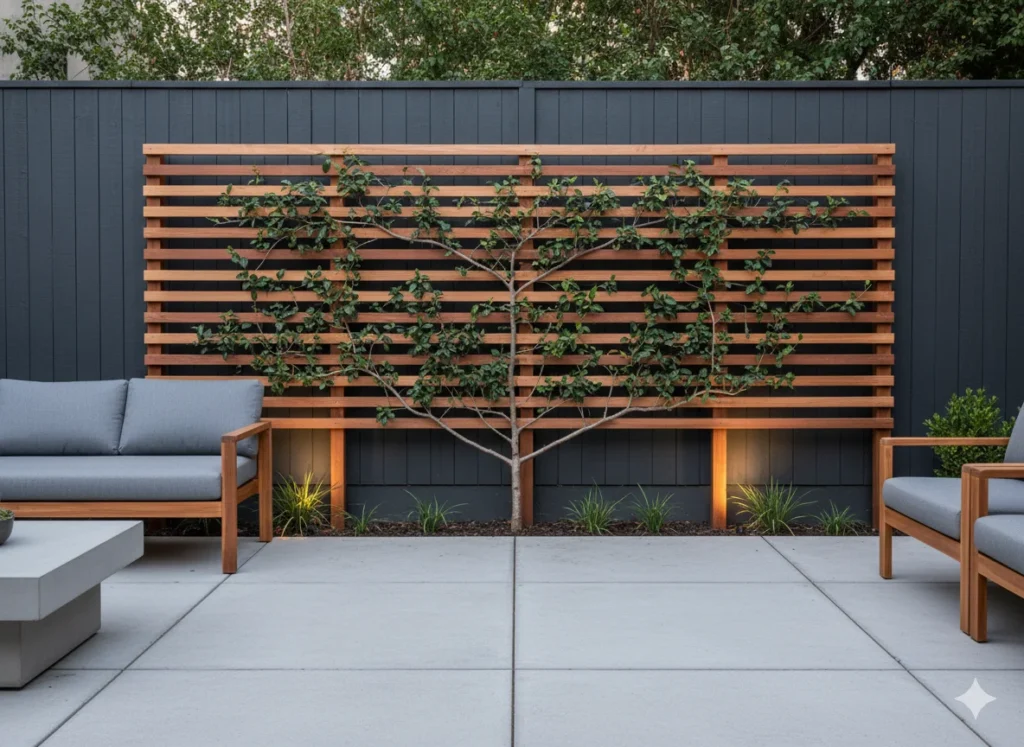
Horizontal wood slats can completely modernize a backyard while giving climbing plants a clean and organized support system. The long linear design naturally makes outdoor spaces appear wider and more structured without feeling heavy or enclosed. I’ve noticed this style pairs beautifully with minimalist patios, dark fencing, and contemporary landscaping because the evenly spaced boards create subtle visual rhythm. Climbing ivy, espalier fruit trees, and flowering vines all grow beautifully along horizontal supports. As greenery spreads across the frame, the contrast between natural foliage and warm wood textures creates a balanced and highly polished outdoor aesthetic.
This type of trellis works especially well for homeowners who want decorative plant support without the traditional cottage garden appearance. The sleek lines feel modern and architectural while still allowing plenty of room for lush greenery and seasonal growth. Many people use horizontal slat frames to break up large empty fence sections or add privacy around patios and outdoor dining areas. Cedar remains a popular material choice because of its durability and naturally rich tones. In my experience, horizontal trellis designs instantly make a backyard feel more intentional, spacious, and professionally landscaped with very little visual clutter.
A-Frame Support
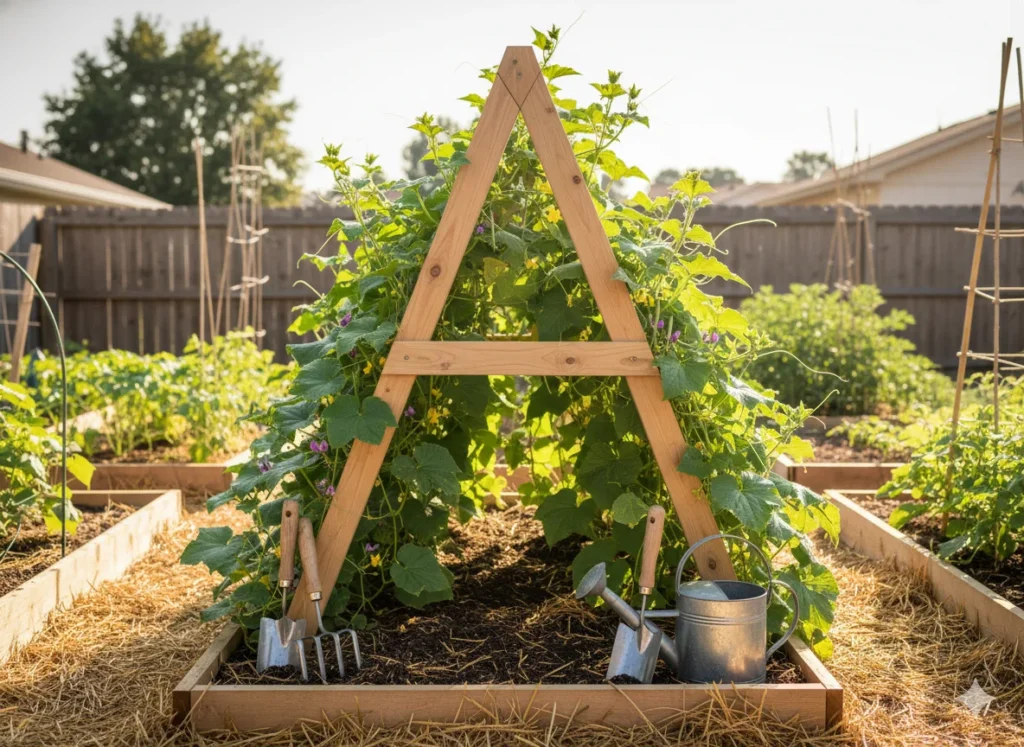
An A-frame trellis is one of the most practical ways to support climbing vegetables while keeping garden pathways organized and accessible. The angled structure gives heavier plants like cucumbers and beans strong support without sagging or overcrowding nearby beds. I’ve noticed this setup works especially well in productive vegetable gardens because it improves airflow and allows sunlight to reach leaves more evenly. The raised shape also keeps produce cleaner and easier to harvest throughout the season. Warm wood tones combined with dense greenery create a relaxed rustic garden appearance that feels both hardworking and visually inviting outdoors.
The triangular frame naturally creates stability, making it ideal for gardens exposed to wind, rain, or fast-growing vines. Many gardeners appreciate how simple the structure feels while still offering impressive functionality for compact growing spaces. The open centre allows easy access from both sides, which makes watering, pruning, and harvesting far more convenient during busy growing months. Cedar and pine remain popular choices because they are lightweight yet durable enough for outdoor use. In my experience, adding an A-frame support instantly makes vegetable gardens feel tidier, more productive, and much easier to maintain throughout the entire growing season.
Fence Extension Panels
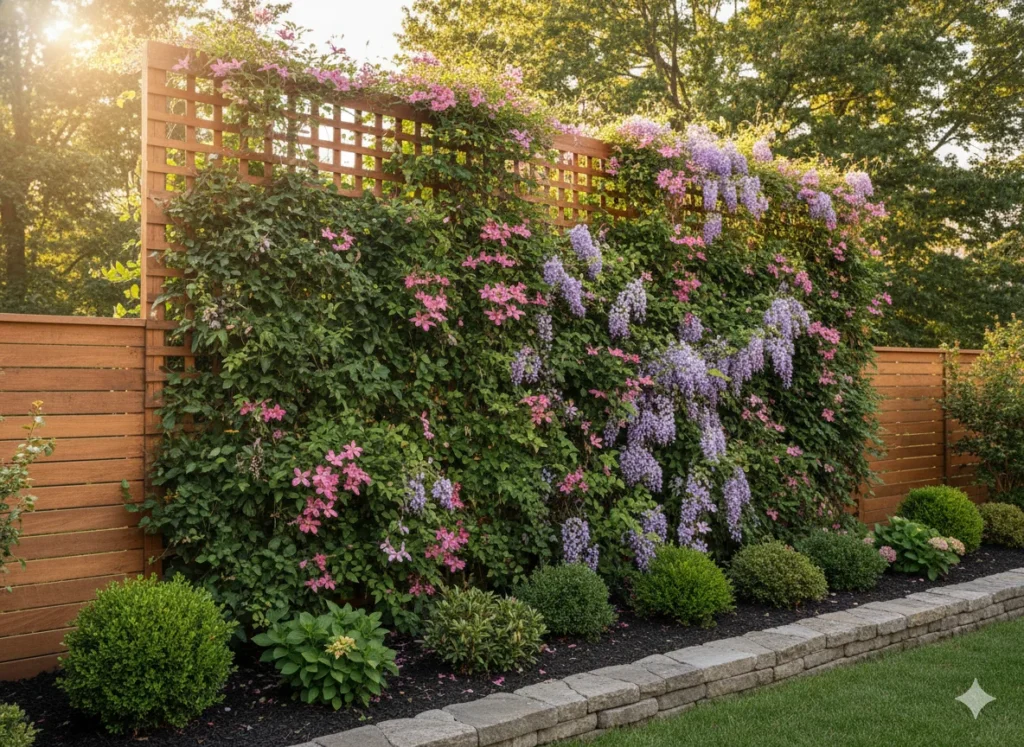
Fence extension trellises are a smart way to create extra privacy while keeping a backyard feeling open and natural. The added vertical height allows climbing plants to form a soft green barrier instead of relying entirely on heavy fencing or walls. I’ve seen this approach work especially well in narrow yards or shared outdoor spaces where privacy feels limited. Flowering vines and dense greenery help soften plain wooden fences while adding colour, movement, and texture throughout the garden. As plants mature and spread upward, the backyard starts feeling quieter, more secluded, and visually much more connected to nature.
The lightweight open framework keeps sunlight flowing through the space while still adding noticeable coverage and height. Many homeowners appreciate that this setup feels less harsh than installing taller solid fences, especially in smaller outdoor areas. The wood structure can also support a wide range of climbing plants depending on the desired level of privacy and maintenance. Cedar remains a favourite material because it withstands outdoor conditions beautifully over time. In my experience, adding greenery above an existing fence instantly makes the backyard feel more peaceful, private, and professionally designed without requiring a complete landscape renovation.
Window Box Trellis
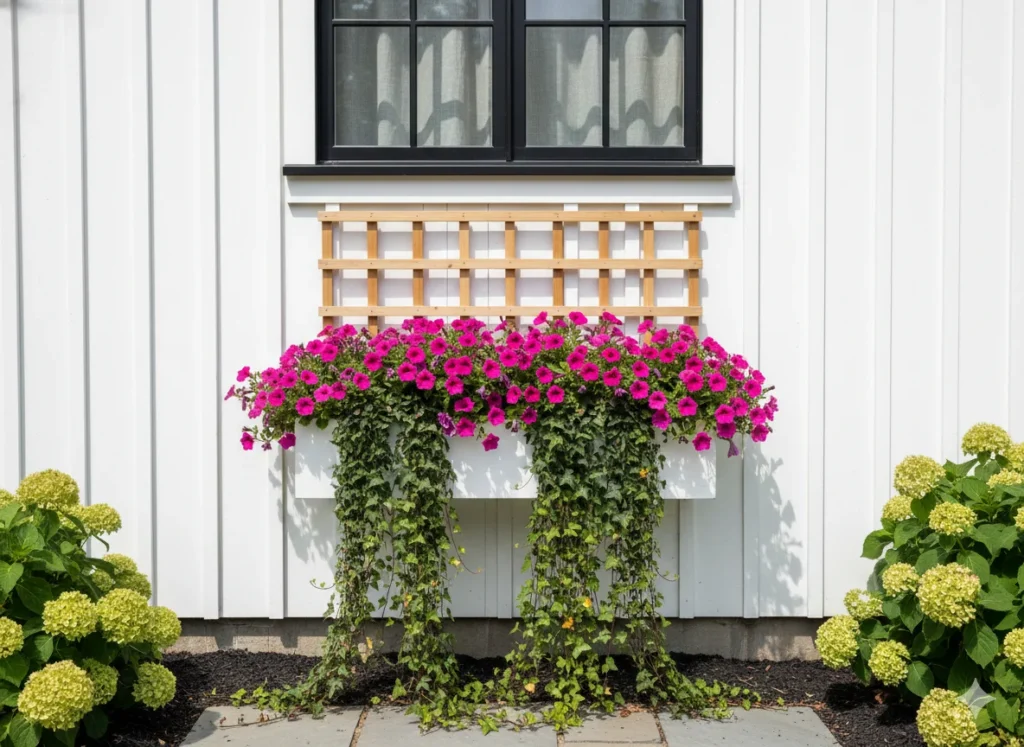
A window box trellis can completely transform plain exterior walls by layering climbing greenery above colourful blooming flowers. The combination creates a soft cottage-inspired look that feels welcoming, cheerful, and full of texture without requiring much outdoor space. I’ve noticed this style works especially well for balconies, patios, and smaller homes where vertical gardening makes a noticeable difference. Trailing ivy, clematis, and flowering vines naturally frame windows while adding seasonal colour and movement. The warm wood tones paired with overflowing blooms help exterior spaces feel more personalized, relaxed, and visually connected to the surrounding garden landscape.
This setup also offers practical growing space for gardeners who want decorative plant support without building larger structures in the yard. The compact design allows vines to grow upward while flowers fill the lower portion with layered texture and colour variation. Many homeowners love how window trellis designs make ordinary walls feel more detailed and thoughtfully styled throughout the year. Painted wood finishes can create either a rustic farmhouse appearance or a cleaner modern look depending on the surrounding exterior design. In my experience, even a simple window trellis can dramatically increase curb appeal while making outdoor spaces feel brighter and more inviting.
Freestanding Privacy Screen
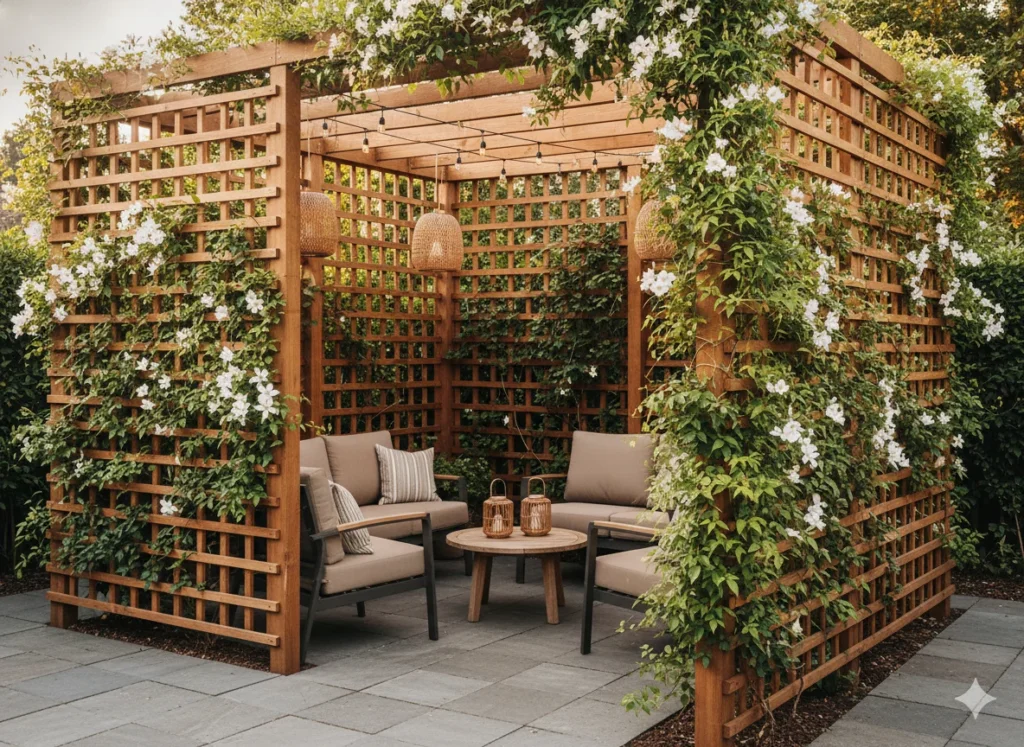
A freestanding wood trellis screen can instantly make patios and outdoor seating areas feel more secluded and comfortable without blocking fresh air or natural light. The open structure supports climbing vines beautifully while creating gentle separation between different garden spaces. I’ve noticed this style works especially well for decks, apartment patios, and backyard lounges where extra privacy is needed without installing permanent walls. Flowering vines and leafy greenery soften the frame naturally, making outdoor areas feel calmer and more inviting. As plants mature across the structure, the screen becomes a decorative living backdrop filled with texture and movement.
Unlike fixed fence panels, freestanding trellis screens offer flexibility that makes seasonal garden updates much easier. Many homeowners love that the structure can be repositioned whenever outdoor layouts change or additional shade is needed. The vertical greenery also helps soften concrete patios, wood decks, and other hard surfaces that sometimes feel visually cold or empty. Cedar remains a favourite choice because it holds up beautifully outdoors while maintaining a warm natural appearance. In my experience, adding a freestanding privacy screen instantly creates a more peaceful atmosphere that encourages people to spend more time relaxing outside throughout the year.
Diamond Pattern Frame
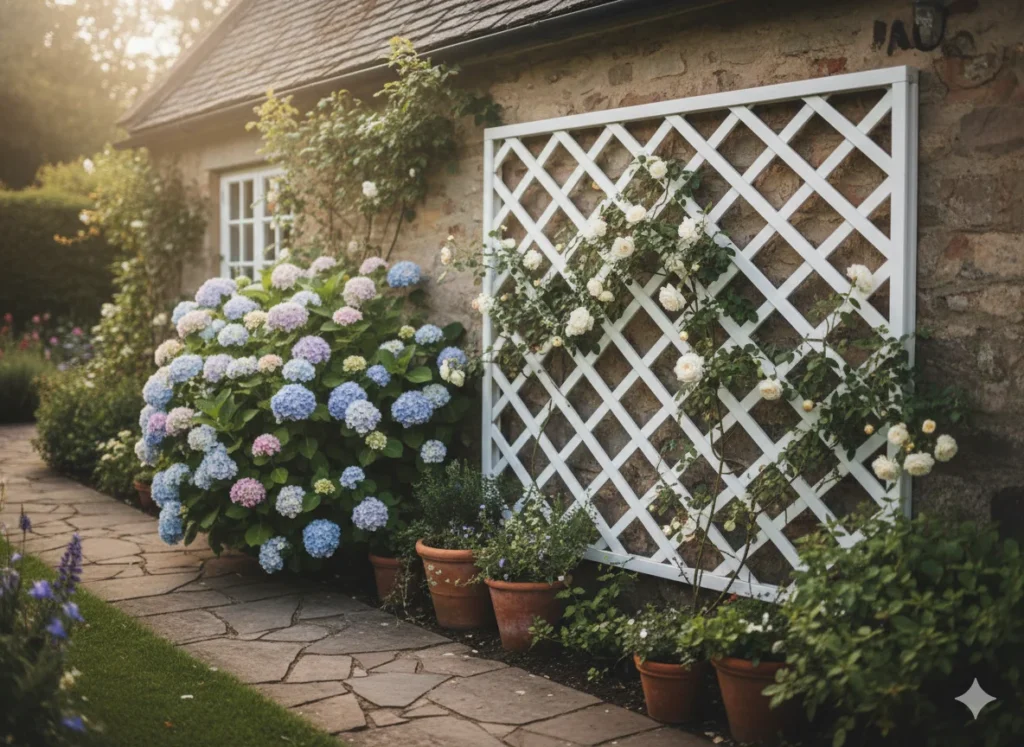
A diamond-pattern wood trellis adds elegant texture that instantly makes outdoor spaces feel more detailed and thoughtfully styled. The repeating lattice design creates a softer visual effect compared to straight horizontal or vertical frames, which works beautifully in cottage and traditional gardens. I’ve seen this style pair especially well with climbing roses, clematis, and flowering vines because the angled openings encourage natural spreading growth. Painted finishes in white or soft neutral tones help gardens feel brighter and more open. Even when plants are not fully grown, the decorative pattern still adds charm and structure throughout every season outdoors.
The layered lattice layout also helps climbing plants weave evenly across the frame, creating fuller coverage and better visual balance over time. Many homeowners appreciate how this style feels timeless while still blending naturally with modern landscaping elements and outdoor furniture. The wood framework can be mounted against fences, sheds, patios, or exterior walls depending on the garden layout. In my experience, diamond-pattern trellises often become standout decorative features because they add both greenery support and architectural detail at the same time. It is a simple addition that creates noticeable visual softness and depth throughout the entire garden.
Tiered Planter Trellis
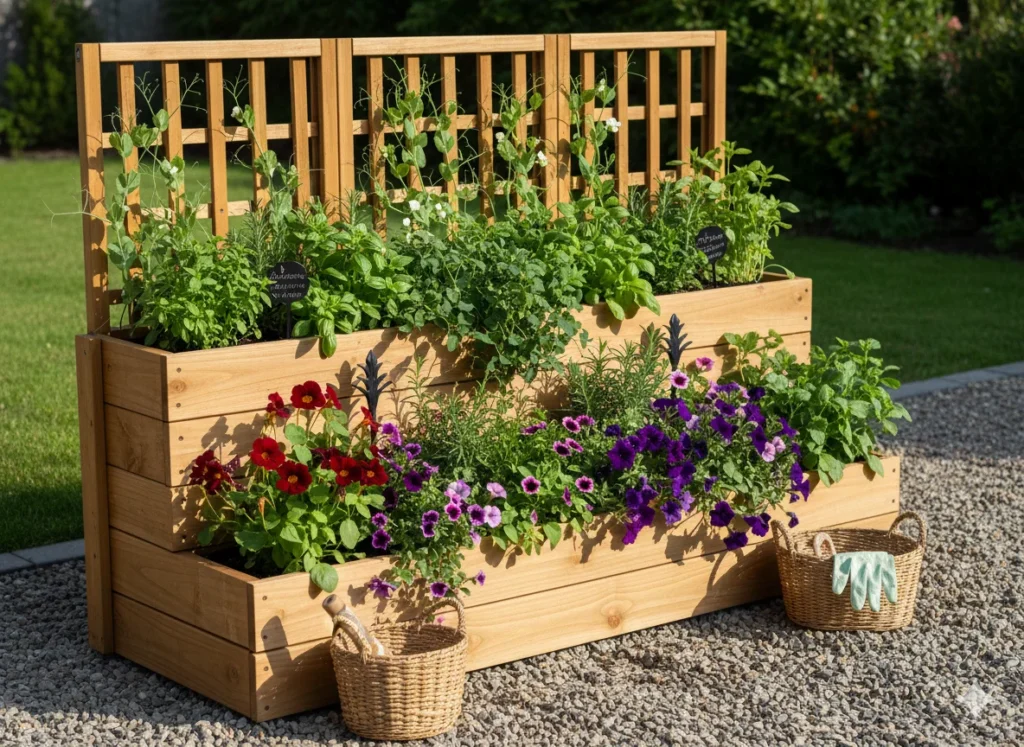
A tiered planter trellis is perfect for creating a full layered garden look in smaller outdoor spaces where every inch matters. The built-in vertical frame supports climbing plants while lower planter sections hold flowers, herbs, or vegetables in one compact design. I’ve noticed this setup works beautifully on patios and balconies because it adds greenery without taking up excessive floor space. The stacked arrangement naturally creates depth and visual interest, making compact areas feel more lush and inviting. Warm wood textures paired with overflowing plants help even small outdoor corners feel productive, cosy, and thoughtfully designed throughout the growing season.
This type of planter also makes gardening more manageable by keeping plants elevated, organized, and easier to reach during watering or harvesting. Many homeowners appreciate how the vertical design combines decorative styling with practical functionality for everyday use. Climbing peas, beans, ivy, and flowering vines all grow beautifully along the upper support frame while herbs and blooms fill the lower sections with colour and texture. Cedar remains a popular material because it blends naturally with outdoor greenery and ages gracefully over time. In my experience, tiered planter trellises instantly make compact patios feel greener, brighter, and much more personalized.
Cattle Panel Frame
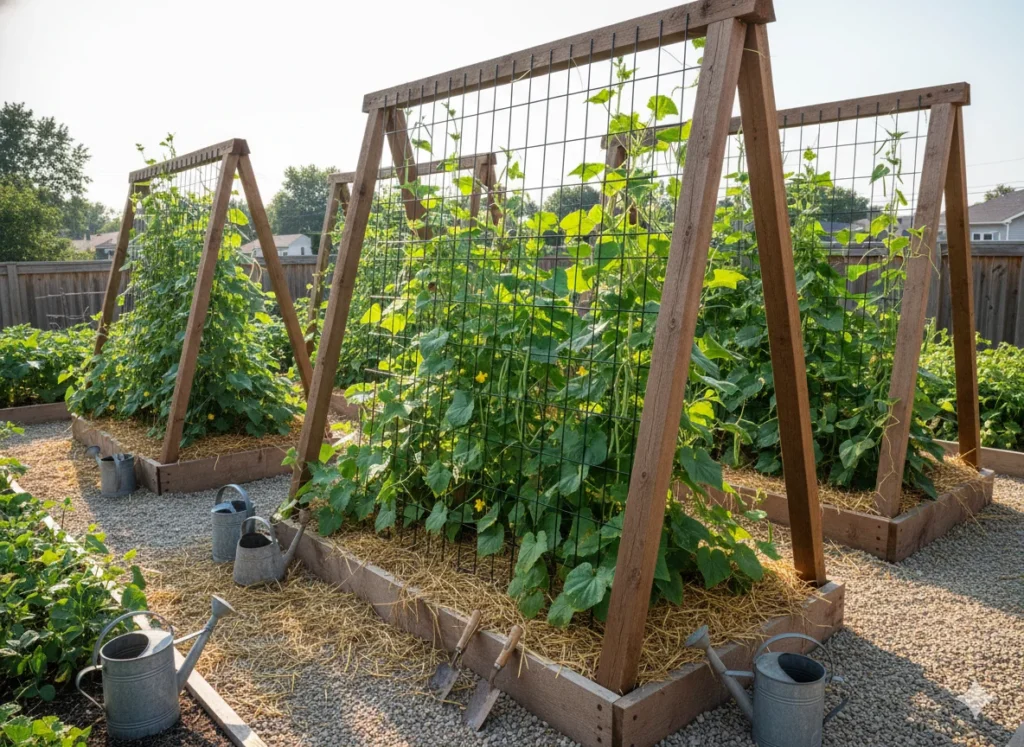
A cattle panel wood frame offers one of the strongest and most reliable support systems for fast-growing climbing vegetables. The sturdy metal grid paired with warm wood framing creates a practical structure that feels both rustic and highly functional in backyard gardens. I’ve seen this design work especially well for cucumbers, squash, beans, and melons because the reinforced support handles heavier produce without bending or collapsing. The open grid pattern also improves airflow and sunlight exposure, helping plants stay healthier throughout the growing season. Visually, the combination of natural wood and dense greenery creates a productive farmhouse-inspired garden aesthetic.
This style is especially popular among gardeners who want durable vertical growing systems that remain attractive year after year. The strong framework allows vines to spread evenly while keeping produce elevated, cleaner, and easier to harvest. Many people appreciate how organized vegetable gardens feel once climbing plants move upward instead of sprawling across pathways and planting beds. Cedar framing softens the industrial look of metal panels while blending naturally into outdoor spaces. In my experience, cattle panel trellises quickly become one of the hardest-working features in a garden because they combine strength, functionality, and visual structure so effectively.
Conclusion
The right trellis design can bring structure, beauty, and personality into any outdoor space while helping climbing plants thrive naturally. From rustic ladder frames to elegant garden arches and compact planter setups, these ideas show how simple materials can create a major visual transformation. A thoughtfully designed diy wood trellis not only supports healthier growth but also makes gardens feel more layered, inviting, and professionally styled throughout every season.
I’ve seen how small changes like these can completely transform a space. Save your favourite ideas on Pinterest, experiment with designs that fit your garden style, and share these inspiring setups with fellow plant lovers. Sometimes one simple garden project is all it takes to make an outdoor space feel truly special.