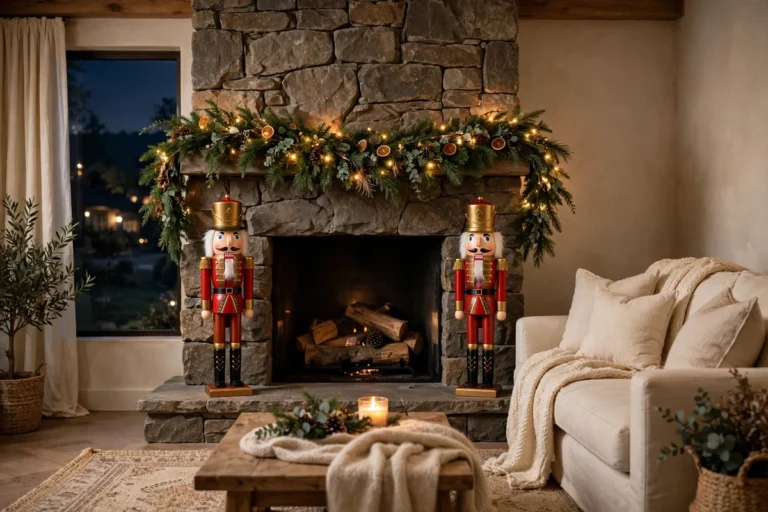
15 Magical Christmas Pathway Lights Ideas
The walkway between the sidewalk and the front door is where most Christmas curb appeal falls apart. There is a wreath on the door, lights on the eaves, and then a dark rectangle of concrete in the middle. Pathway lights fix that stretch, and once the walk is lit the whole exterior reads as intentional instead of half decorated. A glowing path also does a practical job: it helps guests see the steps and the edges of the walk after dark.
Christmas pathway lights ideas range from a classic row of warm white stakes to candy cane lanes, glowing lanterns, lit arches, and little forests of mini trees. Most of them are cheap, easy to install, and renter friendly, since they stake into the ground instead of climbing the roof. These 15 ideas show how, with spacing tips, solar versus plug in advice, and answers to the questions people ask most.
Pathway Lights Planning Guide
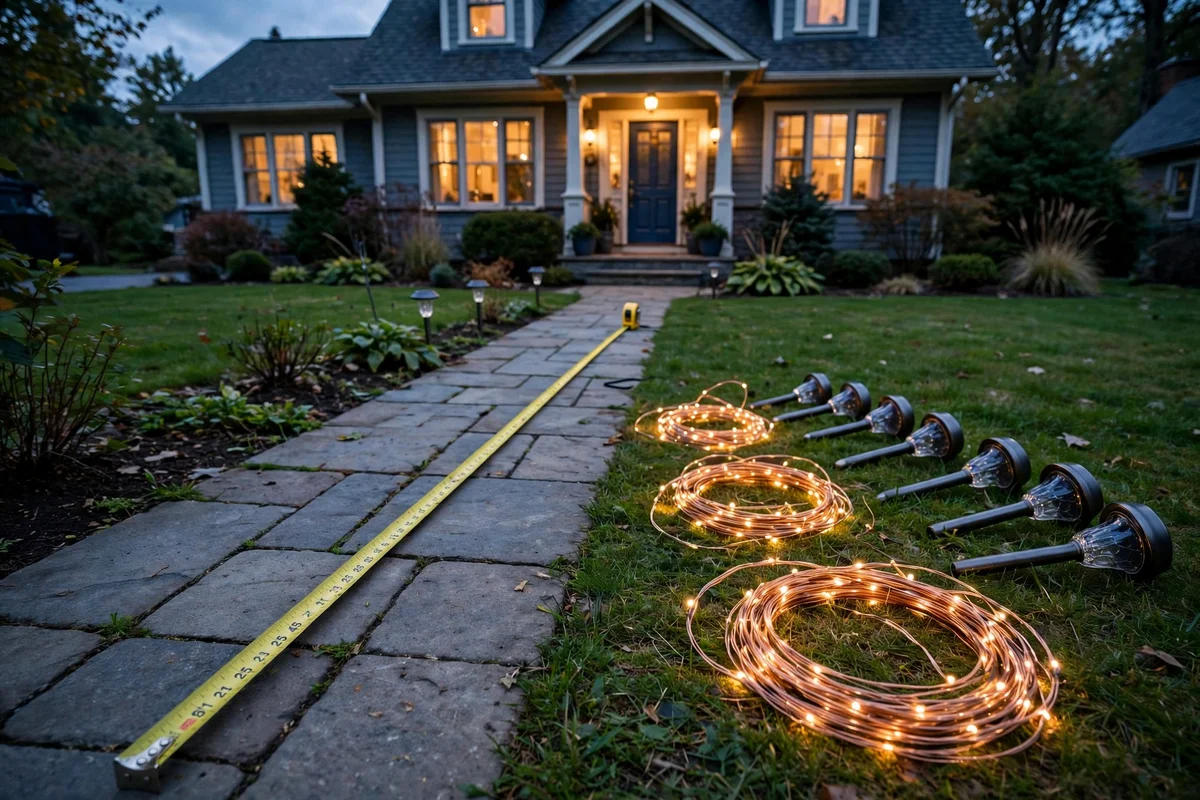
Start with the walk itself. Measure its length, count the outlets, and note which parts get sun during the day. That decides whether solar or plug in lights will work best for you.
| Option | Best for | Watch out for |
|---|---|---|
| Plug in stake lights | Long walks, bright reliable glow | Needs an outdoor outlet and a cord path |
| Solar stake lights | No outlet nearby, renters | Needs 4 hours of direct sun to charge |
| Battery lanterns | Steps, porches, short paths | Check batteries and timers weekly |
| Rope lights | Edging, curves, stone borders | Keep cords out of the walkway |
Space pathway stakes about 5 to 8 feet apart, alternating sides, and set them a step back from the edge so no one trips. Use warm white around 2700K for a golden glow that flatters stone, greenery, and snow. Pick one white and use it everywhere white appears.
1. Warm White C9 Stake Lights on Both Sides
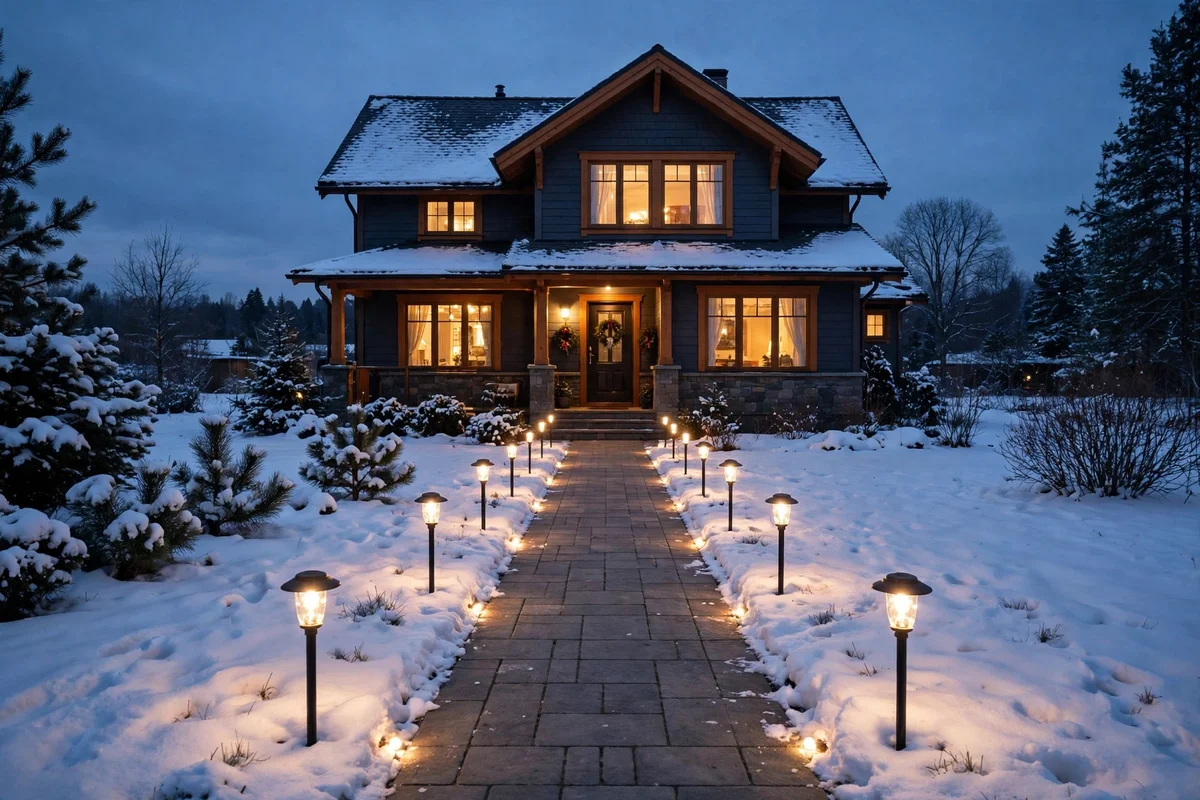
The classic look, and still the first recommendation. C9 bulbs staked into the ground on both sides of the walk give a warm, even glow that guides guests from the street to the door. The big bulbs are visible from down the block, so the path reads clearly even on a dark night.
Choose a connectable C9 pathway strand so you can string two sets end to end without a tangle of extension cords. Space the stakes 5 to 8 feet apart, alternating sides, and push them firmly into the soil or the lawn edge. Use warm white LED bulbs for a golden glow, and plug the strand into an outdoor timer so it turns on at dusk. This is the cheapest upgrade for the biggest curb appeal payoff, and it pairs with almost any roofline style.
2. Solar Pathway Lights for Tricky Outlets
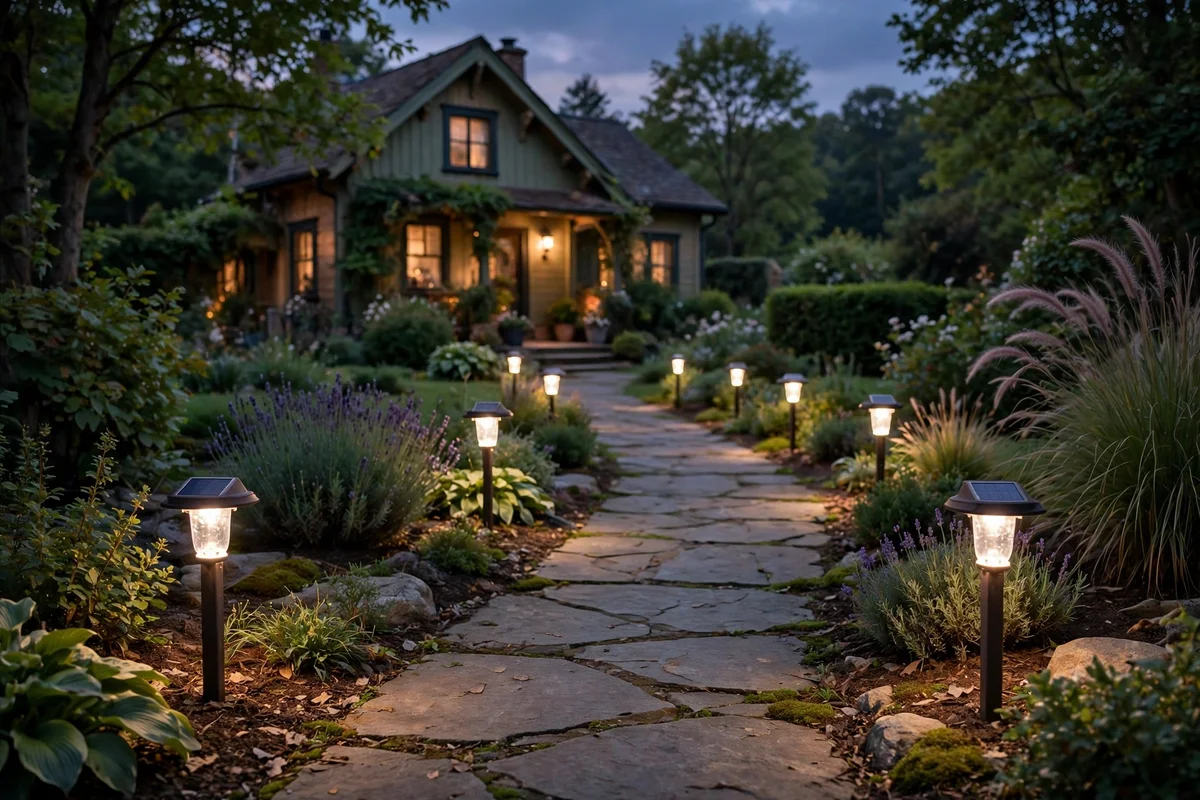
If your outlet situation is complicated, solar is the peaceful answer. Solar pathway lights need no cords, no outlet, and no electrician, so they are perfect for renters, for walks far from the house, and for homes where the front walk is nowhere near a plug. A set of warm white glass and metal solar lights gives you a soft glow with zero cables to run.
Place the solar panel where it gets at least 4 hours of direct sun during the day, and keep it clean of snow and leaves. If your front walk is fully shaded during the day, solar is not the right move, since the lights will fade early in the evening. Choose lights with a warm white LED, and set them along both sides of the walk, spaced evenly.
3. Candy Cane Lane
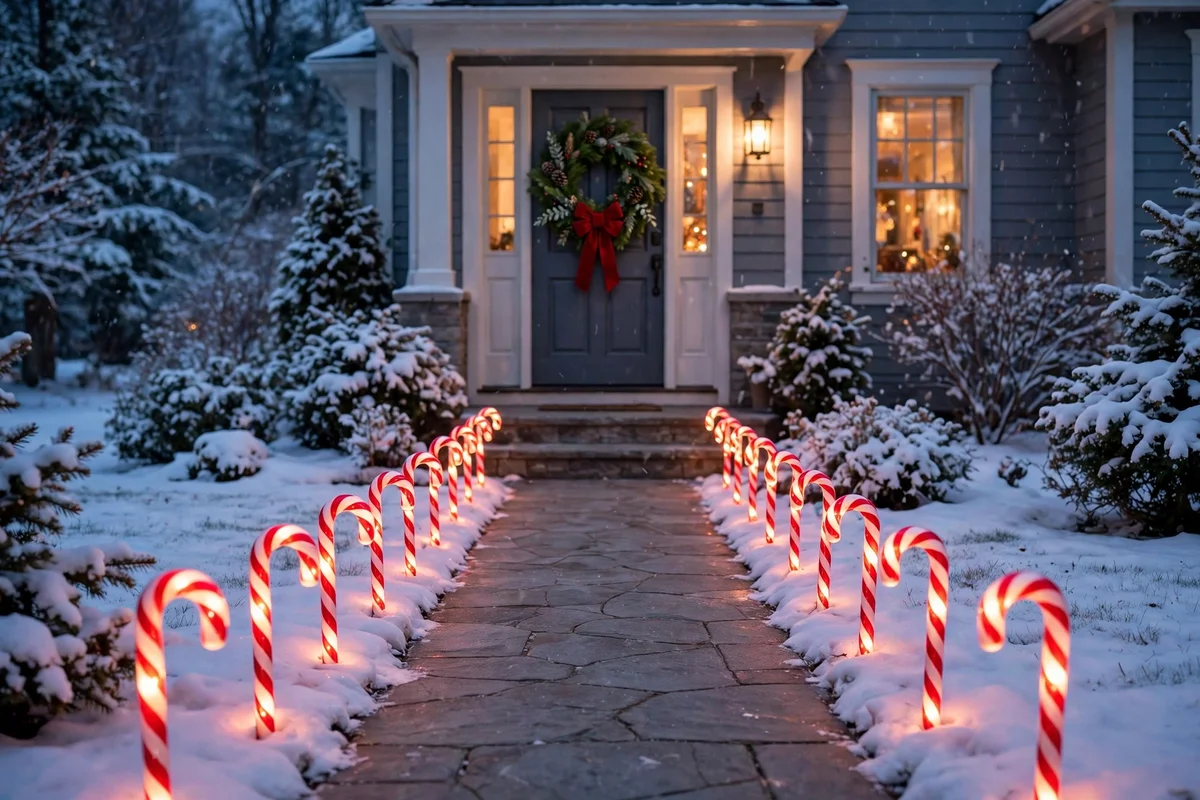
Light up candy canes staked along the front walk are pure childhood nostalgia. The red and white stripes read instantly as Christmas, and a row of them turns an ordinary walkway into a North Pole path that kids love and neighbors photograph.
Line the canes down both sides of the walk, spaced evenly, or alternate sides for a playful zigzag. Set them a step back from the edge so no one trips, and keep the spacing consistent so the lane looks neat. Plug in sets give a brighter, more reliable glow, while solar canes work well on a sunny walk. Pair the lane with a red and white wreath or a candy cane roofline to carry the theme up the house. A candy cane lane is also quick to install, usually in about 30 minutes for a standard walk.
4. Mini Tree Shaped Pathway Stakes
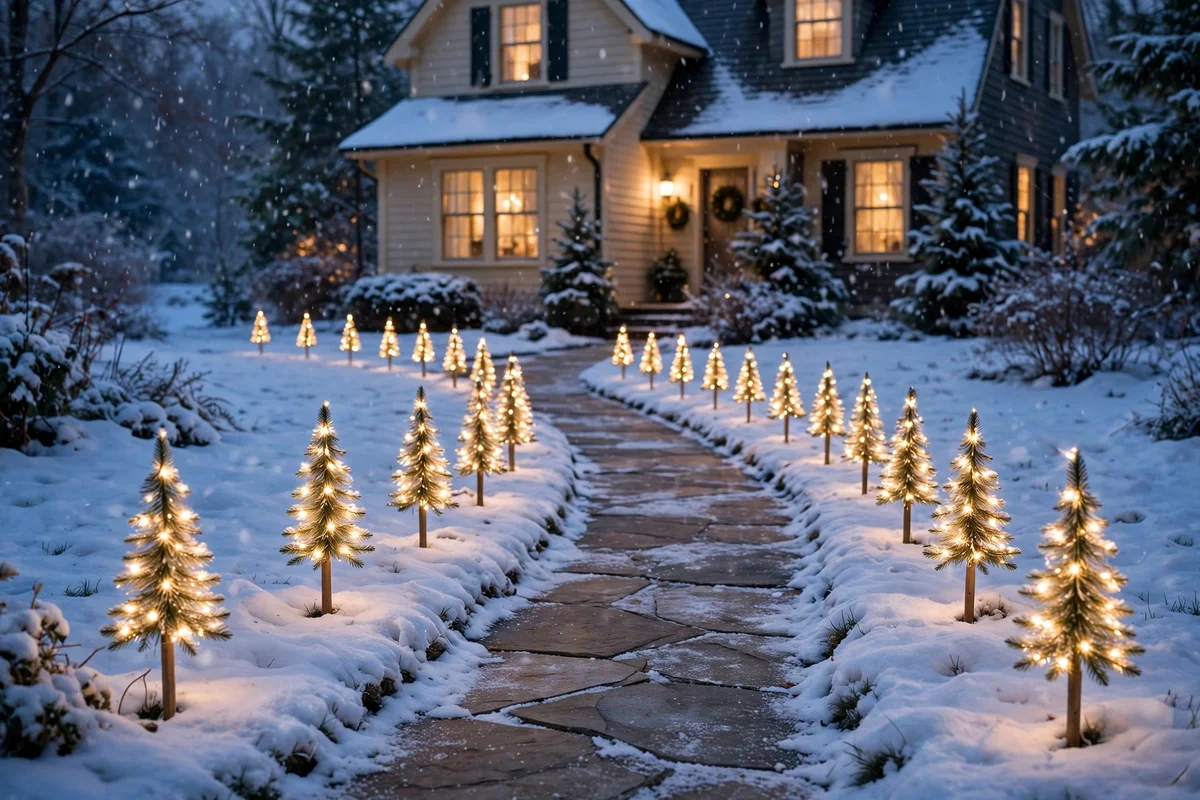
Small illuminated Christmas trees on stakes, about 12 to 18 inches tall, planted every couple of feet down the walk, make a warm white runway that feels like a tiny forest. They bring greenery and height to the path, which flat stake lights cannot do, and they look charming in daylight as well as after dark.
Space the mini trees 3 to 4 feet apart on alternating sides, and push the stakes firmly into the ground so wind does not tip them. Choose warm white trees for an elegant look, or multicolor trees for a playful one. Pre-lit mini trees are the easiest option, since the lights are already attached. Pair them with a lit spiral tree on either side of the door to frame the entry.
5. Jumbo Bulb Pathway Markers
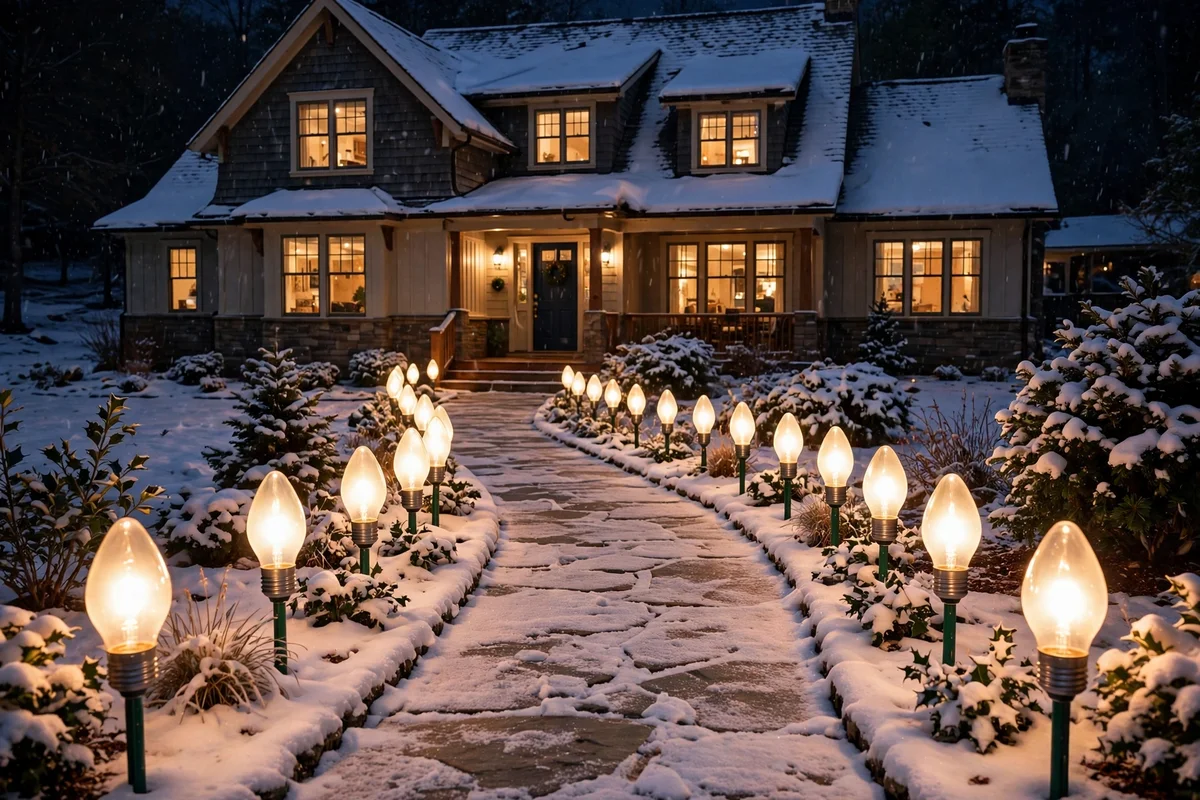
Jumbo C9 bulb stakes are oversized versions of the classic roofline bulbs, and they cast a heavy, warm glow that smaller fairy lights cannot match. They are excellent for visibility, since each bulb is big enough to see from the street, and they bring a serious dose of vintage nostalgia to the front walk.
Place jumbo bulb stakes along the flower beds or the lawn edge beside the walk, spaced 6 to 8 feet apart. Use warm white for a classic look, or multicolor for a retro feel. Because the bulbs are large, you need fewer of them than mini stakes, which keeps the display simple. Plug in sets are best here, since jumbo bulbs use more power than solar can reliably supply.
6. Snowflake Stake Lights
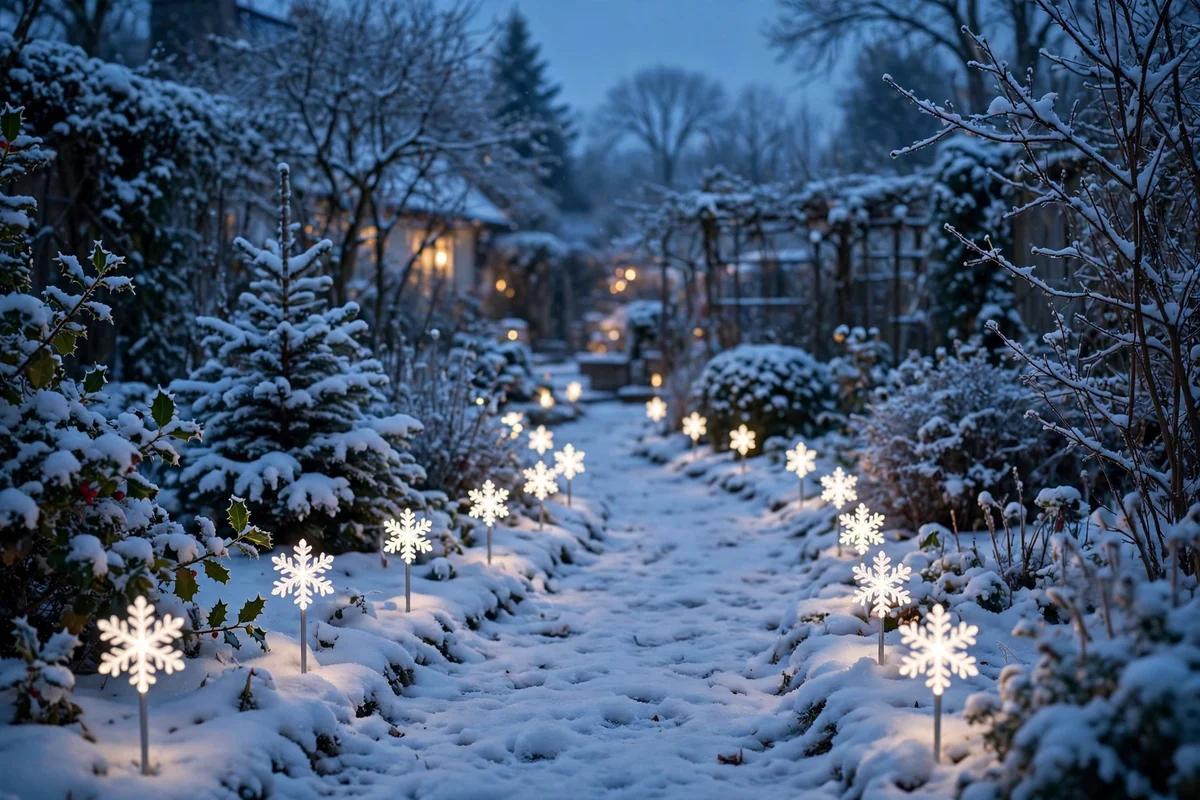
Solar snowflake stakes are one of the most subtle pathway ideas, and they suit homes that want a wintry feel without a lot of color. The snowflake shapes glow softly in white or cool white, and they look like frozen stars floating just above the lawn. They are especially pretty against snow, where the shapes stand out against the white ground.
Alternate snowflake stakes with warm white stakes along the walk for a gentle mix, or use snowflakes alone for a clean winter look. Space them 4 to 6 feet apart, and choose a size that reads from the street: 8 to 12 inches across works well. Solar snowflakes need sun during the day, so place them where the panel is not shaded by the house.
7. Lanterns Lining the Path

Lanterns lining the path edges add a low, flickering glow that guides footsteps safely through the snow. They give a garden path an old world, elegant feel, especially when each one holds a warm white LED candle. Unlike stake lights, lanterns have weight and presence, so they feel like part of the garden rather than a temporary decoration.
Place one lantern every 3 feet on alternating sides, or group them in twos and threes at the start of the path and beside the steps. Use battery operated pillar candles inside so wind and wet snow cannot blow them out, and choose candles with built in timers so they glow every evening without you thinking about it. There is no open flame to worry about with kids, pets, or wind.
8. Lighted Archway Over the Path
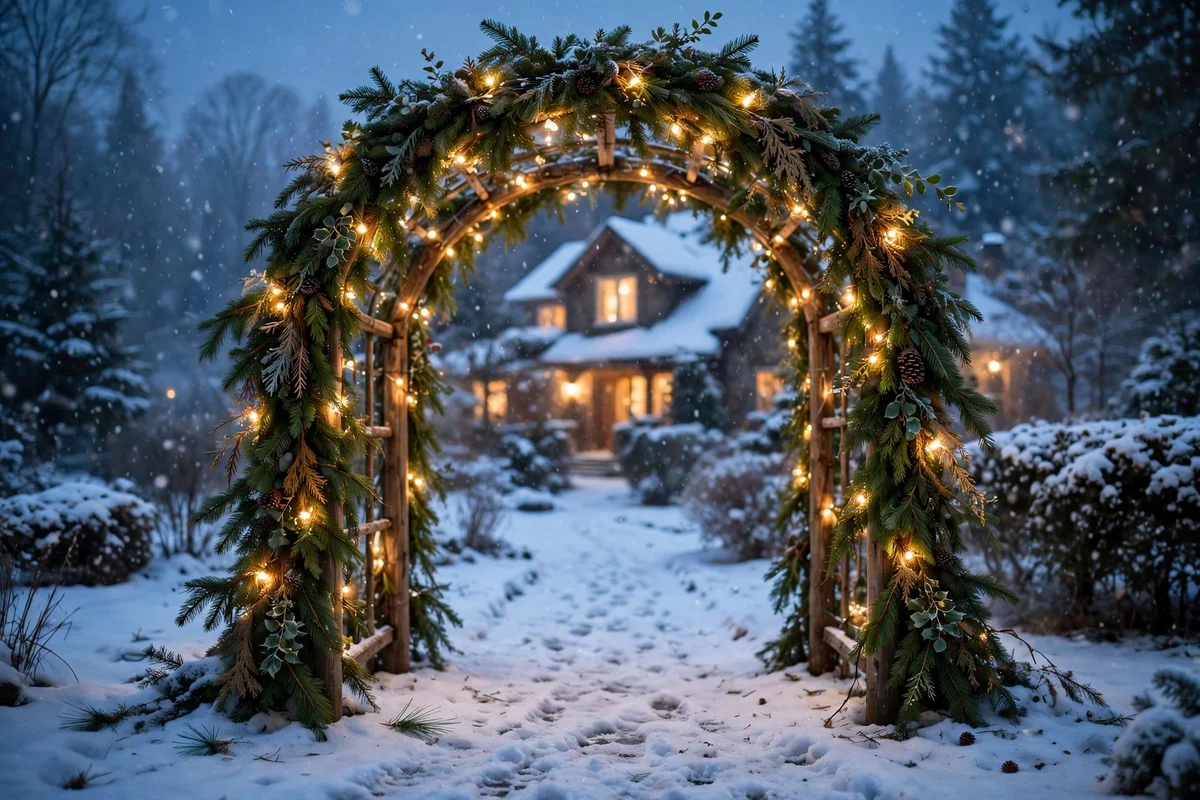
A garden arch wrapped in warm white lights turns a simple path into a moment of magic, especially where the walkway passes between two beds or at the start of the front walk. Walking under a glowing arch feels like entering a storybook, and it gives your display a focal point that stake lights alone cannot provide.
Build the arch from a sturdy metal frame at least 7 feet high so tall guests pass comfortably beneath it, and wrap it with evergreen garland. Weave a warm white light strand through the garland, and add a few pinecones or a bow at the top. Anchor the frame firmly in the ground so wind does not tip it, and keep the lights clear of the walking space.
9. Wrapped Tree Trunks Along the Path
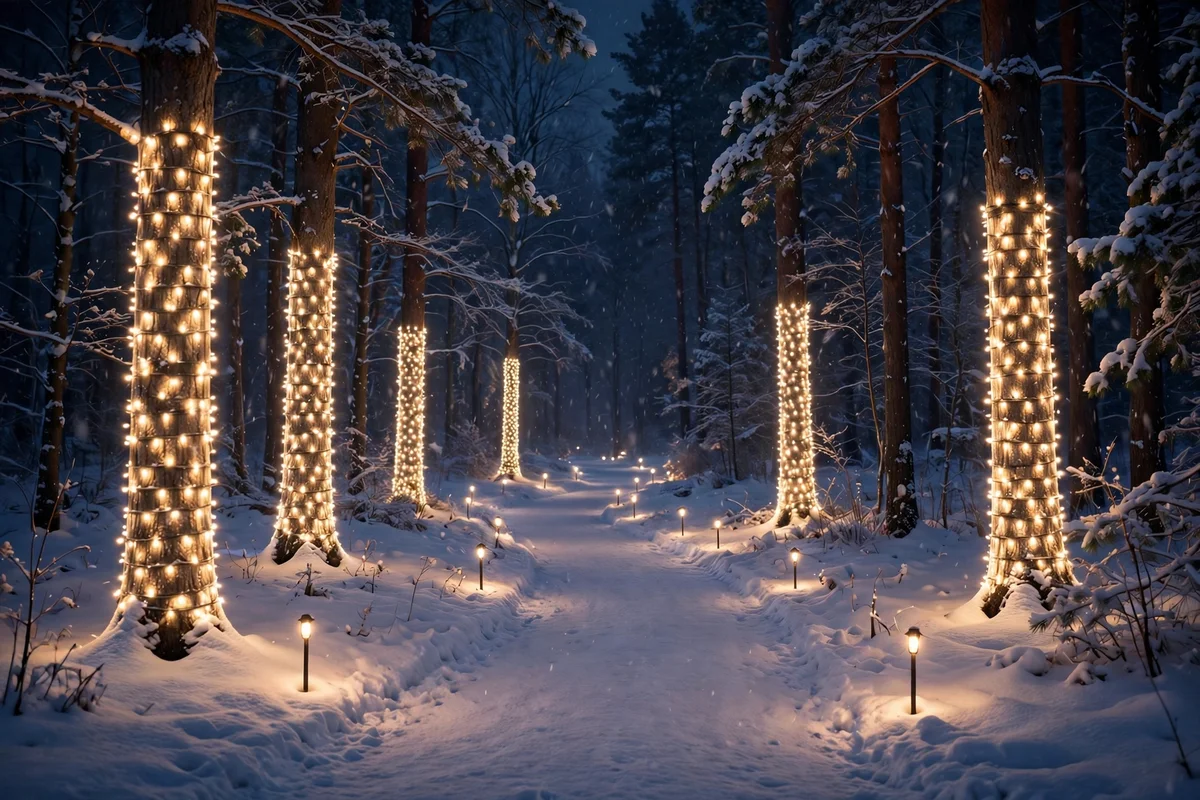
Wrapping the trunks of trees along the walk in warm white lights gives bare winter trees a soft, golden glow from the ground up. The lit trunks become glowing pillars that guide the eye down the path, and they add height to a display that otherwise sits low to the ground. This is the layer that makes a pathway feel magical rather than just lit.
Wind the lights in a tight spiral with gaps of about 3 inches, using one 100 light strand per 6 feet of trunk height, and start at the base so the cord stays hidden. Use outdoor rated warm white lights, and secure the top of the strand with a zip tie so it does not slide down. Wrap the trunk only, or continue a little way up the lower branches for a fuller glow.
10. Rope Lights Along Stone Edging
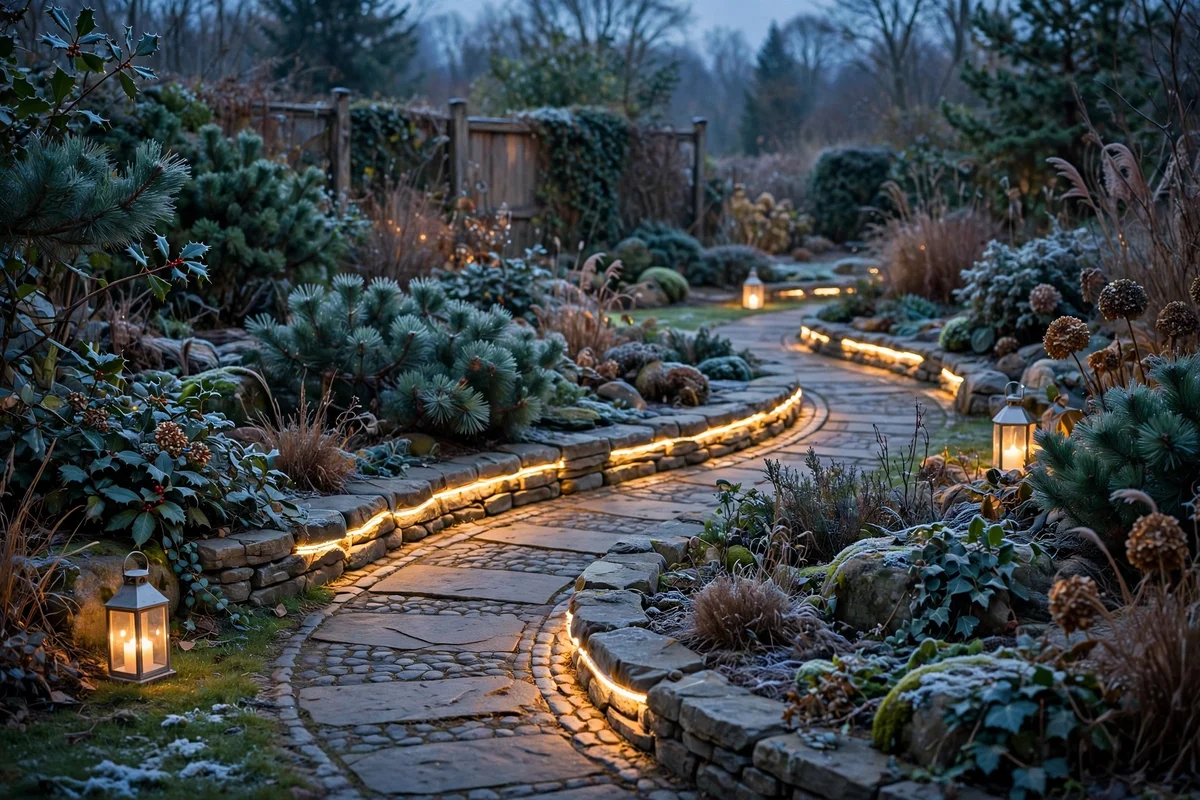
Stone edging along the path looks beautiful when a slim rope light or a row of small warm white lights is tucked just behind it. The light washes across the stones and the edge of the walk, so the path itself glows without any stakes or poles. It is a subtle, elegant idea that suits a garden path better than a straight concrete walk.
Lay the rope light along the back of the edging stones, securing it with small landscape pins every foot or so. Choose warm white rope light rated for outdoor use, and keep the cord out of the walkway where feet could catch it. Rope lights also follow curves well, which makes them ideal for a winding garden path.
11. Peppermint Lollipop Stakes
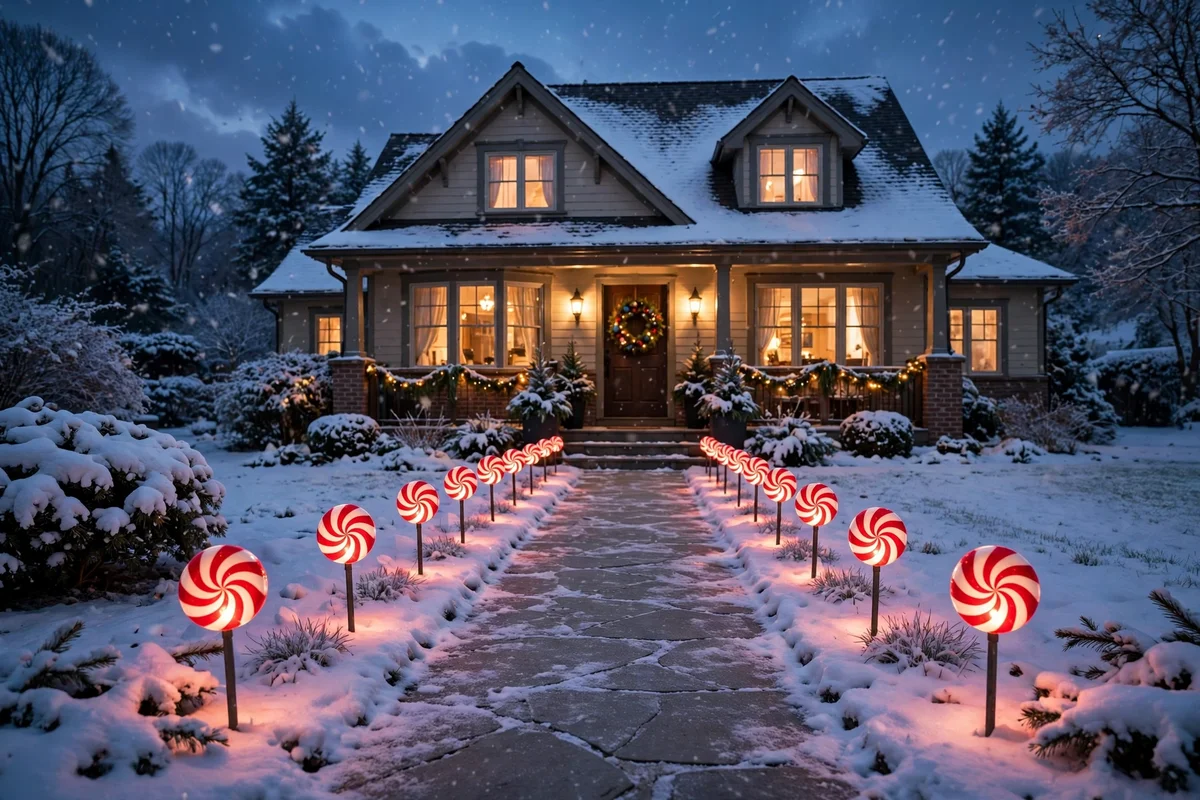
Peppermint lollipop pathway lights are the sweetest stakes you can buy. Round red and white swirl discs on short stakes line the walk like candy in a shop window, and they make kids smile the moment they see them. They are playful, colorful, and perfect for a family home or a house with young children.
Place the lollipops along both sides of the walk, spaced 3 to 4 feet apart, and alternate them with warm white stakes so the red and white does not overwhelm the path. Plug in sets give the brightest glow, while solar lollipops work on a sunny walk. Keep them a step back from the edge so no one trips, and pair them with candy cane stakes or a gingerbread wreath for a full candy theme.
12. Solar Starburst Fireworks Stakes
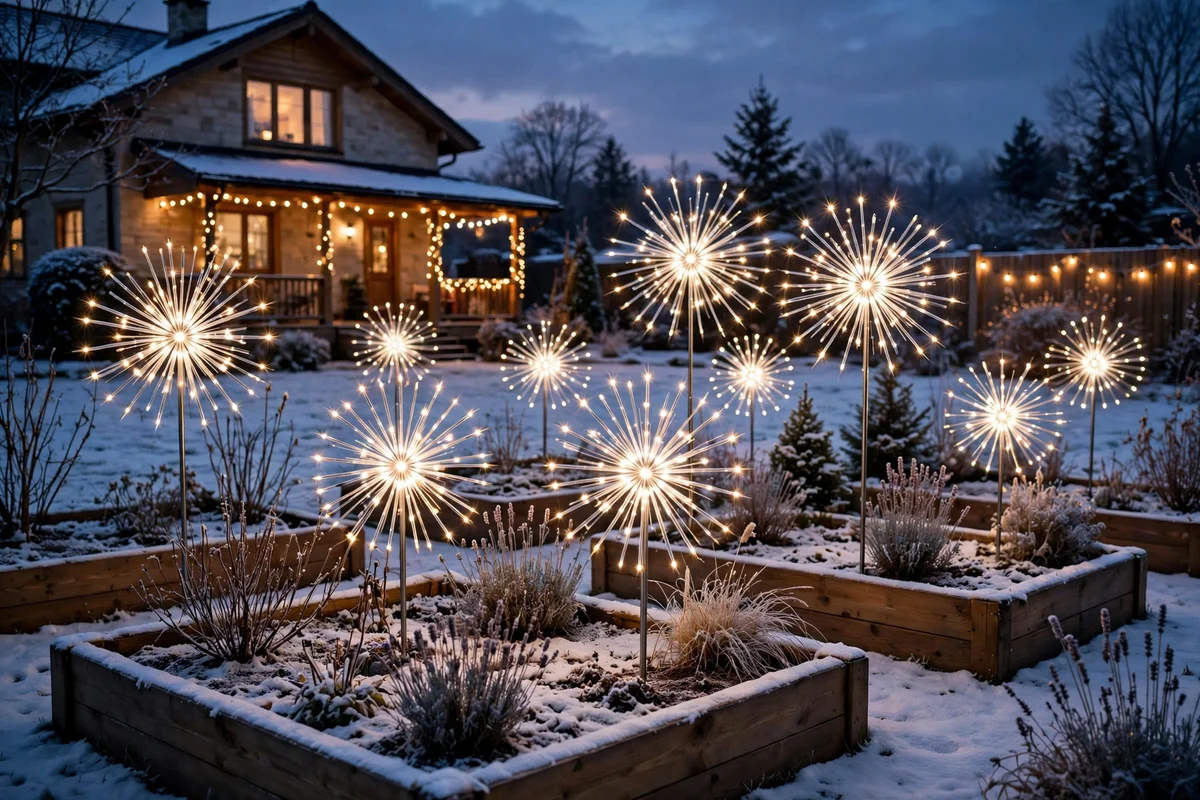
Solar starburst stakes explode with tiny warm LED lights, looking like frozen fireworks, and they are a game changer for renters who cannot run cords across a sidewalk. Each stake has thin wire arms tipped with lights, so it glows like a sparkler frozen in the lawn. They add a delicate, airy texture that solid stake lights cannot match.
Scatter starburst stakes in garden beds along the path, or place one every 6 feet alternating sides, and let them mix with lower stake lights. They need sun during the day, so keep the panel clear of snow and shade. Choose warm white for an elegant look, and avoid mixing them with multicolor stakes on the same stretch, since the two styles compete.
13. Lighted Birch Trees in Planters
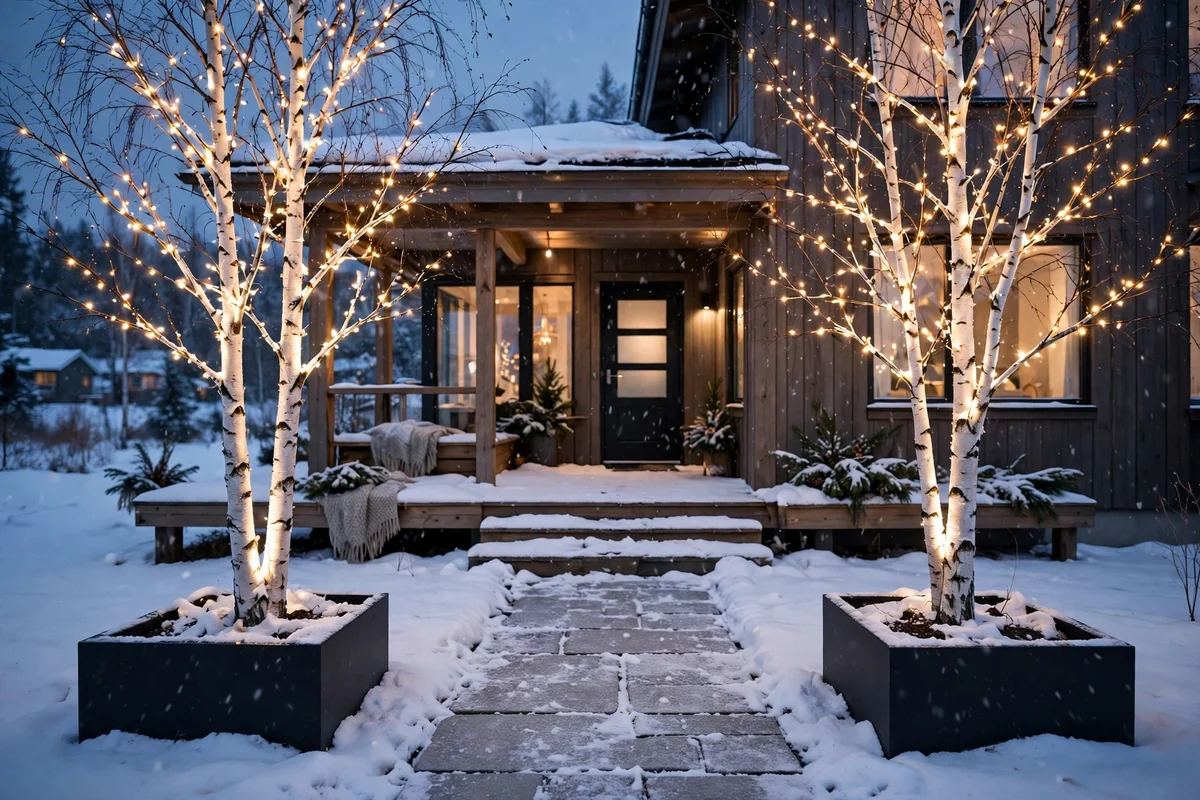
Lighted birch trees in planters bring a Scandinavian touch to a snowy pathway, their white bark glowing softly against the snow. The slim white stems look elegant beside a dark walkway, and the planters make them easy to move and store. They are the most stylish way to add height to a path without planting anything.
Choose birch stems 3 to 5 feet tall in sturdy planters, and set one on each side of the start of the path, or one beside each step. Pre-lit birch trees are the easiest option, with warm white lights already wrapped around the stems. Weigh the planters down with stones so wind does not tip them, and keep them clear of the walking space.
14. Character Stakes for Families
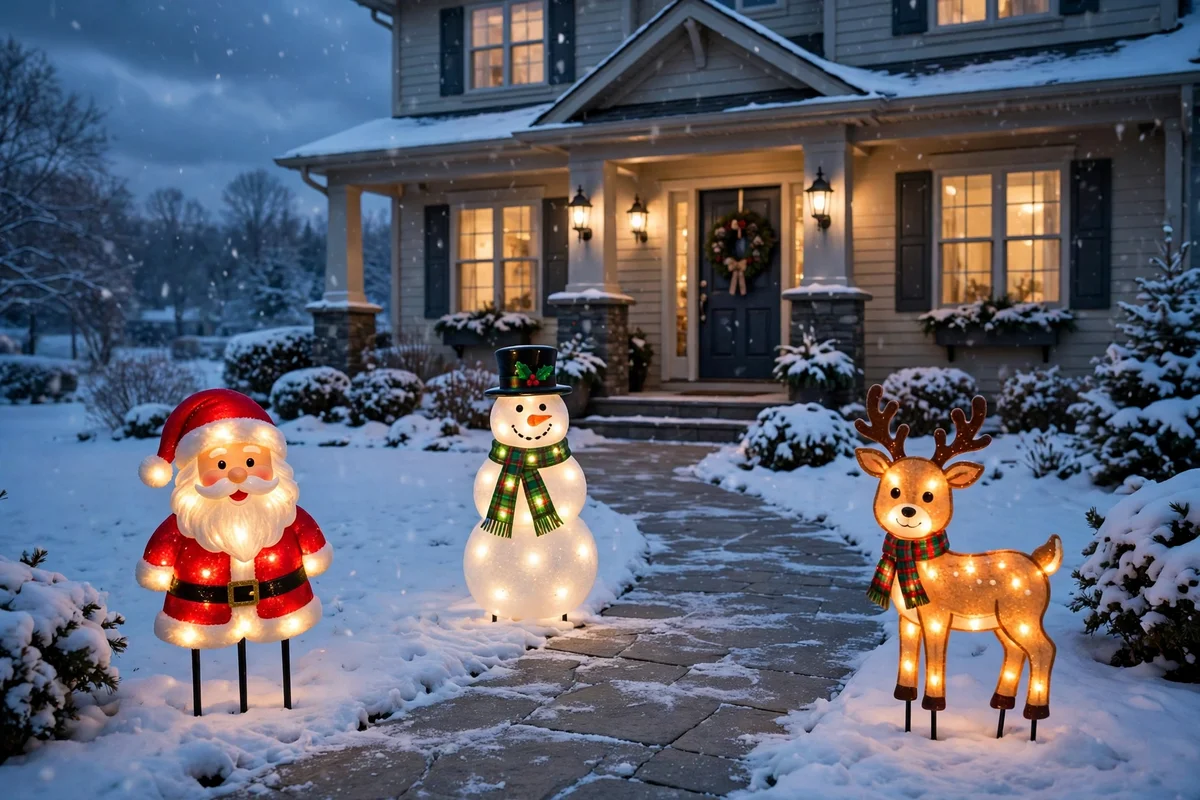
Whimsical character stakes, such as Santa, a snowman, or a reindeer, act as greeters for guests walking up the path. These acrylic or blow mold figures glow from within, and they are highly favored by families with young children, who love spotting each character on the way to the door. They turn the walk into a little story.
Place 2 or 3 characters along the path, spaced well apart so each one gets its moment, rather than crowding them together. A Santa near the door, a snowman halfway along the walk, and a reindeer near the street gives the path a beginning, a middle, and an end. Choose characters in the same style and size so they look like a set, and keep the rest of the pathway lights simple in warm white so the characters stand out.
15. Driveway Forest of Mini Light Trees
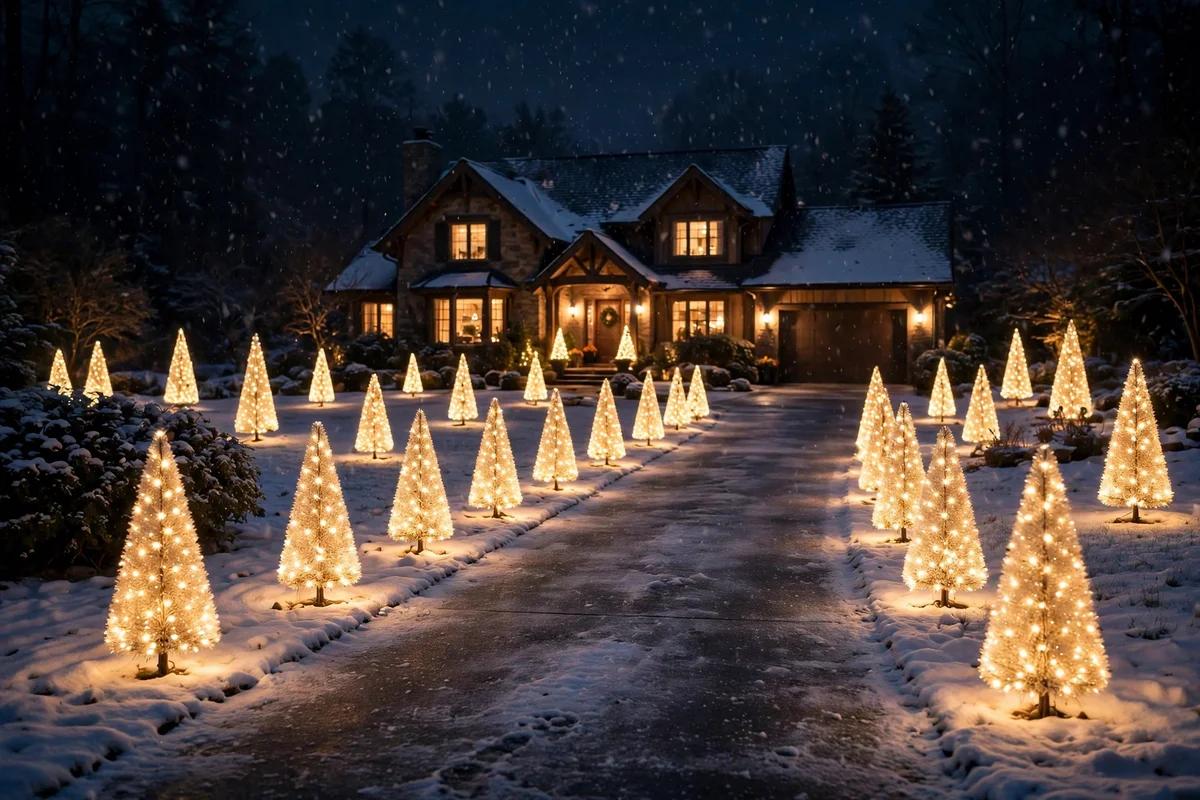
Cone shaped light trees lined along the driveway look like a little enchanted forest, and they are the most dramatic pathway idea on this list. A row of glowing cones turns a plain driveway into a winter woodland, and it makes the edge of the drive visible on dark or snowy nights. It is the idea to choose if you want neighbors to slow down and look.
Use cone trees 2 to 3 feet tall, spaced 4 to 6 feet apart along both sides of the driveway, or along one side if the drive is narrow. Choose warm white trees for an elegant forest, or mix in a few green lit trees for variety. Plug in sets with a single timer are easiest for a long run, since solar trees may fade before the evening ends.
Pathway Lighting Tips for a Polished Look
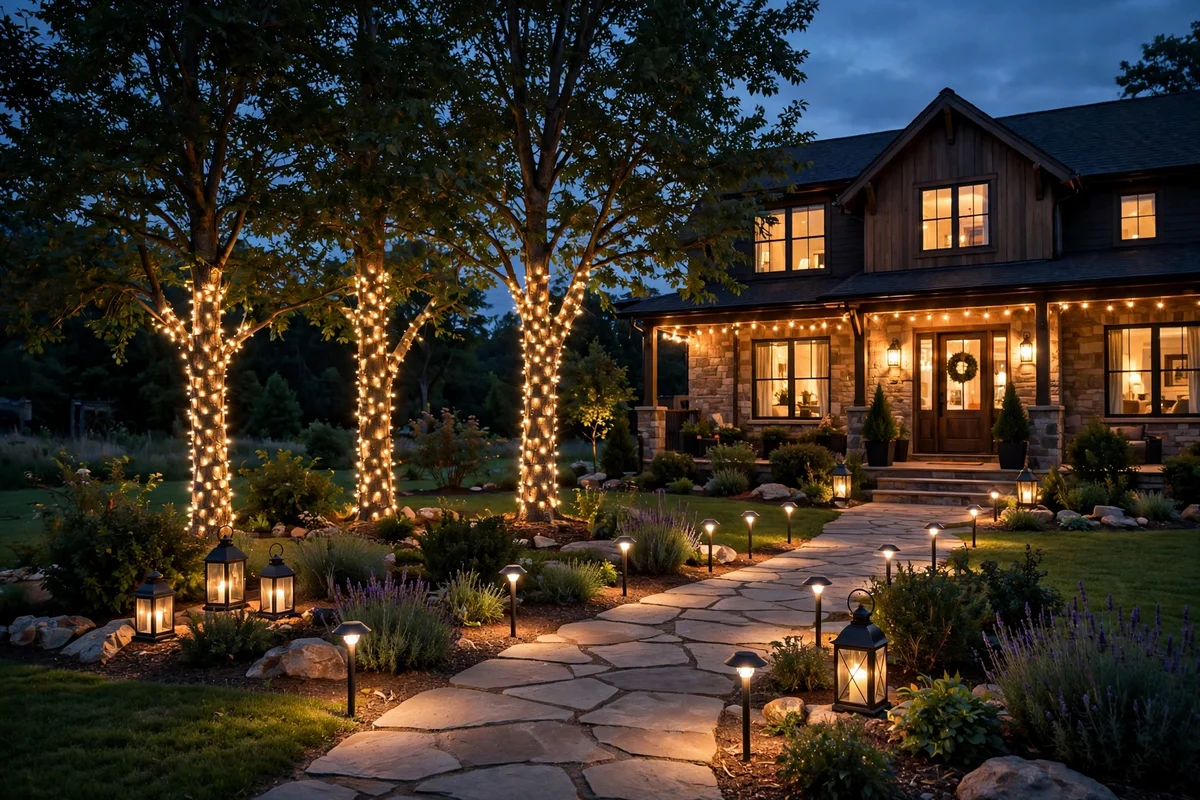
Layer light at different heights: low stakes along the edges, lanterns or planters at knee height, wrapped trunks above, and a lit arch overhead if you have one. That layering is what makes a pathway feel magical instead of flat. Pick one white, warm white for most homes, and use it everywhere white appears, since mixed whites clash at dusk.
Keep cords out of the walking space, and run them along the lawn edge or under a cord cover. Use an outdoor timer so the lights turn on at dusk and off at bedtime, and test every strand on the ground before you install it. Step back to the street when you finish, since the display looks different from 30 feet away than it does from 3 feet away.
Frequently Asked Questions
How far apart should Christmas pathway lights be?
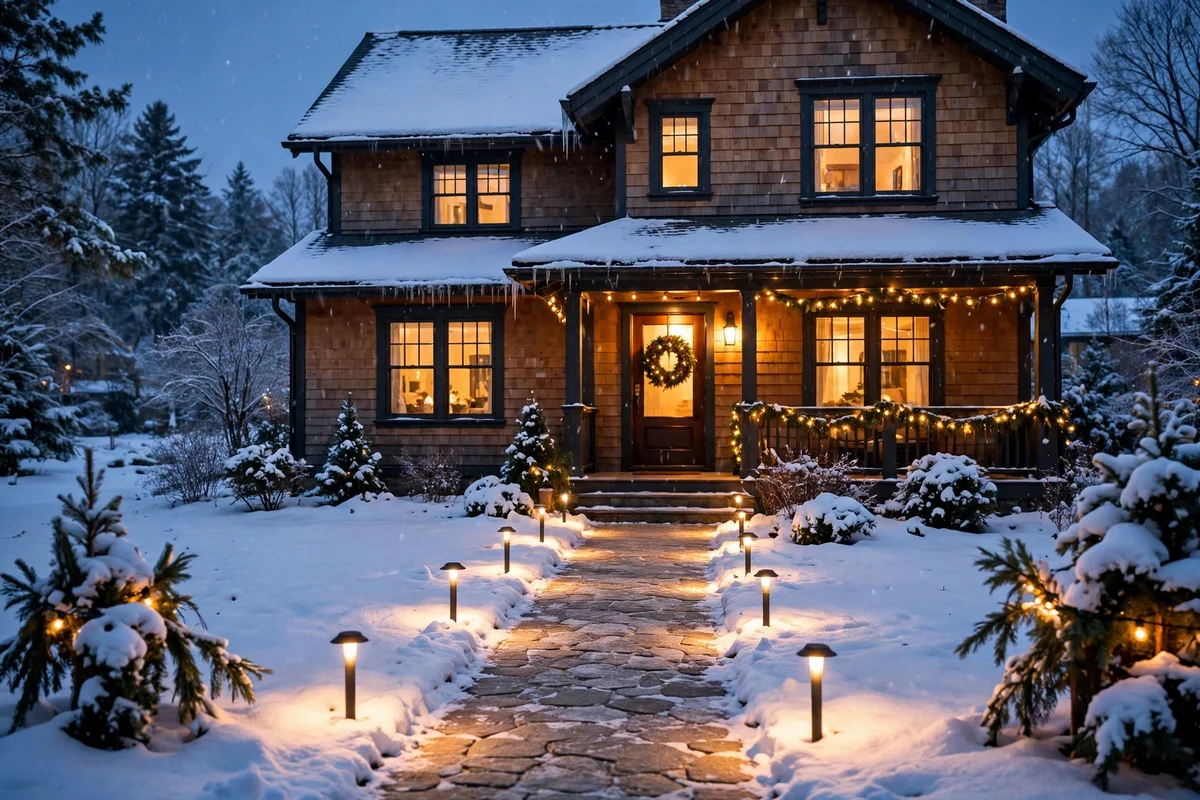
Space pathway stakes about 5 to 8 feet apart, alternating sides, and set them a step back from the edge so no one trips. Smaller stakes, such as mini trees or lollipops, can sit 3 to 4 feet apart. Step back to the street to check the spacing, since lights that look close up can look sparse from far away.
Are solar Christmas pathway lights bright enough?
Solar lights are bright enough for a short walk that gets 4 hours of direct sun during the day. They fade earlier on cloudy days or in shade, so plug in lights are better for long walks, for jumbo bulbs, and for displays you want glowing all evening. Choose solar lights with a warm white LED for the softest glow.
How do I power pathway lights without an outdoor outlet?
Use solar or battery lights, which need no outlet at all. For plug in lights, run an outdoor rated extension cord from the nearest outlet along the lawn edge, and keep connections off the ground. A battery pack with a timer works well for lanterns and short strands on a porch or steps.
Can I leave pathway lights out in snow and rain?
Yes, if they are rated for outdoor use. Look for outdoor rated lights with a waterproof rating of IP44 or higher for snow and melting ice. Keep plugs and connections off the ground and out of puddles, and bring battery lights inside during heavy storms.
How many pathway lights do I need?
Count the length of your walk in feet and divide by 6 for a typical spacing, then double it if you want lights on both sides. A 30 foot walk needs about 10 stakes, 5 per side. Buy one extra strand or set in case a light fails mid season.
How do I keep pathway lights from tipping over?
Push stakes firmly into the soil, not just the snow, and use longer stakes in soft ground. Weigh down planters and lanterns with stones, and anchor character figures and arches with ground stakes.