
13 Urban Garden Balcony Ideas for Small Apartments
A bare balcony is one of the most underutilized spaces in any apartment. Most city dwellers walk past it daily without a second thought, treating it as little more than a place to store unused furniture or air-dry laundry. But that overlooked rectangle of outdoor space holds extraordinary potential. With the right approach, even the smallest balcony can become a thriving, beautiful urban garden that produces fresh herbs, vegetables, and flowers while creating a private green sanctuary above the noise of city streets.
Urban garden balcony ideas have exploded in popularity across the United States over the past several years as more Americans move into cities and apartment living becomes the norm for millions of households. The desire to connect with nature, grow food, and create beautiful outdoor spaces doesn’t disappear when you move into a high-rise. It simply requires more creativity and intention. This article delivers 13 practical, beautiful, and achievable urban garden balcony ideas specifically designed for small apartment spaces where every square foot counts.
Build a Vertical Garden Wall
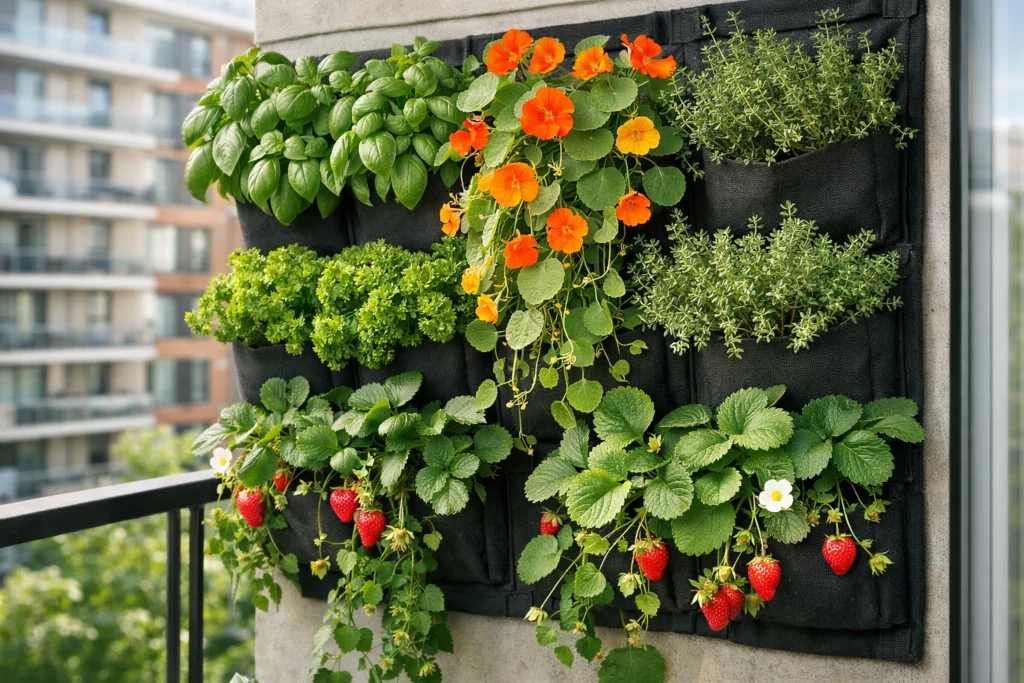
The single most transformative urban garden balcony idea for a small space is thinking vertically rather than horizontally. A vertical garden wall uses your balcony’s wall space to grow plants in stacked or modular planter pockets, dramatically increasing your growing capacity without consuming any precious floor area. Wall-mounted planter systems are widely available at garden centers and online retailers like Amazon and Home Depot, ranging from simple pocket felt systems to sophisticated modular plastic or powder-coated steel frames.
Vertical gardens work exceptionally well for growing herbs, strawberries, lettuces, and small flowering plants. A single 4-foot by 4-foot vertical planter panel can hold 12 to 20 individual plants in a footprint that takes up zero floor space. For renters concerned about wall damage, freestanding vertical planter towers provide the same visual impact without any wall attachment. The lush green wall created by a thriving vertical garden also functions as a natural privacy screen and a sound buffer from neighboring balconies.
Install Railing Planters for Herbs and Flowers
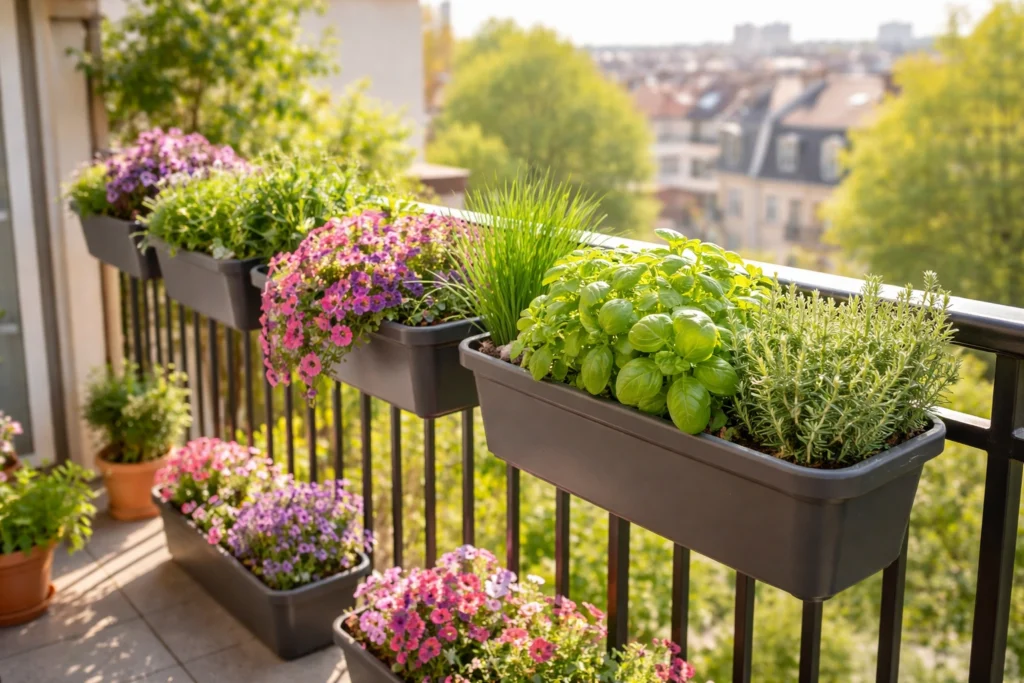
Railing planters attach directly to your balcony railing and transform that structural element from a safety barrier into a productive garden row. These clever containers straddle the railing and hang securely in place, using space that would otherwise be completely wasted. A standard 6-foot balcony railing can accommodate four to six railing planters, providing substantial growing space for herbs, trailing flowers, and compact vegetables without touching the floor at all.
Balcony railing planters made from powder-coated steel, wrought iron, or UV-resistant plastic are all widely available and designed to withstand outdoor weather conditions year-round. For apartment renters, these planters attach without any permanent modification to the railing, making them ideal for lease-compliant gardening. Fill them with a rotation of seasonal plants to keep your balcony looking beautiful throughout every season of the year.
Create a Container Vegetable Garden
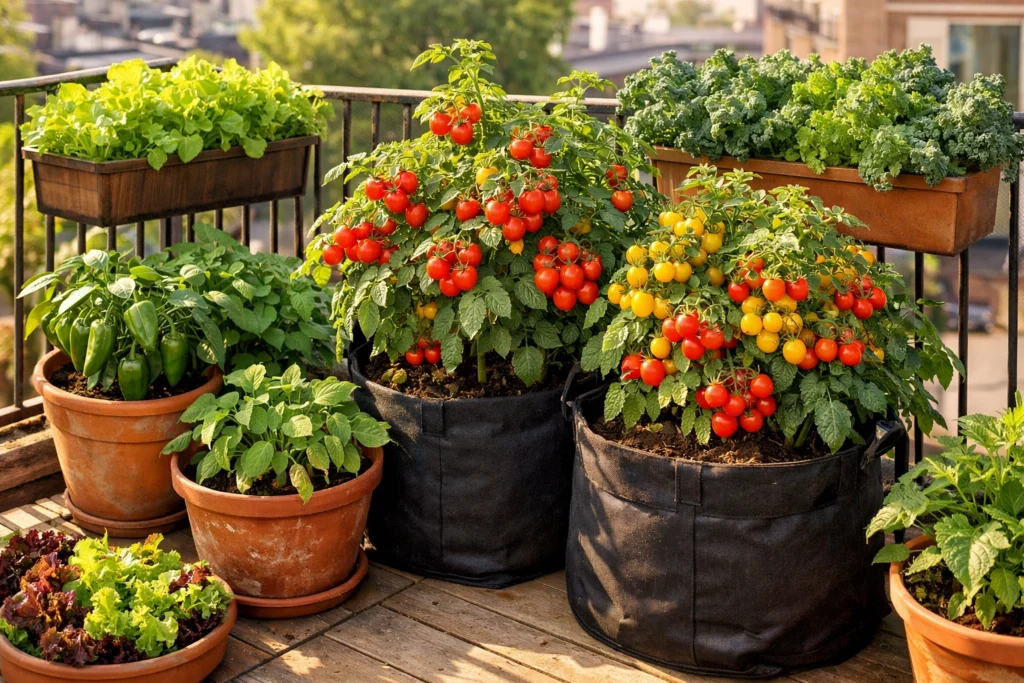
Growing vegetables in containers on a balcony is more productive than most people realize. Container vegetable gardens have been feeding urban apartment dwellers for generations and modern compact vegetable varieties bred specifically for container growing have made this approach more accessible than ever before. Tomatoes, peppers, beans, cucumbers, zucchini, lettuce, kale, and spinach all grow successfully in containers given adequate sunlight, water, and quality potting mix.
you may also like this:12 Rustic Farmhouse Garden Decor Ideas for Cozy Charm
The key to a successful container vegetable garden is choosing the right pot size for each vegetable. Tomatoes need at least a 5-gallon container while lettuce and herbs thrive in much smaller 1 to 2-gallon pots. Self-watering containers with built-in water reservoirs are particularly valuable for busy apartment gardeners who can’t water daily, as they maintain consistent soil moisture and dramatically reduce plant stress during hot summer periods.
Design a Dedicated Balcony Herb Garden
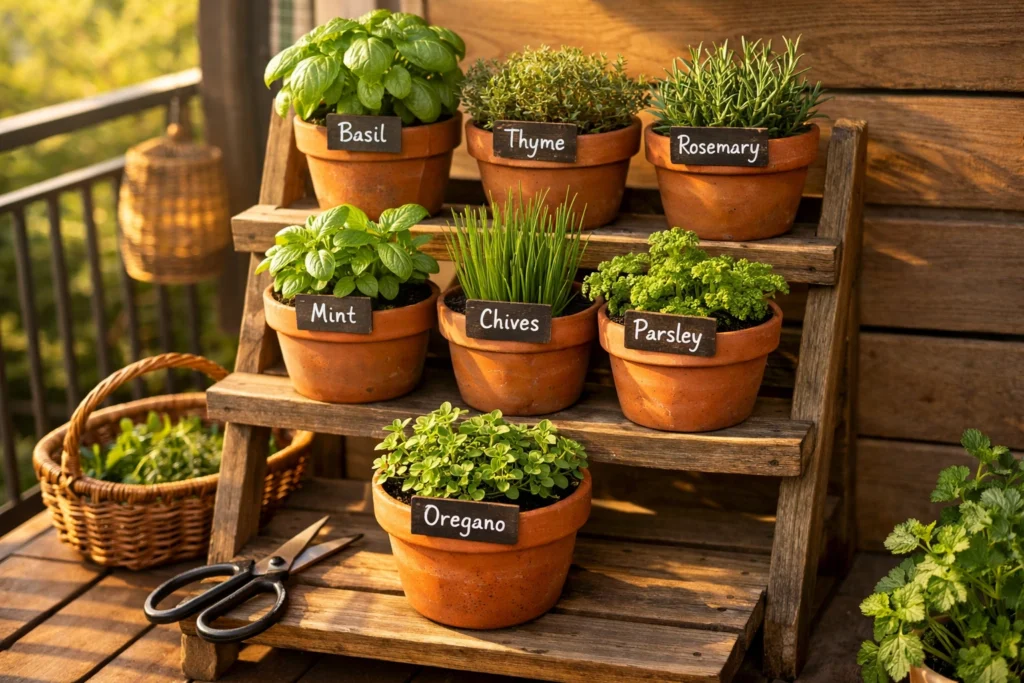
A dedicated herb garden on your balcony puts fresh culinary herbs within arm’s reach of your kitchen at all times. The convenience factor alone justifies the small investment of space and effort required to maintain a balcony herb collection. Fresh basil for pasta, snipped chives for eggs, rosemary for roasted vegetables, and mint for drinks and desserts all become daily pleasures rather than expensive grocery store purchases when you grow your own herbs steps from your kitchen door.
Arranging your herb garden in a tiered planter stand maximizes the number of herb varieties you can grow within a compact footprint. A three-tiered planter stand occupying roughly 2 square feet of floor space can comfortably house eight to twelve individual herb plants, giving you a genuinely impressive and productive herb collection in a space smaller than most kitchen cutting boards. Group herbs with similar water requirements together to simplify care and prevent overwatering or underwatering stress.
Use Hanging Planters for Trailing Plants
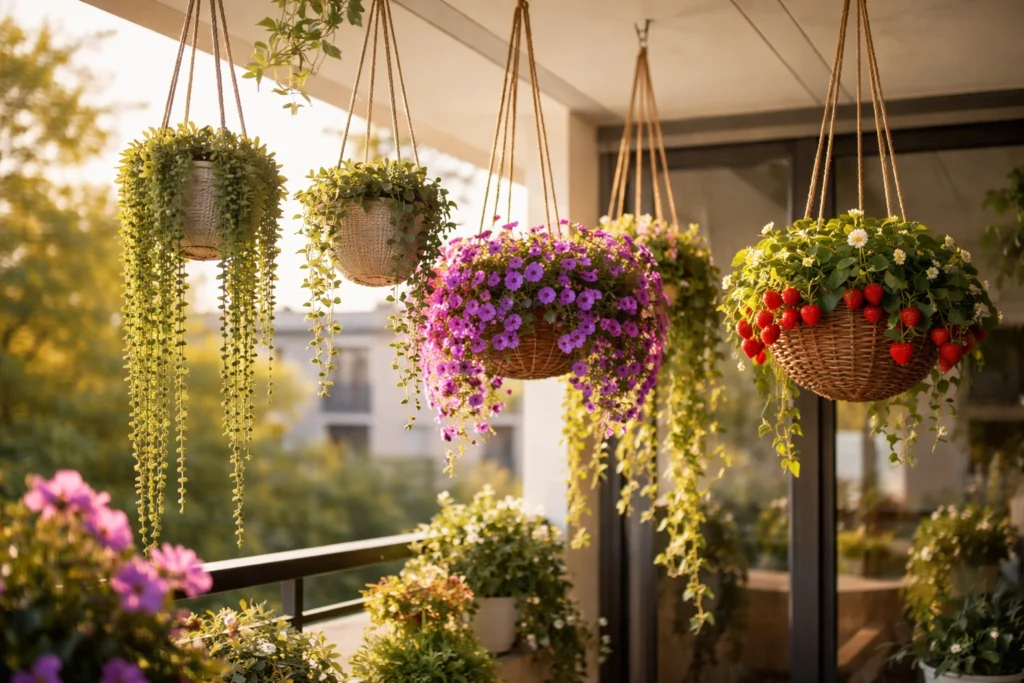
Hanging planters suspended from your balcony ceiling, overhead beam, or pergola structure bring plants up into the vertical dimension of your outdoor space, creating layered visual interest and freeing floor space simultaneously. Trailing plants are the natural choice for hanging planters as their cascading growth habit displays beautifully from an elevated position. Trailing petunias, bacopa, lobelia, fuchsia, string of pearls succulents, and cherry tomatoes all perform magnificently in hanging basket arrangements.
For a productive approach to hanging planters, consider hanging strawberry baskets that produce fruit throughout the summer while creating beautiful cascading foliage. Strawberries are among the most rewarding hanging planter crops because they require minimal care, produce reliably throughout the season, and provide both ornamental and edible value from a single plant. Ensure your hanging planter hooks are rated for the weight of wet soil plus the container weight as a saturated large hanging basket can weigh 15 to 20 pounds or more.
Build Raised Planter Boxes
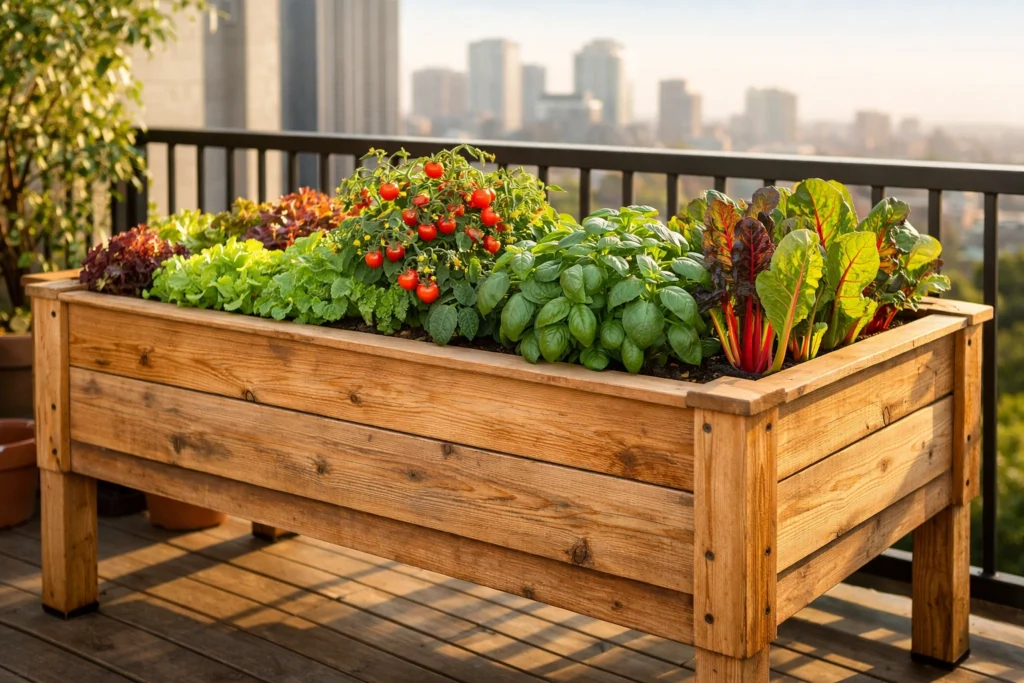
Raised planter boxes are the workhorses of serious balcony vegetable and herb gardening. A well-built raised planter box 12 to 18 inches deep provides sufficient soil volume for most vegetables and herbs while keeping the growing medium elevated above the balcony surface for better drainage and easier ergonomic access. Cedar and redwood are the preferred materials for outdoor raised planters because both woods naturally resist rot and insect damage without requiring chemical treatment that could leach into edible crops.
Weight is the critical consideration when building or buying raised planter boxes for a balcony garden. Wet soil is extraordinarily heavy and most residential balconies have load-bearing limits of 40 to 60 pounds per square foot. A 4-foot by 2-foot raised planter box filled with standard potting mix can weigh 200 pounds or more when fully saturated. Use lightweight potting mixes containing perlite, vermiculite, and coco coir rather than dense garden soil to reduce the load on your balcony structure significantly.
Create a Privacy Screen with Tall Plants
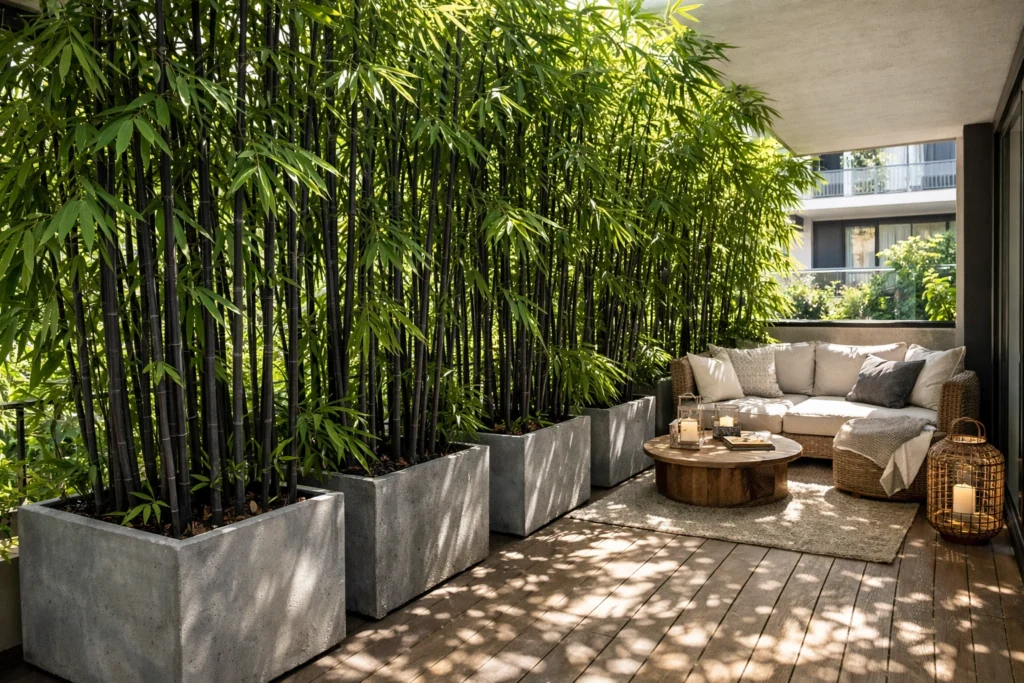
Bamboo, tall ornamental grasses, columnar evergreen shrubs, and climbing plants trained on a trellis all create effective living privacy screens that separate your balcony space from neighboring units or street-level views. This approach solves two problems simultaneously by using plants as functional privacy infrastructure rather than purely decorative elements. A row of tall potted bamboo along the balcony perimeter creates an almost instantaneous privacy screen that also softens city noise and filters air while establishing a lush, resort-like atmosphere.
Clumping bamboo varieties rather than running varieties should always be used in container settings as running bamboo spreads aggressively and becomes extremely difficult to control. Black bamboo, Golden Goddess bamboo, and Alphonse Karr bamboo are all clumping varieties that grow beautifully in large containers and reach impressive heights of 6 to 15 feet making them excellent privacy screening plants for urban balcony gardens.
Install a Drip Irrigation System
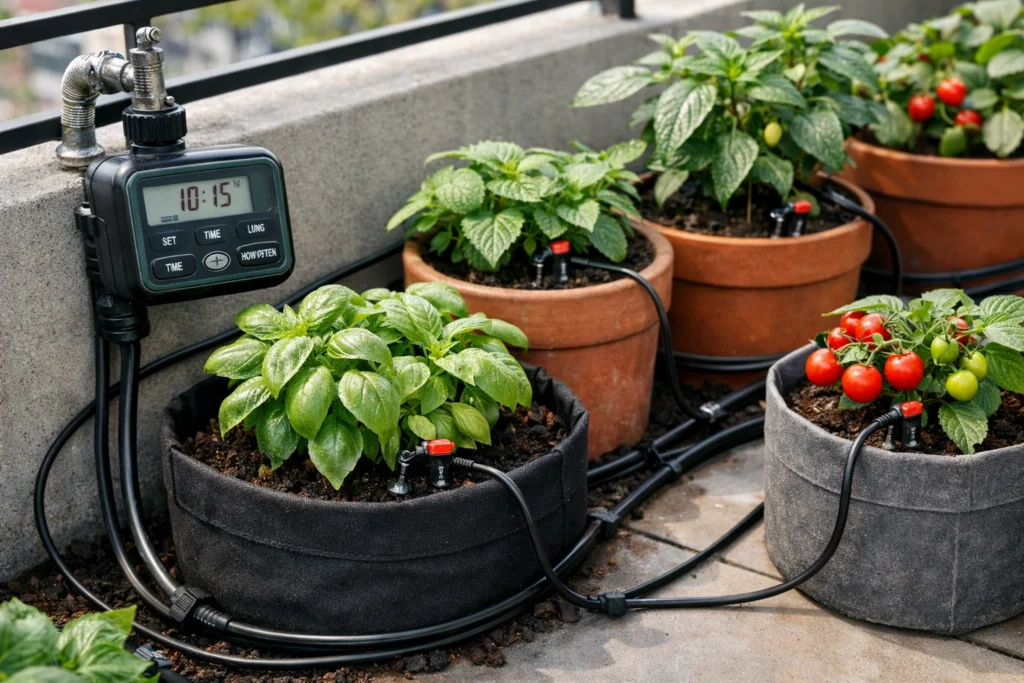
Consistent watering is the single biggest challenge of balcony container gardening because containers dry out much faster than in-ground garden beds and missing a watering day during a summer heat wave can devastate an entire season’s worth of carefully grown plants. A simple drip irrigation system connected to your balcony hose bib or water source solves this problem permanently and transforms the maintenance burden of balcony gardening from a daily obligation into a weekly check-in.
Basic drip irrigation kits for container gardens are available at most garden centers and online for under $50 and can water up to 20 individual containers from a single timer-controlled system. Setting your drip timer to water for 15 to 20 minutes every morning ensures your plants receive consistent moisture regardless of your schedule, travel plans, or simply forgetting on a busy day. This single investment dramatically improves the success rate and overall health of any urban garden balcony setup.
Grow a Salad Garden in Window Boxes
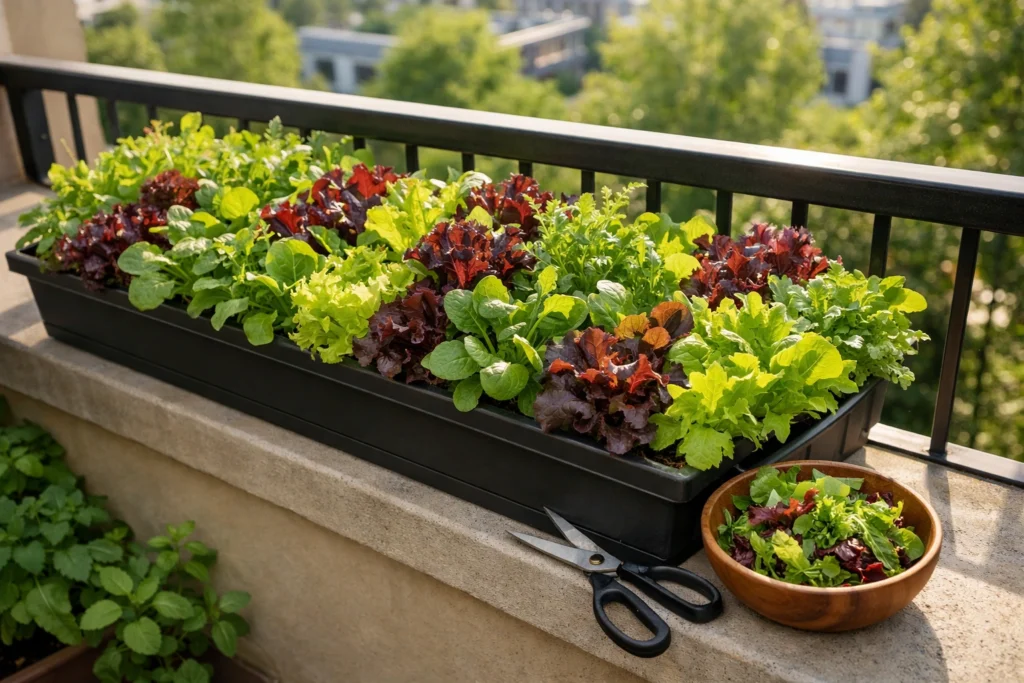
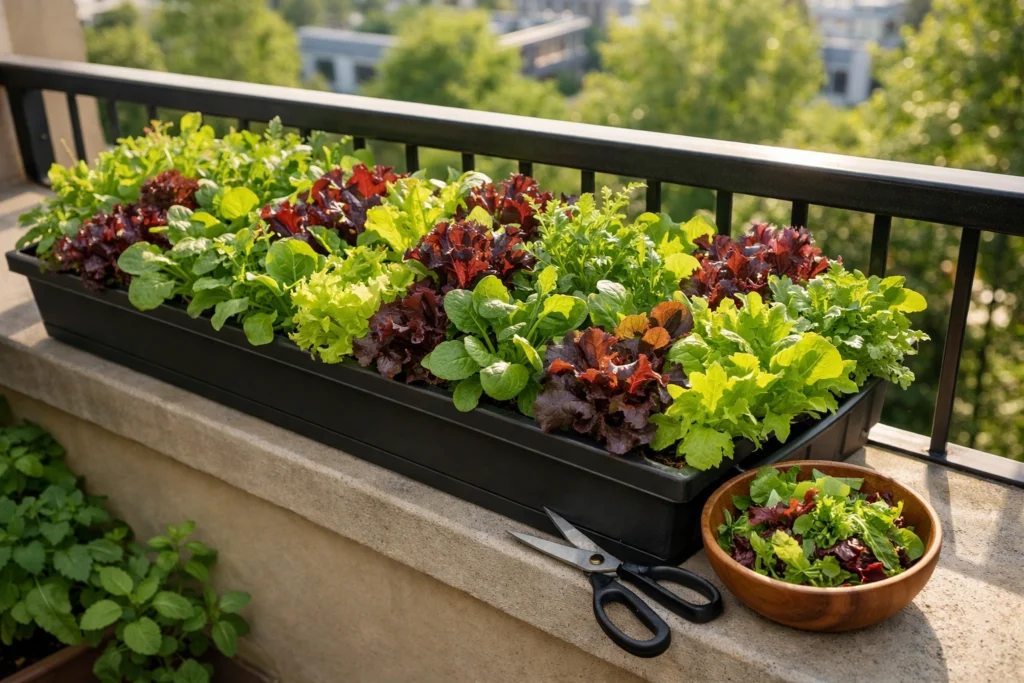
Window boxes mounted along the inside edge of your balcony railing create a continuous row of productive growing space that is perfectly positioned for harvesting salad greens steps from your kitchen. A 36-inch window box can produce enough lettuce, arugula, spinach, and mixed salad greens to supplement your salads multiple times per week throughout the spring and fall growing seasons when cool-weather greens perform at their absolute best.
The cut-and-come-again harvesting technique maximizes production from window box salad gardens by trimming outer leaves rather than harvesting entire plants. This approach keeps plants producing continuously for weeks or months depending on the variety and season. Sow new seeds every two to three weeks using a succession planting schedule to ensure a continuous harvest throughout the growing season rather than a single large flush of growth followed by a production gap.
Grow a Salad Garden in Window Boxes
Edible flowers bridge the gap between ornamental and productive gardening in the most beautiful way imaginable. Nasturtiums, pansies, violas, borage, calendula, and chamomile all produce flowers that are genuinely beautiful in a garden setting and genuinely delicious in culinary applications. Nasturtium flowers add a peppery bite to salads and can be stuffed with cream cheese for elegant appetizers. Borage flowers have a delicate cucumber flavor perfect for garnishing cocktails and cold soups.
Incorporating edible flowers into your urban garden balcony design creates a dual-purpose planting scheme where every plant earns its space by delivering both visual beauty and culinary utility. Nasturtiums in particular are among the easiest plants to grow from seed in container settings, tolerating poor soil, requiring minimal fertilizer, and producing prolifically throughout the summer months. They also naturally deter aphids from nearby vegetable plants making them excellent companion planting partners for your balcony tomatoes and peppers.
Create a Themed Balcony Garden
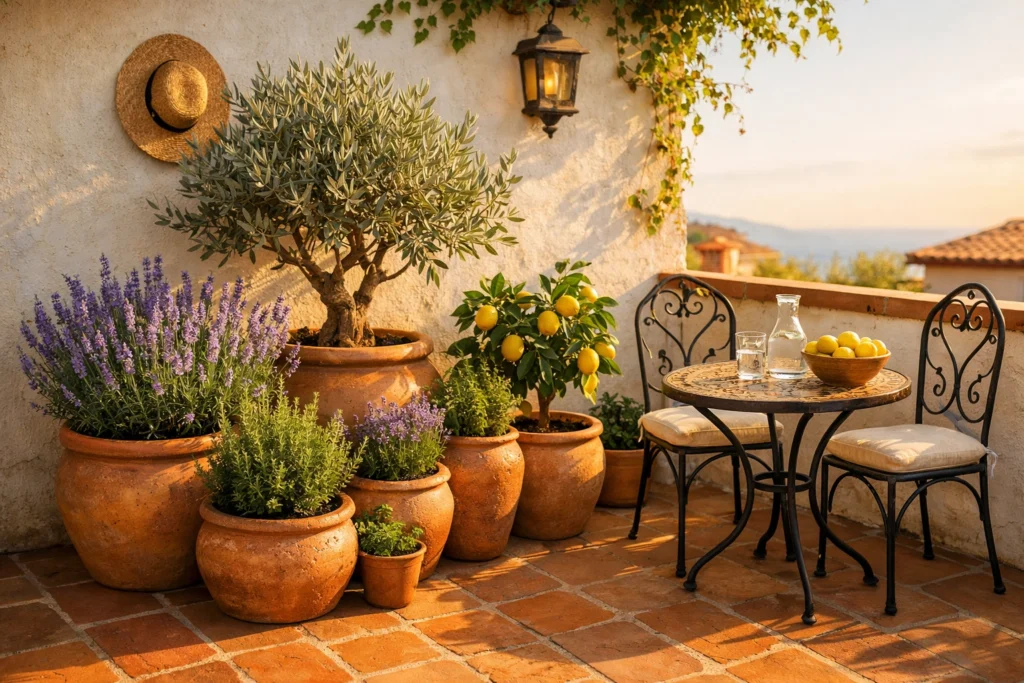
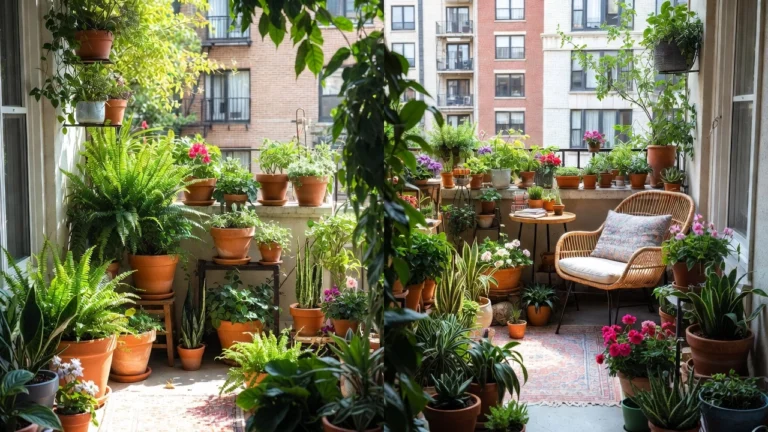
A themed garden creates a coherent, intentional design story that elevates a collection of individual planters into a unified and visually compelling outdoor space. Popular balcony garden themes include Mediterranean herb gardens featuring terracotta pots, olive trees, and fragrant herbs like lavender and rosemary. Japanese-inspired minimalist gardens using carefully pruned bonsai trees, moss, bamboo, and gravel create a serene meditative space. Cottage garden themes with abundant flowering annuals and perennials in soft colors create a romantic, overflowing abundance that feels lush and welcoming.
Choosing a theme before purchasing any plants or containers prevents the visual chaos that results from mixing incompatible styles and scales. A cohesive balcony garden theme also simplifies purchasing decisions by providing clear criteria for what belongs in the space and what doesn’t. The investment of choosing a theme before shopping saves money, prevents buyer’s remorse, and results in a significantly more beautiful finished space than an ad-hoc accumulation of individual plants and containers purchased without a unifying vision.
Use Lightweight Grow Bags
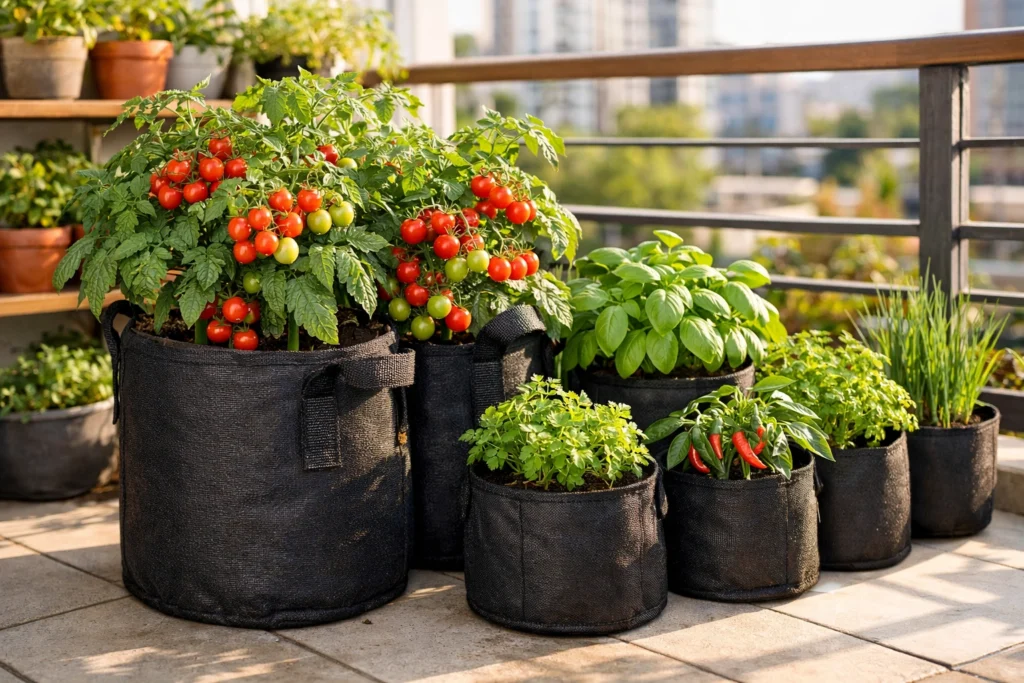
Fabric grow bags have become one of the most popular container options for urban balcony gardening because they solve several problems simultaneously. They are dramatically lighter than ceramic or terracotta pots of equivalent volume, they promote exceptional root health through a process called air pruning where roots naturally stop growing when they reach the air at the bag’s permeable fabric walls, and they fold flat for compact storage during winter months when you’re not actively gardening.
Grow bags are available in sizes from 1 gallon for individual herb plants up to 100 gallons for growing full-sized fruit trees in container settings. For balcony vegetable gardening, 5-gallon grow bags suit tomatoes, peppers, and cucumbers while 3-gallon bags work perfectly for herbs and compact flowering plants. The fabric material also prevents the overwatering problems that plague beginners using solid ceramic or plastic pots because excess water drains freely through the permeable walls rather than pooling at the bottom of the container.
Design a Relaxation Corner Within Your Garden
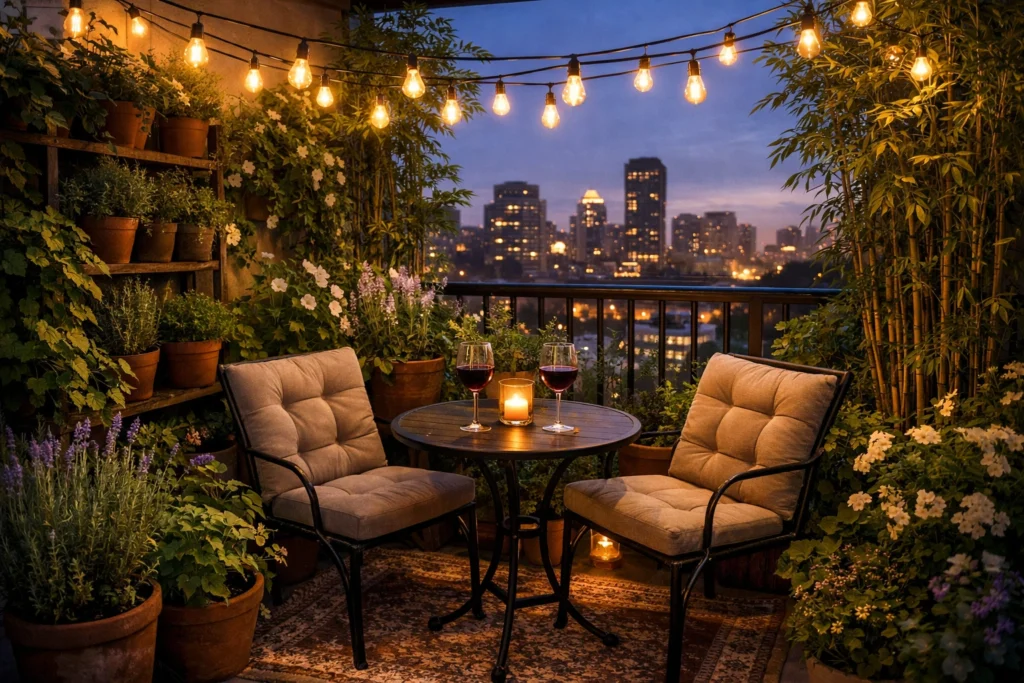
The most livable urban garden balcony designs integrate a comfortable relaxation area within the garden space rather than treating the garden and seating as separate competing uses for limited square footage. A bistro table with two chairs positioned in one corner, surrounded on three sides by lush container plants, creates an intimate outdoor dining room that feels completely removed from the urban environment beyond the railing despite being several stories above a busy city street.
String lights overhead, a small outdoor rug underfoot, and a few strategically placed candles complete the transformation of a utilitarian balcony into a genuine outdoor living room. This integration of comfort and nature is ultimately what urban garden balcony ideas are working toward — not just a place to grow plants, but a place to genuinely live outdoors, eat meals, drink morning coffee, and decompress from the demands of urban life in a space that feels entirely your own.
Conclusion
Transforming a small apartment balcony into a thriving urban garden requires nothing more than intention, a few well-chosen containers, quality potting mix, and the right selection of plants for your light conditions and climate. The 13 urban garden balcony ideas covered here range from simple starter projects like railing planters and herb gardens to more ambitious undertakings like vertical garden walls and full container vegetable gardens. Every idea scales to fit whatever space, budget, and time commitment you bring to the project.
Start small, observe what works in your specific light and climate conditions, and build your balcony garden gradually over successive seasons. The knowledge and confidence you gain in your first year of balcony gardening makes every subsequent season more productive, more beautiful, and more deeply satisfying than the last.
Frequently Asked Questions
What vegetables grow best in small balcony container gardens?
Cherry tomatoes, lettuce, spinach, herbs, peppers, beans, and radishes all perform exceptionally well in balcony container gardens. Choose compact or dwarf varieties specifically bred for container growing and ensure containers receive at least 6 hours of direct sunlight daily for best vegetable production results.
How do I prevent my balcony planters from becoming too heavy?
Use lightweight potting mixes containing perlite, vermiculite, and coco coir rather than dense garden soil. Choose fabric grow bags or lightweight plastic containers over heavy ceramic or concrete pots. Place the heaviest containers near load-bearing walls and consult your building management about your balcony’s specific weight limits before installing large planter boxes.
How often should I water balcony container plants?
Most balcony container plants require watering every one to two days during summer heat and every three to four days during cooler spring and fall weather. Check soil moisture by inserting your finger two inches into the potting mix. Water thoroughly when the soil feels dry at that depth. Installing a drip irrigation timer eliminates the daily watering burden entirely.
What are the best low maintenance plants for a balcony garden?
Succulents, lavender, ornamental grasses, rosemary, sedum, and trailing petunias are among the most low-maintenance options for balcony gardens. These plants tolerate irregular watering, require minimal fertilization, and bounce back quickly from periods of neglect making them ideal for busy apartment gardeners seeking beauty without excessive daily care demands.
Can I grow fruit on a small apartment balcony?
Yes, several fruit varieties grow successfully in large balcony containers. Dwarf citrus trees, strawberries, blueberries in acid-mix containers, figs, and patio apple and pear varieties all produce genuine harvests in container settings given adequate sunlight, appropriate container size, and consistent fertilization throughout the growing season.

One Comment