
14 Outdoor Patio Ideas for a Stylish Outdoor Living
Your backyard is more than just a patch of grass or concrete behind your home. With the right approach to design, it can become one of the most loved and lived-in spaces your property has to offer. An outdoor patio, when thoughtfully planned and executed, transforms your exterior into an extension of your indoor living areas, one where meals taste better, conversations feel warmer, and evenings stretch longer than they ever do inside.
Whether you have a sprawling backyard or a compact urban terrace, the principles of great outdoor patio design remain the same: balance comfort with function, choose materials that endure the elements, and bring a personal style that reflects how you live. From sun-drenched dining spots and fire-lit lounges to shaded pergola retreats and bold bohemian corners, the possibilities are far wider than most homeowners realize.
In this article, we walk you through 14 of the best outdoor patio ideas, each one packed with practical insights, design tips, and real-world examples to help you build, refresh, or completely reinvent your outdoor space. By the time you reach the end, you will have a clear vision of what your ideal patio looks like and exactly how to make it happen.
Create a Classic Pergola Patio for Shade and Structure
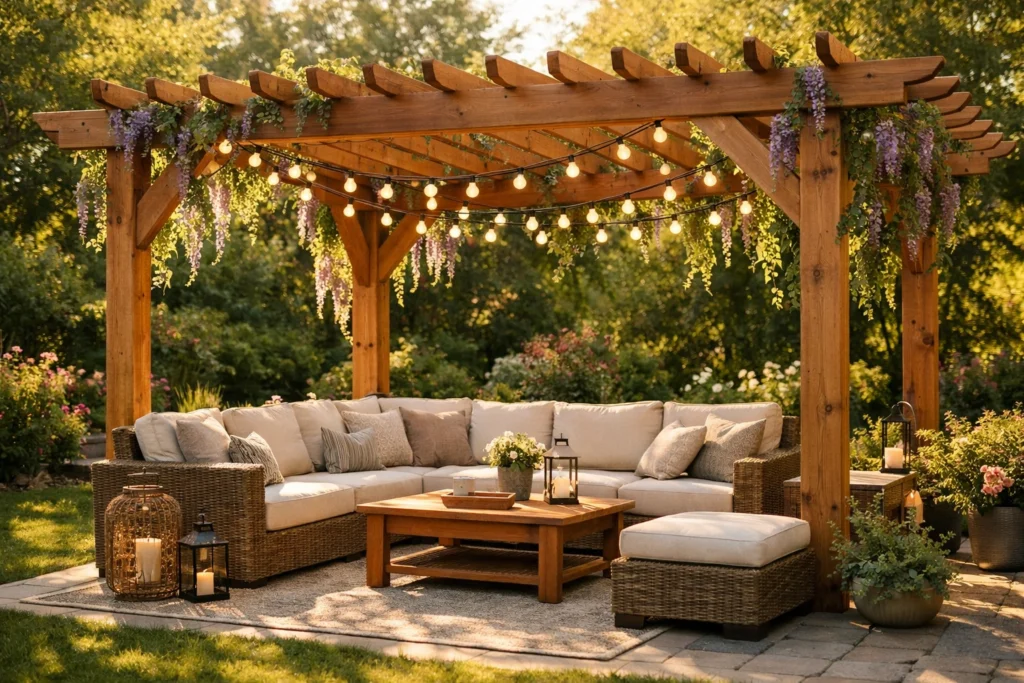
Few additions transform a bare patio more dramatically than a well-built pergola. This open-roofed structure gives your outdoor space an architectural backbone, creating a defined room without walling it off from the sky or surrounding yard. Pergolas work beautifully in nearly every setting, from traditional homes with cedar or pine timber frames to modern properties with sleek powder-coated aluminum structures.
For maximum effect, drape the beams with climbing vines like wisteria or jasmine for natural shade and fragrance. Add string lights along the rafters to create an enchanting evening atmosphere. If you live in an area with strong midday sun, consider fitting shade sails or louvered roof panels that can be adjusted to control the amount of light that filters through.
Design Tip: Attach your pergola to the rear wall of your house to create a seamless indoor-outdoor flow. Use the same flooring material on your patio as in your nearby interior room to visually extend the living space outward.
you may also like this:10 Outdoor Fireplace Ideas to Elevate Your Backyard
Design a Fire Pit Gathering Zone for Year-Round Enjoyment
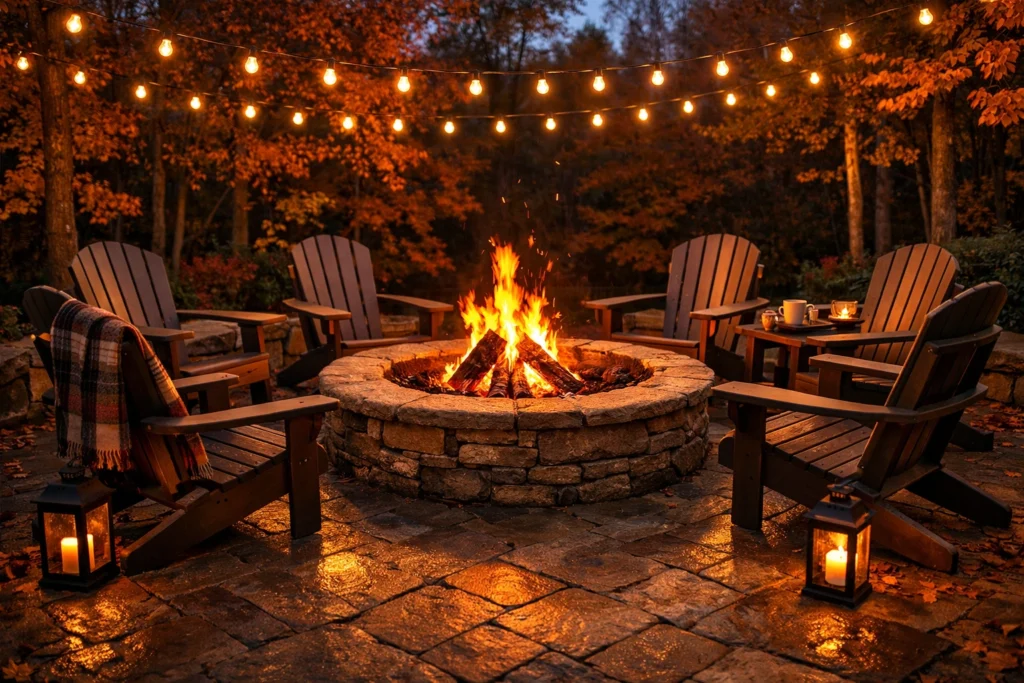
A fire pit is one of the most universally beloved features in outdoor patio design. It acts as a natural gathering point, drawing people in, sparking conversation, and extending the usability of your patio well into cooler months. Whether you go with a built-in stone fire pit, a portable steel bowl, or a sleek gas-powered fire table, the warmth and ambiance it adds are hard to replicate with any other element.
Surround your fire pit with curved stone seating walls topped with weather-resistant cushions, or arrange a set of Adirondack chairs in a welcoming circle. Keep a clearance of at least five feet between the fire and any seating or combustible material. For patios with pergolas, gas fire tables are the safest and most stylish choice, as they produce a controlled, consistent flame without flying embers.
A sunken fire pit design, where the pit sits slightly below the surrounding patio level, creates a particularly cozy and wind-protected environment. This architectural touch adds a luxury feel even on a moderate budget.
Build an Outdoor Kitchen and Dining Area for Al Fresco Living
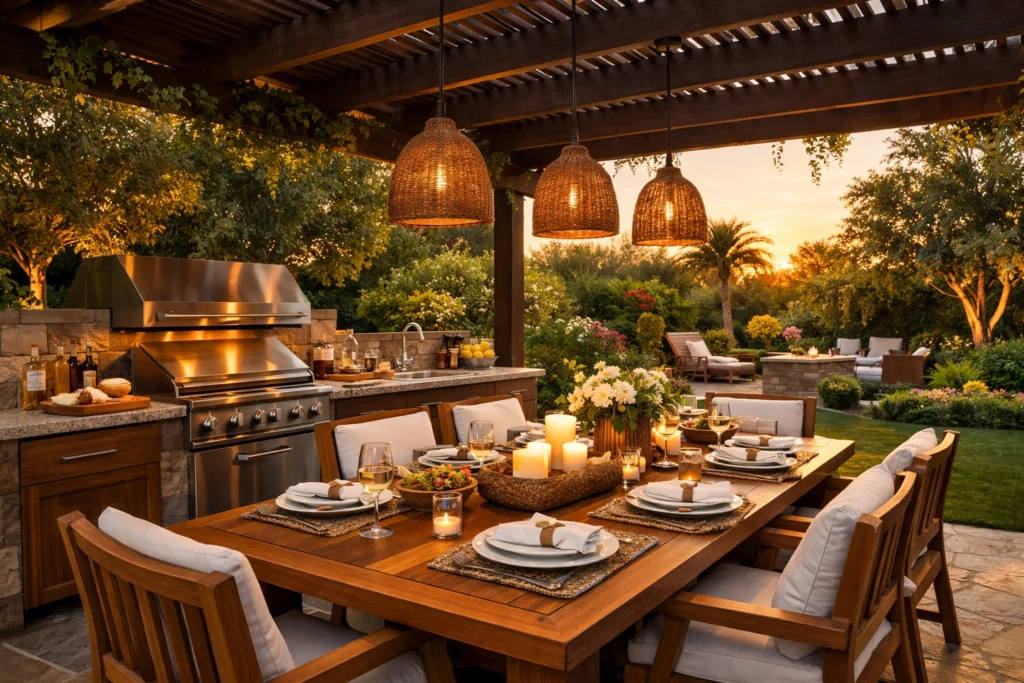
The outdoor kitchen has moved from luxury feature to mainstream patio upgrade in recent years, and for good reason. Cooking and entertaining outdoors keeps guests in the same space rather than separated by walls, and it turns every backyard gathering into a full sensory experience. A well-designed outdoor kitchen can include a built-in grill or smoker, a countertop prep area, an under-counter refrigerator, a sink with running water, and even a pizza oven.
Pair your outdoor kitchen with a dedicated dining zone. A large teak or powder-coated aluminum dining table with six to eight weather-resistant chairs can comfortably host a dinner party under the open sky. Overhead, a pergola or ceiling fan provides shade and air circulation during warmer months.
Material Insight: For outdoor kitchen countertops, porcelain tile and granite are both excellent choices. They are heat-resistant, easy to clean, and hold up well against rain and UV exposure without needing regular sealing.
Choose the Right Patio Flooring to Set the Tone
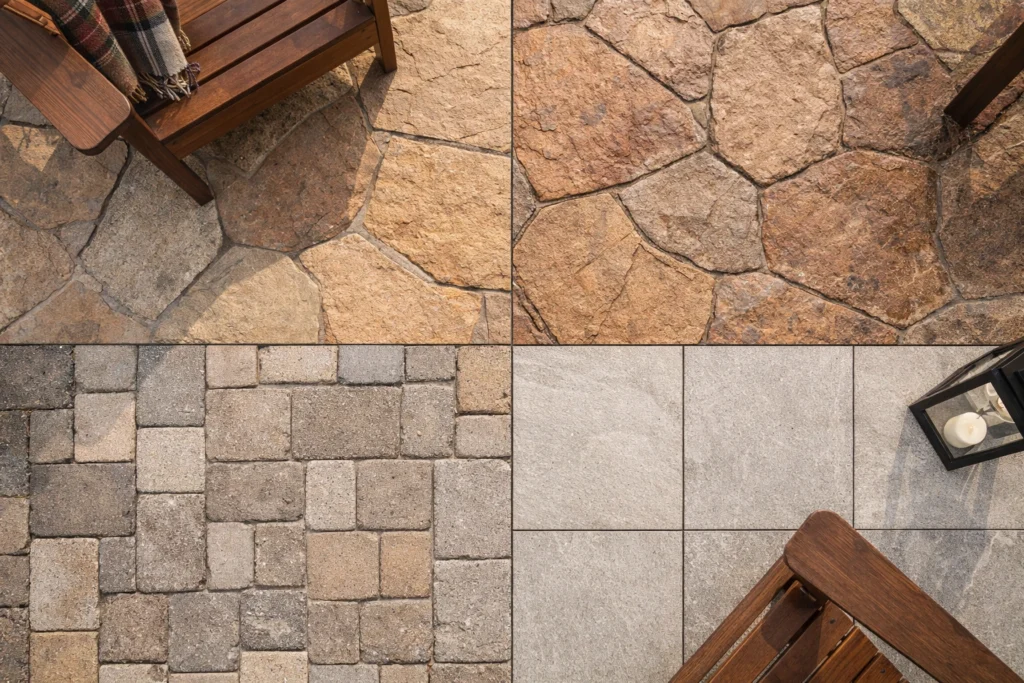
The surface underfoot is one of the most important decisions in any patio design project. It establishes the aesthetic character of the entire space and determines how easy the area is to maintain over the years. Among the most popular outdoor patio flooring options today are concrete pavers, natural flagstone, stamped concrete, ceramic tile, brick, and gravel.
Flagstone offers a natural, timeless look that pairs well with cottage gardens, rustic settings, and Mediterranean-inspired designs. Its irregular shapes and earthy tones give patios a handcrafted feel. Concrete pavers deliver clean geometric lines and come in dozens of colors and textures, making them ideal for modern and transitional designs. Stamped concrete is a cost-effective option that can convincingly mimic the look of stone, brick, or slate.
Porcelain tile is gaining popularity for contemporary patios because of its low maintenance and sophisticated appearance. Just be sure to select a tile with a slip-resistant finish when using it outdoors.
Use Outdoor Lighting to Transform Your Patio After Dark
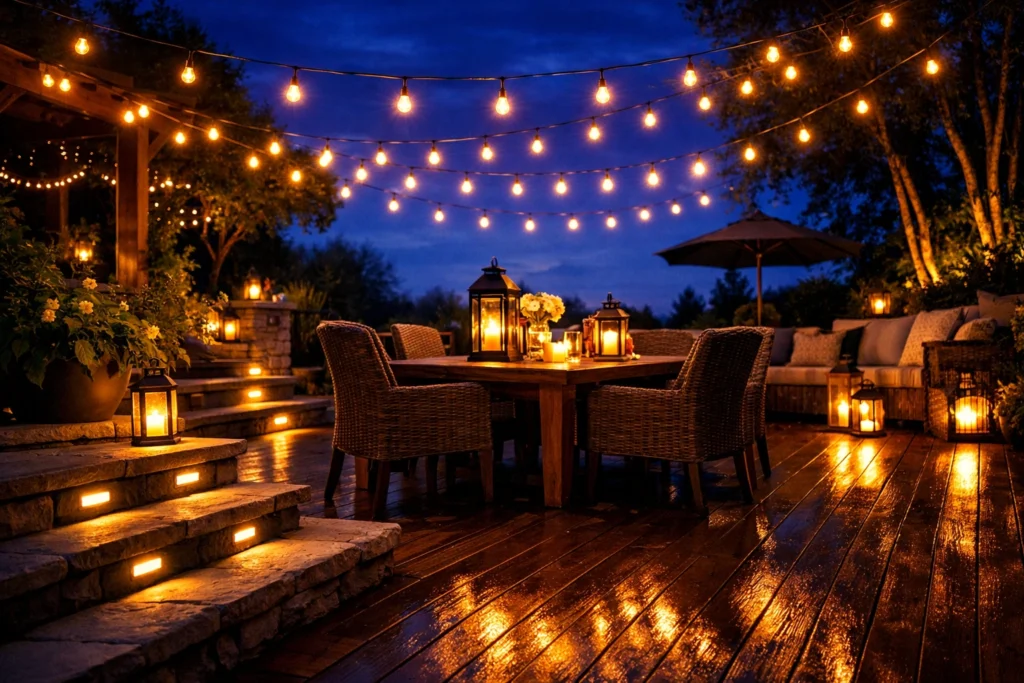
A patio that looks beautiful in daylight should be equally inviting at night, and the right lighting is what makes that possible. String lights draped overhead along a pergola or between posts are perhaps the most popular choice for backyard patios, delivering a warm, festive glow that makes any evening feel special. Solar-powered lanterns are a practical and environmentally friendly way to add accent lighting along pathways or at table centerpieces.
For a more sophisticated approach, low-voltage LED lighting installed along the edges of patio steps, beneath seating walls, or within planters creates a subtle, architectural illumination that highlights texture and depth. Spotlights directed at a statement tree or water feature can serve as dramatic focal points. Dimmer switches and smart lighting systems allow you to adjust the mood instantly, from bright and energetic for entertaining to soft and intimate for quiet evenings.
Always prioritize illuminating steps, level changes, and the fire pit area for safety, then layer in the decorative lighting around them.
Create a Cozy Lounge Area with Comfortable Outdoor Furniture
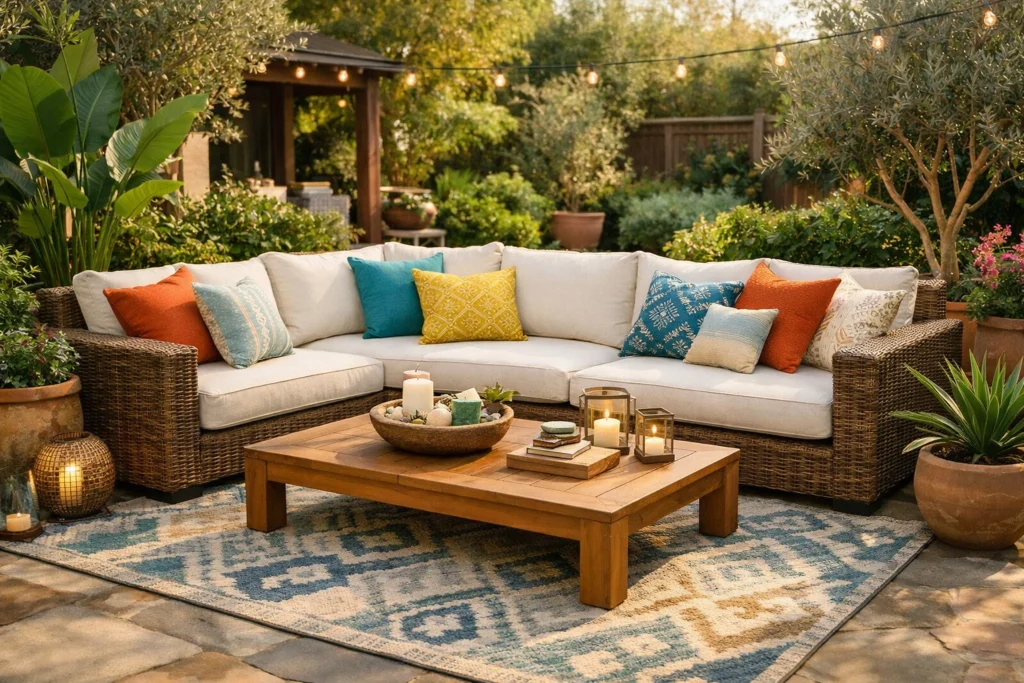
The furniture you choose has the single greatest impact on how inviting your patio feels and how often people actually use it. A well-styled outdoor lounge with a deep-seat sectional, a low coffee table, plump throw pillows, and a soft outdoor rug can feel every bit as comfortable as your living room indoors.
When selecting patio furniture, focus on materials engineered for the outdoors. All-weather wicker is lightweight, stylish, and moisture-resistant. Teak wood is a top-tier choice for its natural oils that repel water and resist cracking over decades. Powder-coated aluminum frames are rust-proof, incredibly light, and available in virtually every color. For cushions and upholstery, choose fabrics treated with UV protection and water repellency, such as those made from solution-dyed acrylic or high-performance olefin.
Space Planning Tip: Anchor your lounge area with an outdoor rug sized generously enough that all furniture legs rest on it. This simple trick makes the seating zone feel purposeful, defined, and polished.
Add Privacy Screens and Vertical Gardens for Seclusion
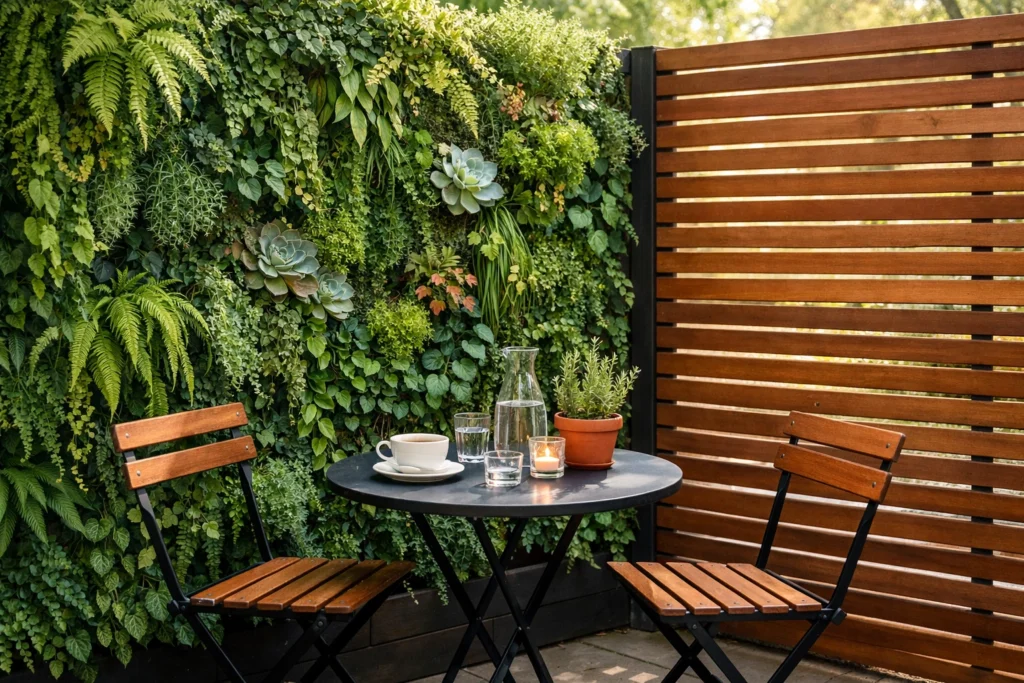
Privacy is one of the most common concerns homeowners have about their patios, particularly in urban neighborhoods or properties with close-set fences. Fortunately, there are many stylish ways to create seclusion without making your space feel enclosed or oppressive. Lattice privacy screens, slatted wood panels, bamboo fencing, and tall ornamental grasses all offer varying degrees of screening while adding visual texture and character.
A vertical garden serves a dual purpose: it screens your patio from neighboring views while introducing a lush, living backdrop of greenery. Vertical gardens are particularly well-suited for small patios where ground space is limited. Plants like ferns, succulents, herbs, and trailing vines all thrive in vertical planting systems and can be arranged to create a striking living wall that doubles as a natural air purifier.
For a more permanent solution, build a low masonry wall along one or two sides of the patio and top it with tall planters or trellised climbing plants. This creates a layered boundary that feels natural rather than fenced off.
Design a Small Patio That Feels Spacious and Stylish
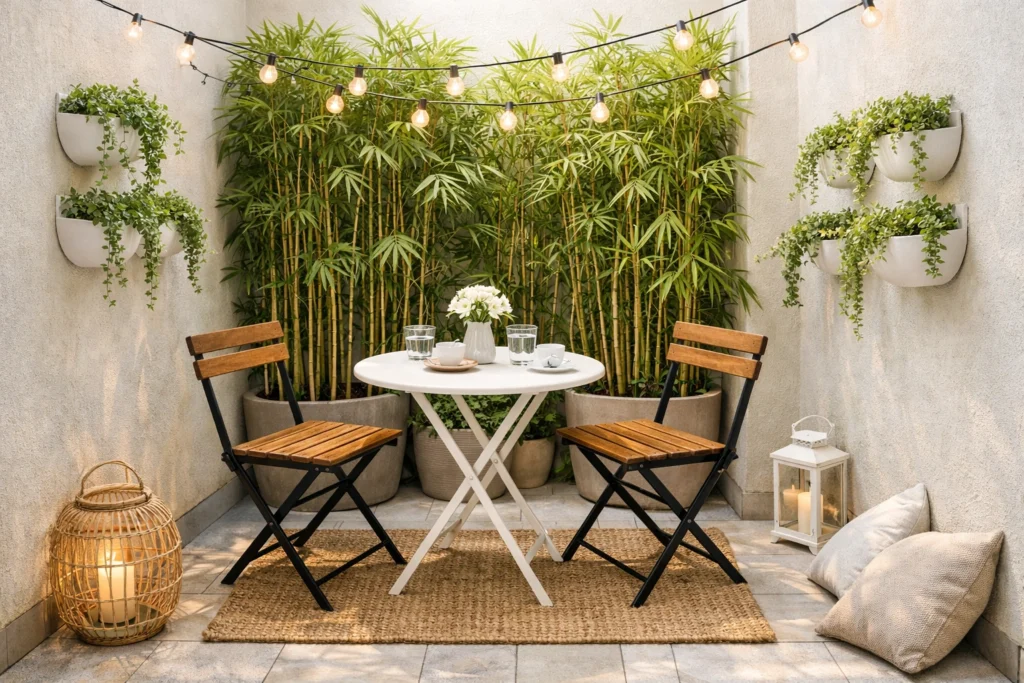
Limited square footage is no barrier to great patio design. Some of the most beautifully executed outdoor spaces are compact urban terraces and small backyard patios that make every inch count. The key is to keep the design intentional, avoid clutter, and choose furniture that is appropriately scaled for the space.
A bistro table with two folding chairs is a classic choice for tiny patios, offering all the functionality of an outdoor dining area without overwhelming the space. Foldable and stackable furniture pieces are invaluable for small spaces because they can be tucked away when not in use. Multi-functional furniture, such as ottomans with hidden storage or benches that double as planters, maximizes utility without adding visual weight.
Use vertical space generously. Tall potted plants, wall-mounted planters, and hanging string lights draw the eye upward, making a small patio feel taller and more expansive than it actually is. A light-colored or reflective flooring material will also help the space feel open and airy.
Embrace a Bohemian Patio Style for Relaxed, Eclectic Charm
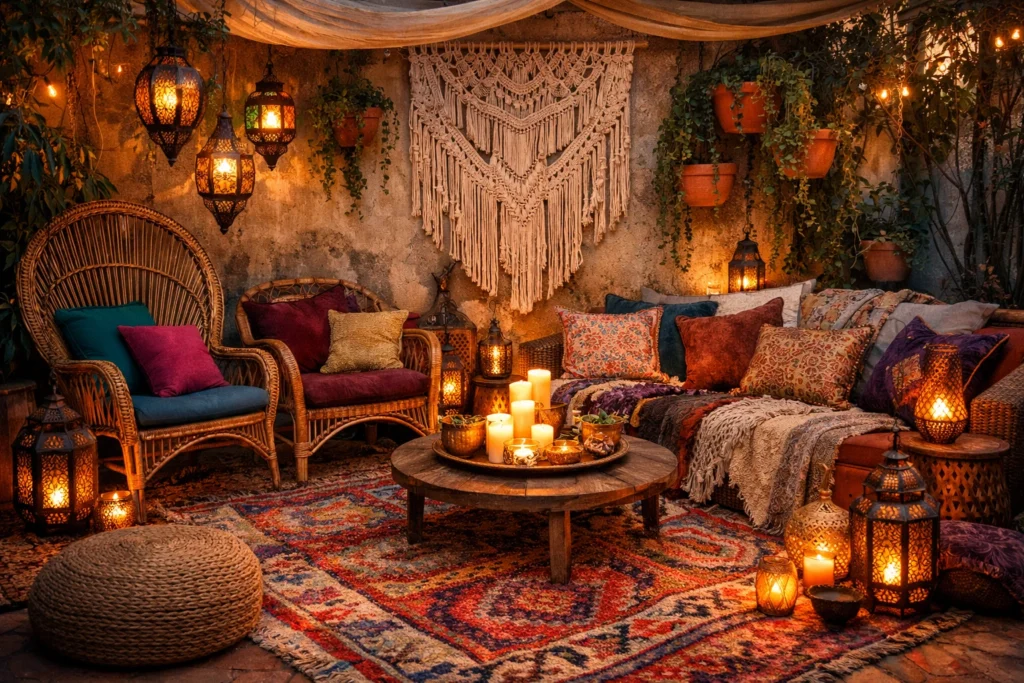
The bohemian patio aesthetic celebrates color, texture, and a spirit of free-flowing creativity. It is one of the most personal and expressive design styles available to outdoor spaces, drawing from global influences including Moroccan patterns, South American textiles, and handcrafted natural materials. The result is a space that feels collected over time rather than purchased all at once.
Start with a richly patterned outdoor rug as the foundation. Layer in rattan or wicker chairs, low-slung floor cushions, and a mix of throw pillows in warm jewel tones. Macrame wall hangings, woven lanterns, hand-thrown ceramic pots, and trailing plants complete the look. Do not be afraid to mix patterns and textures; in bohemian design, more is often more.
For lighting, opt for Moroccan-style lanterns with intricate metalwork, candles in a variety of holders, or a string of Edison bulbs draped generously overhead. The goal is to create a warm, intimate glow that feels like an evening spent somewhere magical.
Go Modern and Minimalist with Clean Lines and Neutral Tones
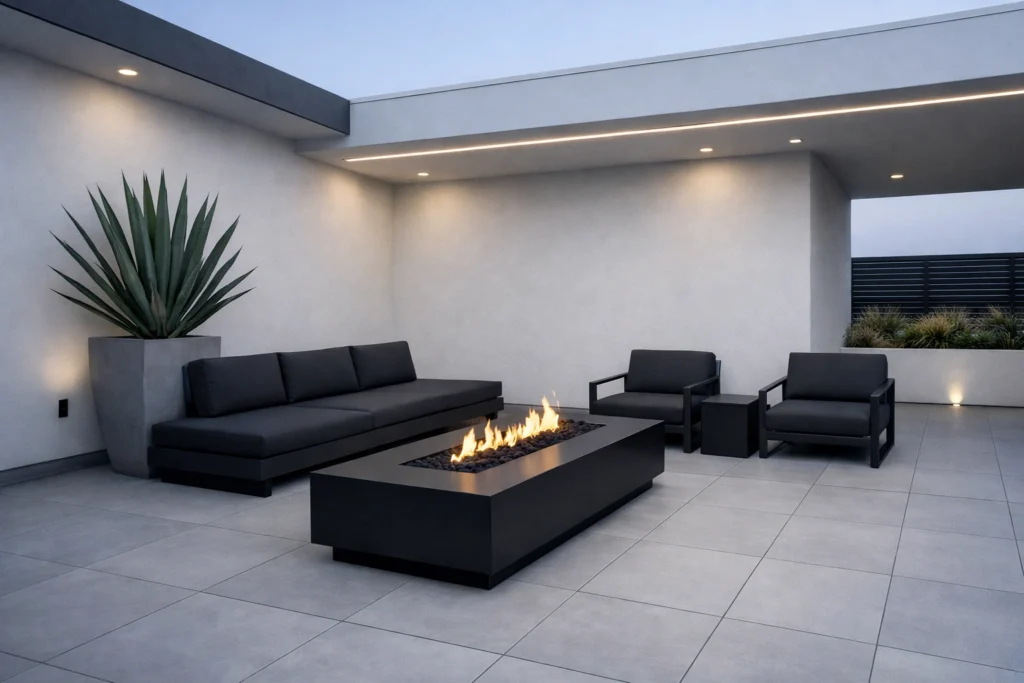
For homeowners who prefer a pared-back aesthetic, a modern minimalist patio offers elegance through restraint. This design philosophy focuses on clean geometry, a tight color palette, and materials that are as functional as they are beautiful. Think poured concrete or large-format porcelain tile in neutral tones, paired with low-profile furniture in matte black, warm gray, or natural linen.
A modern patio typically features a few carefully chosen statement pieces rather than many smaller decorative items. A single sculptural fire table, a long rectangular dining table with bench seating, or a sleek concrete planter filled with architectural plants such as agave or ornamental grass can each serve as a compelling focal point. Greenery in modern patios tends toward structured, low-maintenance varieties that complement rather than compete with the clean design lines.
Lighting in a minimalist patio should be integrated and subtle. Recessed LED lights in patio steps, under-rail lighting along seating walls, and slim profile pendant lights over dining tables all contribute to the refined look without adding visual clutter.
Incorporate a Water Feature for Tranquility and Ambiance

The sound of moving water has a uniquely calming effect that transforms an ordinary patio into a genuine retreat. Whether you choose a wall-mounted fountain, a freestanding urn with a bubbling basin, a natural stone waterfall integrated into a garden bed, or a small reflecting pool, a water feature brings life and sensory depth to your outdoor space that no other element can replicate.
From a practical standpoint, a water feature also helps mask the ambient noise of a busy neighborhood, creating a sonic barrier that makes your patio feel more private and peaceful. Many modern water features are designed to be self-contained and low-maintenance, using a recirculating pump and a small reservoir that only needs to be refilled occasionally.
Position your water feature where it can be seen and heard from the main seating area. A wall-mounted fountain is a particularly efficient choice for smaller patios because it takes up no floor space while still delivering that sought-after sound and visual movement.
Build a Multi-Level Patio to Add Dimension and Interest
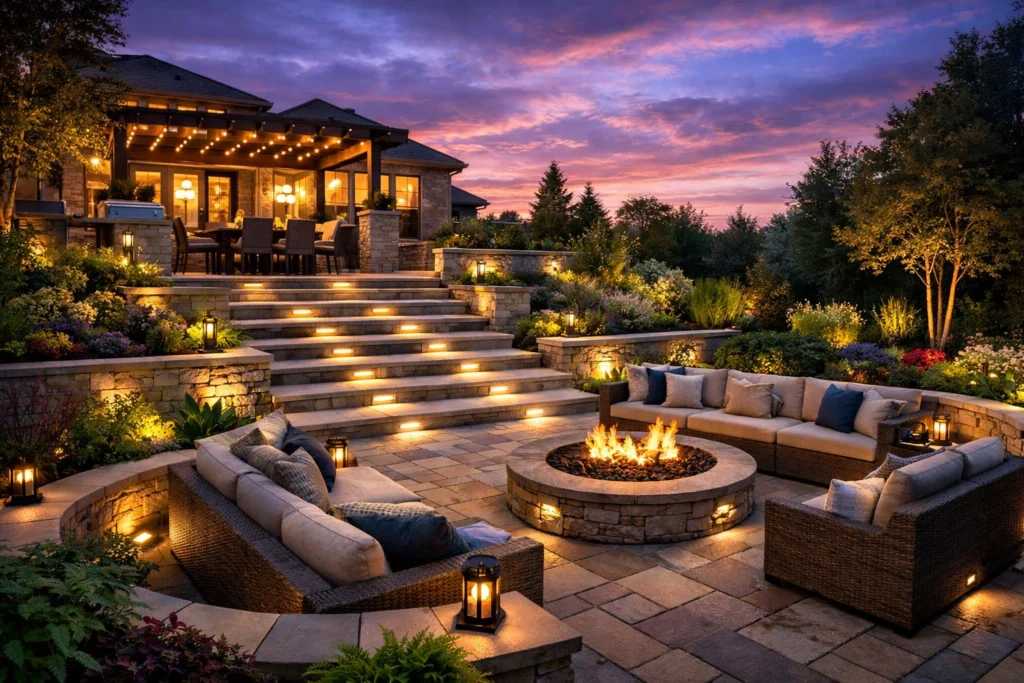
If your backyard has a natural slope or if you simply want to add architectural interest to a flat yard, a multi-level patio design is an exceptional solution. By creating two or more distinct platform levels connected by steps or low retaining walls, you can naturally define different functional zones within your outdoor space without relying on walls or screens.
A common approach is to position the dining and kitchen zone on the upper level closest to the house, where access to indoor amenities is convenient, while placing the lounge area and fire pit on a lower level that feels more tucked into the landscape. Steps between levels can be built from the same material as the patio floor for a seamless look, or contrasted in a complementary material for visual definition.
Lighting is especially important in a multi-level design. Step lights built into the risers not only look striking after dark but also provide essential safety illumination for anyone moving between levels.
Choose Sustainable and Eco-Friendly Patio Materials
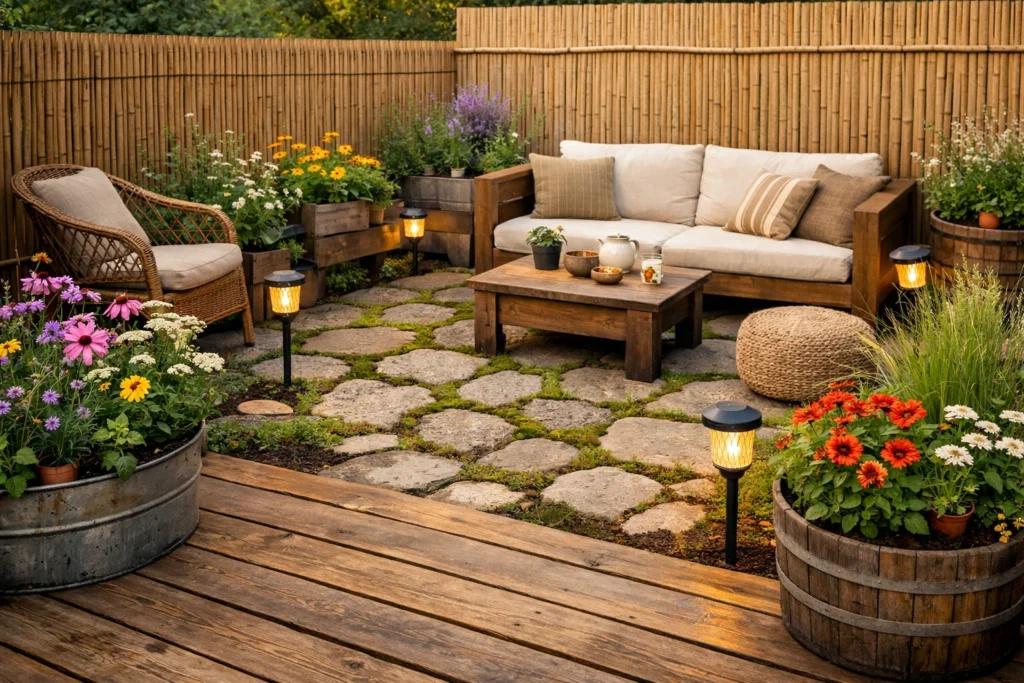
Sustainability has become a central consideration in outdoor design, and there are more eco-conscious choices available today than ever before. Reclaimed wood, recycled plastic lumber, bamboo decking, permeable pavers that allow rainwater to pass through rather than run off, and solar-powered lighting are all excellent ways to reduce the environmental footprint of your patio project.
Recycled plastic lumber, sometimes called composite decking, is a particularly durable and low-maintenance option. Made from post-consumer plastic waste, it will not rot, splinter, or require painting or staining. It also holds up exceptionally well in climates with extreme temperature swings. Bamboo is another outstanding material: it is fast-growing, highly renewable, naturally resistant to moisture, and brings a warm, organic aesthetic to any patio design.
From a planting perspective, choosing native plants for your patio containers and surrounding garden beds reduces water consumption, supports local pollinators, and requires far less maintenance than exotic or ornamental varieties.
Style Your Patio with Accessories, Plants, and Decor to Personalize the Space
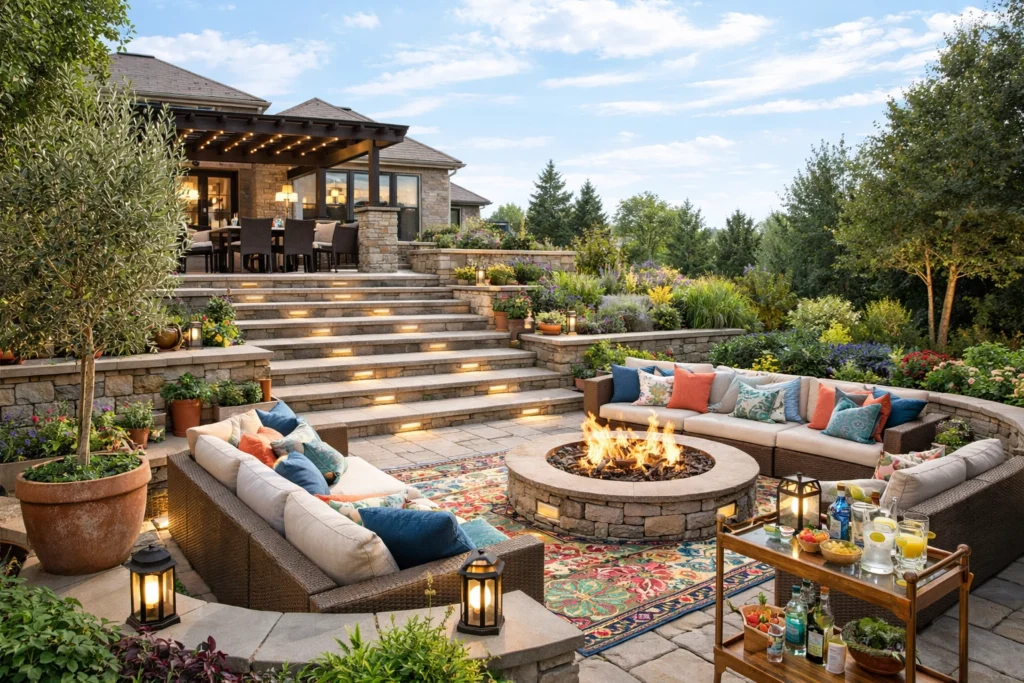
A patio without personality is just a slab of pavement. The finishing touches you add, from decorative planters and outdoor artwork to weather-resistant throw pillows and seasonal decor, are what transform a functional outdoor area into a space that truly feels like yours.
Plants are among the most impactful accessories you can introduce to a patio. Large potted olive trees, lemon trees, or bamboo bring height and drama. Clustered medium-sized pots with herbs, lavender, or ornamental grasses create a lush garden feel. Small succulents and trailing plants in window boxes or wall-mounted containers add detail and softness to hard surfaces.
Outdoor rugs, throw pillows, and blankets introduce color and comfort. An outdoor bar cart stocked and positioned near your seating area adds a layer of hospitality and convenience. The most important principle in patio styling is that it should reflect how you actually live. A family that loves cooking outdoors will prioritize a well-stocked kitchen corner; a couple that enjoys quiet mornings outside will invest in a premium coffee station and comfortable lounge chairs; an entertainer will want a full bar setup, flexible seating, and excellent ambient lighting. Let your lifestyle lead the design.
Conclusion
A great outdoor patio does not happen by accident. It is the product of deliberate choices, from the flooring material and shade structure right down to the placement of a single potted plant. But the effort is entirely worth it. A well-designed patio adds measurable value to your home, dramatically increases your usable living space, and becomes the place where some of life’s best moments unfold.
The 14 outdoor patio ideas covered in this article represent a wide range of styles, budgets, and spatial contexts. Whether you are drawn to the rustic charm of a stone fire pit surrounded by Adirondack chairs or the sleek sophistication of a modern minimalist terrace with integrated LED lighting, there is a design approach here that will resonate with your vision.
Start with what matters most to you, whether that is privacy, entertaining capacity, aesthetic style, or sustainability, and build outward from there. Your ideal outdoor living space is closer than you think.
Frequently Asked Questions (FAQs)
Q1. What is the best flooring material for an outdoor patio?
The best patio flooring depends on your design style, budget, and local climate. Concrete pavers and flagstone are among the most durable and versatile choices. Stamped concrete offers a cost-effective alternative to natural stone, while porcelain tile delivers a high-end contemporary look with minimal maintenance. For a warmer, more natural feel, composite decking or bamboo are excellent eco-friendly options.
Q2. How do I make my small patio feel larger?
Use light-colored or reflective flooring materials, choose furniture appropriately scaled for the space, and maximize vertical surfaces with wall-mounted planters, tall potted plants, and string lights. Avoid clutter by selecting multi-functional pieces such as ottomans with storage. A large mirror mounted on an exterior wall can also visually double the perceived size of a compact patio.
Q3. Is it safe to have a fire pit under a pergola?
A fire pit can be used safely under a pergola with the right precautions. The fire pit should have at least 10 feet of vertical clearance from any part of the pergola structure. Gas or propane fire tables are generally safer than wood-burning fire pits under covered structures because they produce no flying embers. Always ensure proper ventilation and maintain adequate spacing between the fire pit and surrounding furniture.
Q4. What outdoor furniture material lasts the longest?
Teak wood is widely regarded as the most durable natural material for outdoor furniture, thanks to its high natural oil content that resists moisture, insects, and rot. Powder-coated aluminum is another top contender: rust-proof, extremely lightweight, and virtually maintenance-free. High-density polyethylene furniture made from recycled materials is also exceptionally durable and can last for decades in all weather conditions.
Q5. How can I add privacy to my patio without building a wall?
Tall potted plants such as bamboo, arborvitae, or ornamental grasses can be strategically arranged to create a natural green screen. Freestanding privacy screens made from wood, metal, or woven rattan are easy to position and reposition as needed. Outdoor curtains hung from a pergola or tension rod add both privacy and a soft, elegant aesthetic. A vertical garden wall also provides an attractive living barrier that doubles as a decorative feature.


One Comment