
10 Outdoor Fireplace Ideas to Elevate Your Backyard
There is something inherently magical about gathering around a fire with loved ones. The warmth, the dancing flames, the intimate conversation that naturally unfolds creates memories that last a lifetime. An outdoor fireplace transforms your backyard from a seasonal space into a year-round retreat where family and friends want to linger. Whether you envision quiet evenings on a covered porch or lively gatherings under the stars, an outdoor fireplace serves as both a functional heat source and a striking architectural focal point that instantly elevates your entire property.
The beauty of outdoor fireplaces lies in their versatility. They come in countless styles, materials, and configurations, making it possible to find or create a design that perfectly matches your home’s aesthetic and your personal vision. From sleek modern gas inserts to rustic stone structures that evoke timeless charm, the possibilities are nearly limitless. This guide presents twenty-three compelling outdoor fireplace ideas along with the insights and considerations you need to make an informed decision about your own backyard transformation.
Understanding Your Fireplace Options
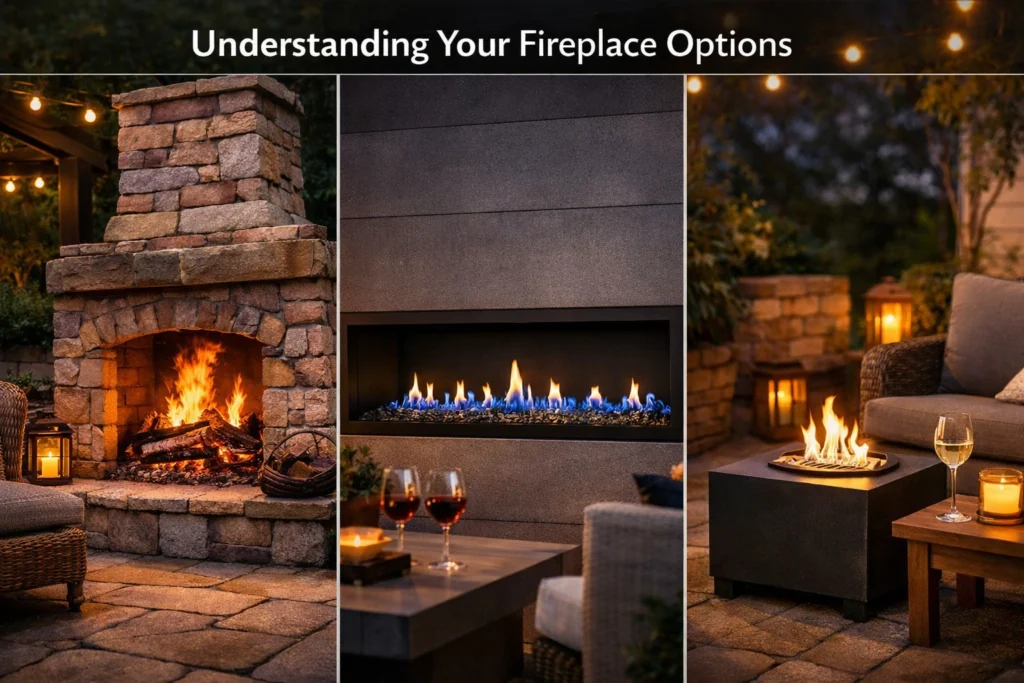
Before diving into specific design ideas, it helps to understand the fundamental categories of outdoor fireplaces. Each type offers distinct advantages, from aesthetic appeal to practical functionality and maintenance requirements.
Wood-burning fireplaces represent the traditional choice, offering authentic flame experience and the unmistakable ambiance of a real wood fire. These structures require a full chimney system and are typically built using masonry construction with a firebrick-lined firebox. While they demand more maintenance and regular chimney inspection, they deliver unmatched charm and character that resonates with those seeking classic beauty. The ritualistic element of tending to the fire and the natural wood fragrance add layers of sensory experience that many homeowners treasure.
Gas fireplaces provide a more modern, low-maintenance alternative that offers convenient warmth and adjustable flame control. Available in both natural gas and propane options, gas fireplaces can be installed as inserts within masonry structures or as freestanding units. They eliminate the need for chimney maintenance and provide consistent heat output, making them ideal for homeowners who want ambiance without the upkeep. Gas options work beautifully in both traditional and contemporary settings, adapting effortlessly to your design vision.
you may also like this:24 Outdoor Shower Design Ideas for a Luxury Backyard
Electric fireplaces and ethanol-burning options represent the most modern alternatives, offering flexibility and ease of installation. Electric models require no venting or chimney system and operate with simple plug-in convenience. Ethanol fireplaces provide real flames without smoke or ash, using bioethanol fuel that burns cleanly. These options prove especially valuable for renters, those with space limitations, or anyone seeking maximum design flexibility with minimal installation complexity.
Fire pits and fire tables present portable alternatives that work wonderfully for smaller spaces or those seeking flexibility. Available in various materials from metal to ceramic, portable units can be repositioned as your outdoor space evolves. Fire tables particularly blur the line between functional furniture and fire feature, offering practical surface space for beverages and accessories while providing warmth and ambiance.
Material Selection and Design Styles
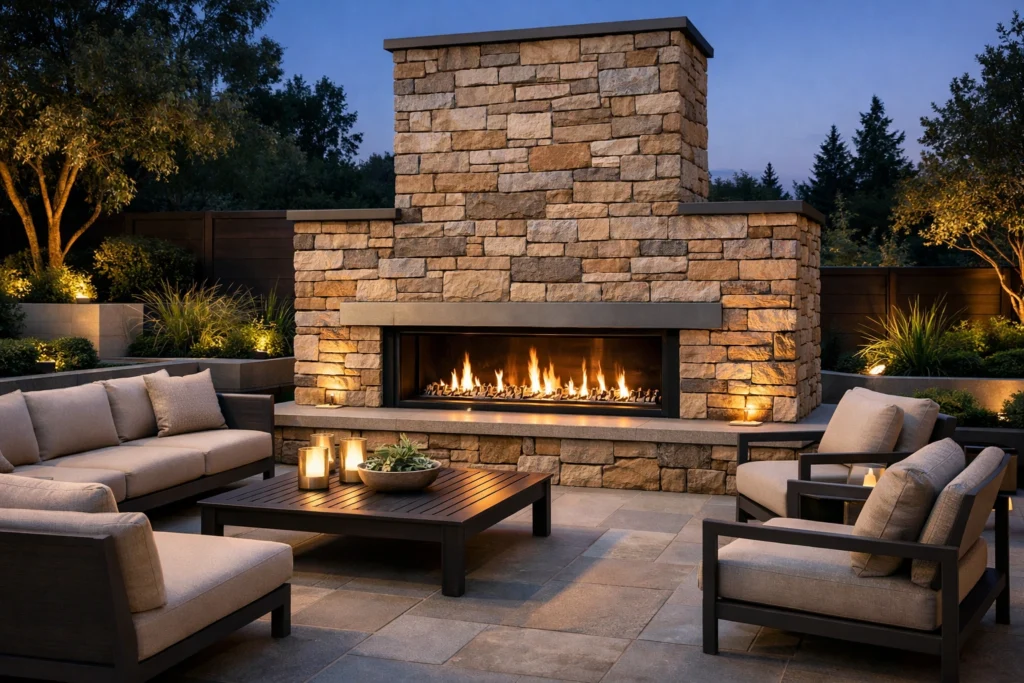
The material you choose for your outdoor fireplace dramatically influences both its appearance and longevity. Stone remains the most popular choice, offering timeless beauty and natural variation that integrates seamlessly into most landscape designs. Natural stone, stone veneer, or manufactured stone each bring distinct characteristics, allowing you to achieve either authentic rustic appeal or refined contemporary elegance depending on color and finish selection.
Brick fireplaces evoke classic residential charm and work particularly well when your home’s exterior already features brick elements. Painted brick versions deliver crisp, modern aesthetics, while unpainted brick maintains traditional warmth. Stucco finishes offer smooth, contemporary lines and adapt beautifully to Mediterranean or Southwestern architectural styles. Concrete and steel materials cater to those preferring modern, industrial-inspired designs, lending themselves to luxurious simplicity through subtle shape and texture variations.
Tile accents add decorative interest and can elevate your fireplace from functional to truly distinctive. Herringbone patterns, colorful tiles, or accent bands create visual richness without overwhelming the design. Wood mantels, whether crafted from reclaimed salvage or new timber, add warmth and invite accessories like potted plants or lanterns that personalize the space further.
Modern outdoor fireplaces favor clean lines, neutral color palettes, and industrial materials. They strip away ornamental details in favor of bold, sophisticated finished looks. These designs integrate beautifully with contemporary homes and minimalist landscape plans. A linear gas fireplace with stone surround exemplifies this approach, offering contemporary aesthetics without requiring a full chimney system.
Traditional and rustic fireplaces blend seamlessly into natural settings through unpolished, rough-edged materials and substantial, grounded designs. These styles work wonderfully in open, lush backyards adjacent to farmhouse or cabin-style homes. Stacked stone, weathered wood, and earthy color palettes create the sense of a structure that has always belonged in the landscape.
Mid-century modern outdoor fireplaces feature clean lines, organic forms, and minimal finishing touches mixed with geometric patterns or bright accent colors. Paired with period-appropriate furniture like tapered-leg tables and simple upholstered seating, this style creates distinctive character that captures mid-century design’s enduring appeal.
Creating Your Outdoor Fireplace as a Focal Point
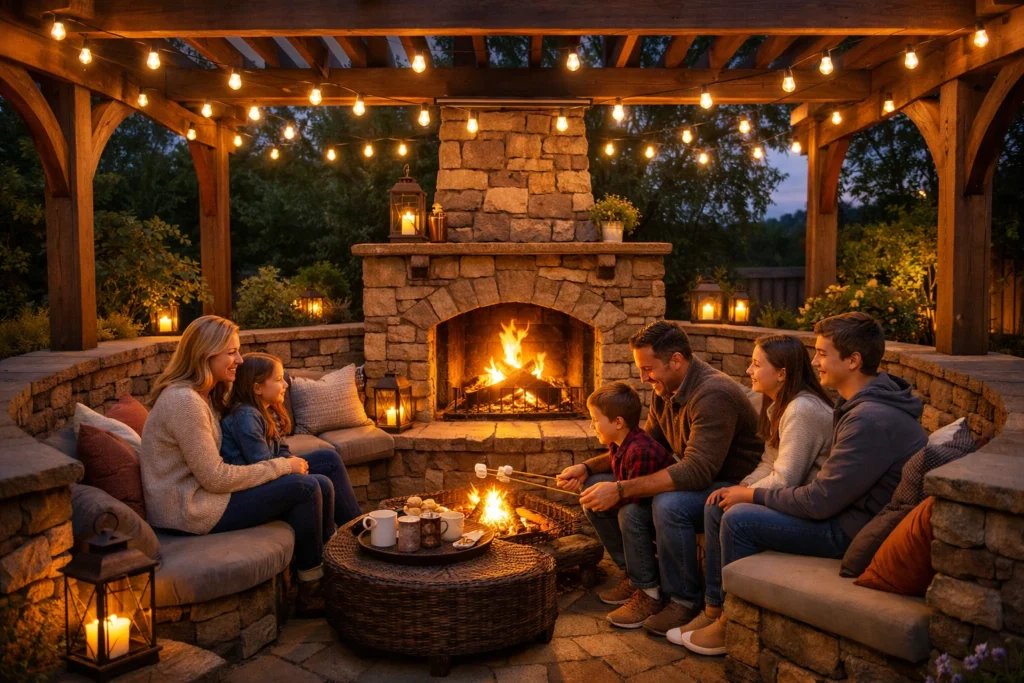
An outdoor fireplace’s greatest power lies in its ability to anchor an entire outdoor room. Rather than treating it as an isolated feature, successful designs make the fireplace the centerpiece around which all other elements organize themselves. Arrange seating in circular or semicircular configurations that naturally orient toward the fireplace, encouraging conversation and communal gathering.
Built-in seating walls flanking the fireplace create both functional comfort and visual balance. These curved or straight benches with plush cushions invite lingering and make entertaining easier by eliminating the need for multiple outdoor furniture pieces. Combine seating walls with a curved hearth design to add softness and dimension to your fireplace structure, breaking up rigid angles with flowing, organic shapes.
Overhead structures like pergolas or louvered roof systems add definition to the space while framing the fireplace elegantly. The interplay of light and shadow from pergola slats creates dynamic visual interest while providing partial shade. For year-round usability, consider a covered patio or enclosed screened structure that allows three-season enjoyment even during inclement weather.
Strategic landscape lighting transforms your fireplace into an evening showstopper. Uplighting on the chimney, downlighting in overhead structures, and subtle pathway lighting create layers of illumination that extend functionality and safety into the evening hours. Landscape lights positioned to highlight the fireplace’s architectural details emphasize its role as the space’s primary focal point.
Practical Design Considerations
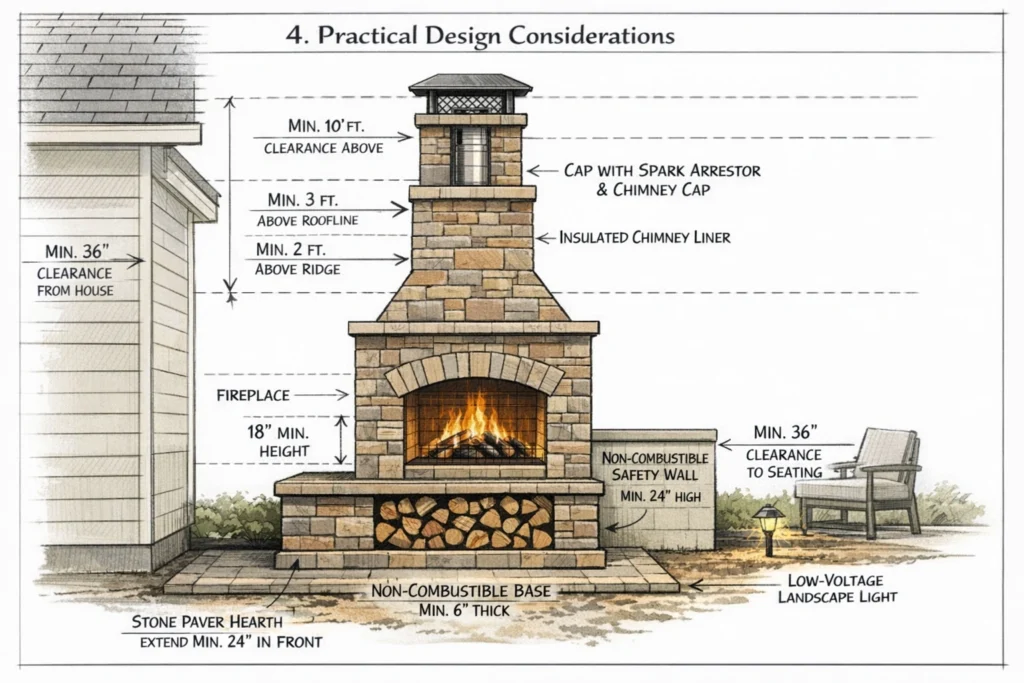
Location matters enormously for both safety and functionality. Outdoor fireplaces must be positioned at appropriate distances from your home and other structures as required by local building codes. Check with your local forest service office regarding burn authorizations and fire restrictions before finalizing placement. Prevailing wind patterns deserve consideration too, as they influence smoke direction and heat distribution.
For wood-burning fireplaces, plan adequate space for firewood storage nearby. Built-in storage cubbies flanking the structure serve practical purposes while enhancing visual appeal. If your fireplace lacks integrated storage, position a log rack conveniently close to minimize carrying distance during entertaining.
If you have young children or pets, safety becomes paramount. Fireplaces with glass enclosures, spark screens, or protective barriers create safer environments while still allowing enjoyment of the fire’s visual appeal. Even with precautions, establishing clear safety rules about maintaining safe distances from the fire protects everyone.
Consider how your fireplace integrates with other outdoor living elements. A fireplace combined with outdoor kitchen features like pizza ovens or grilling stations creates a comprehensive entertainment hub. Some designs even incorporate hot tubs on opposing sides of the fireplace, creating symmetrical balance and sophisticated outdoor living.
Style Inspirations for Every Preference
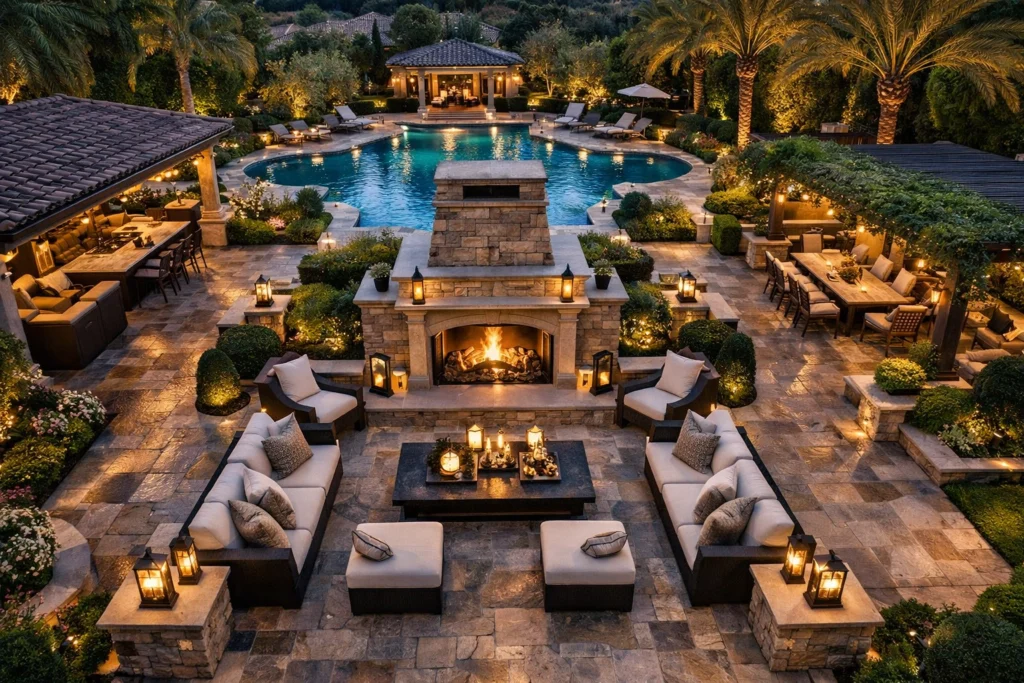
Luxurious estate designs frequently feature substantial stone fireplaces with tall architectural chimneys that command attention across the property. Paired with high-end outdoor furnishings, pool areas, and mature landscaping, these fireplaces become defining features of refined outdoor entertaining spaces. Dark stone, marble mantels, and herringbone firebrick patterns create unmistakable sophistication.
Cottage and farmhouse-inspired fireplaces embrace weathered materials and old-world finishes. Custom cottage stone veneer, reclaimed wood mantels, and Bluestone details create charming, lived-in appeal. These designs feel instantly welcoming and encourage the kind of relaxed entertaining where guests naturally settle in for hours of conversation.
Waterfront and lake-adjacent fireplaces celebrate scenic views while providing gathering warmth during cool evenings. Transparent glass railings preserve sightlines without visual obstruction. The interplay between fire’s warmth and water’s coolness creates appealing contrast that heightens sensory experience.
Desert and Southwestern designs embrace adobe-style finishes and earthy color palettes. Stucco applied in warm terracotta, sand, and rust tones evokes the natural landscape while modern furnishings and contemporary fireplace technology provide functional comfort.
Compact and small-space fireplaces prove that impressive entertaining doesn’t require expansive acreage. Tabletop gel fireplaces, wall-mounted models, and freestanding portable units bring fireplace appeal to apartments, condos, and intimate patios. These flexible options work beautifully in unexpected locations while maintaining full design impact.
Advanced Features and Customization
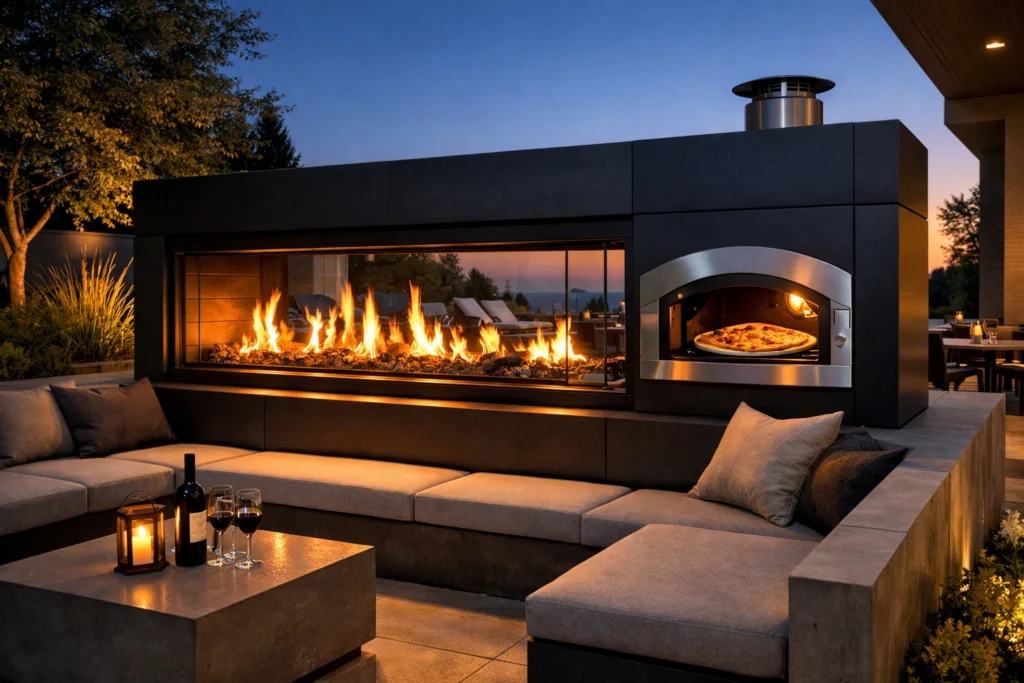
Double-sided fireplaces allow enjoyment from two adjacent spaces simultaneously, such as a porch and adjoining patio. These sophisticated designs create connection between spaces while serving both areas’ heating and ambiance needs. They work wonderfully as architectural room dividers that enhance rather than obstruct flow.
See-through gas fireplace inserts mounted in linear configurations create contemporary focal points with minimal architectural disruption. These sleek designs work beautifully mounted on exterior walls, providing warmth and flame viewing from multiple angles.
Curved fireplace designs break away from rectangular conventions, adding organic softness to outdoor spaces. Curved hearths and rounded stone surrounds create approachable, welcoming forms that feel less imposing than their angular counterparts.
Pizza oven combinations unite culinary and entertaining functions, allowing seamless transitions between courses while gathering with guests. The multi-functionality transforms your outdoor space into a complete entertainment destination beyond simple fire gathering.
Construction Methods That Last
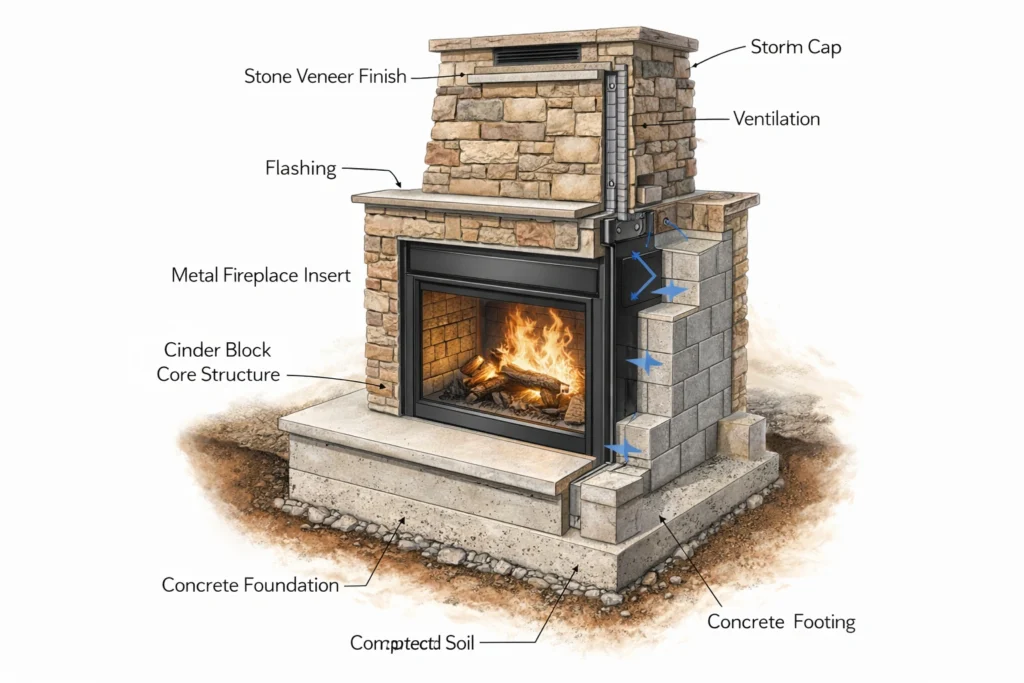
Understanding construction approaches ensures your fireplace remains beautiful and functional for years to come. Ground-level masonry fireplaces typically use a cinder-block core built on a concrete footing, finished with stone, brick, stucco, or other materials. This approach works beautifully for structures built directly on earth.
Elevated fireplaces attached to decks or porches require carpentry-based construction methods that safely support weight on elevated structures. Proper framing, flashing, and finish materials ensure weather resistance and structural integrity for decades of reliable performance.
Gas and electric inserts offer installation flexibility within both masonry and carpentry-built structures, allowing you to achieve custom designs without the complexity of traditional masonry chimneys. These self-contained units simplify installation while expanding design possibilities significantly.
Professional installation proves essential regardless of fireplace type. Qualified contractors understand local building codes, proper ventilation requirements, and construction techniques that ensure safety and longevity. Their expertise transforms your vision into a structurally sound, beautiful reality.
The Emotional and Social Impact
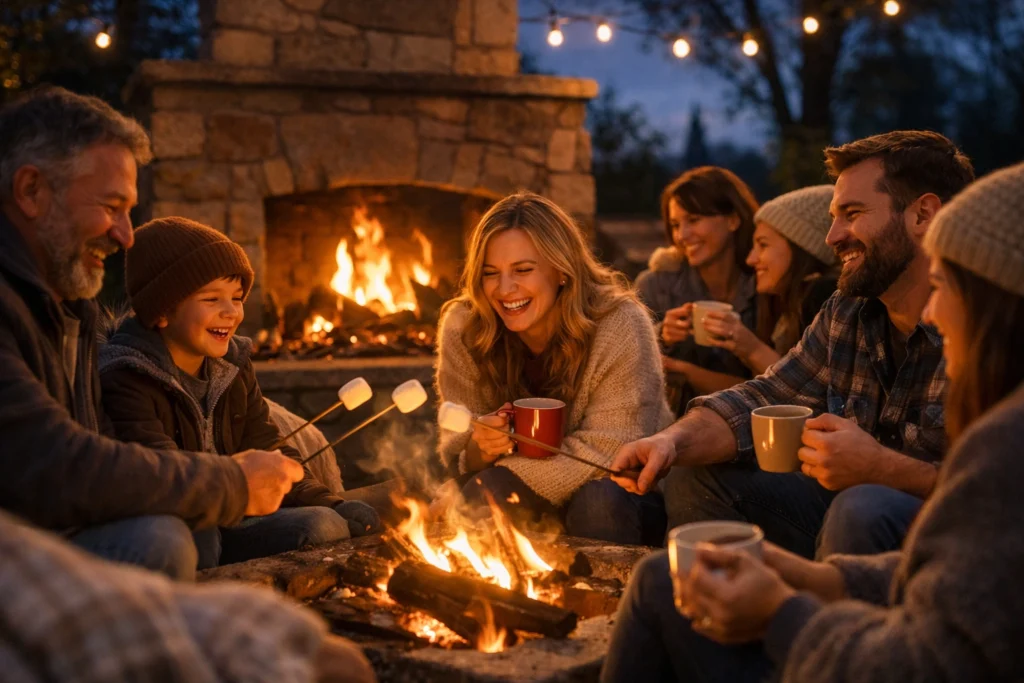
Research consistently demonstrates that outdoor fire features significantly enhance homeowner satisfaction and property enjoyment. According to homeowner surveys, those who added outdoor fire features reported joy scores of nearly 10 out of 10, indicating profound satisfaction with their investment. Beyond statistics, the real magic lies in how a fireplace creates gathering places where meaningful connections form naturally.
Children create memories roasting marshmallows and making s’mores. Couples find quiet evenings of connection and conversation. Families extend their togetherness into cooler months when outdoor gathering would otherwise cease. Friends linger longer than expected, conversations deepening as the fire glows and the evening cools. An outdoor fireplace becomes the heart of your backyard, the place where life’s best moments unfold.
Bringing Your Vision to Life
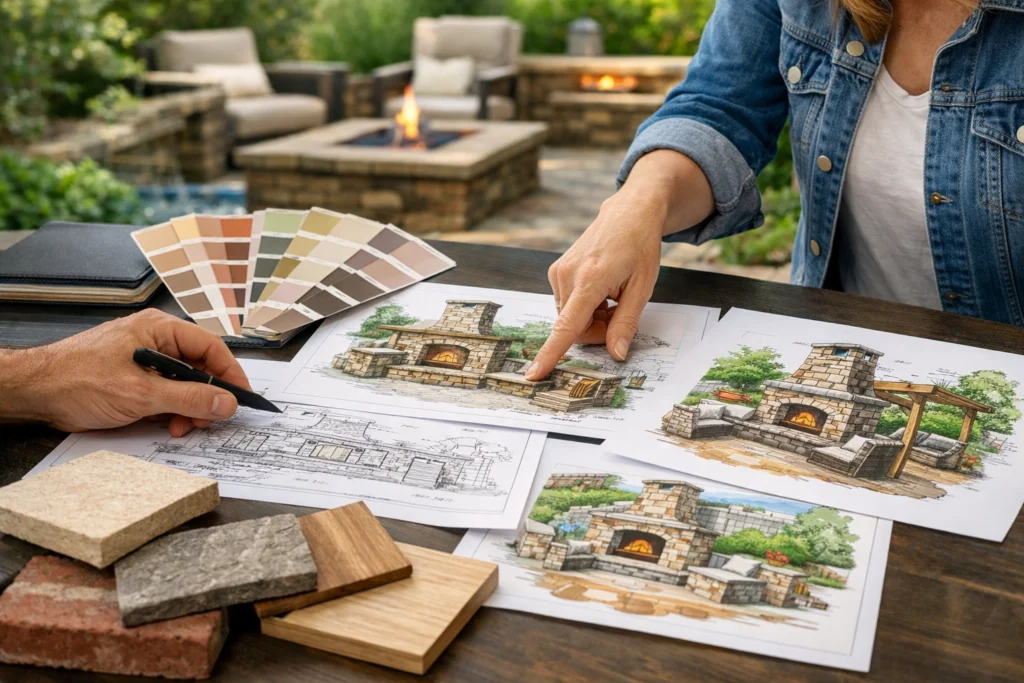
Creating your ideal outdoor fireplace begins with honest assessment of your space, style preferences, and intended use. Consider whether you envision intimate gatherings or larger entertaining events, quiet personal retreats or active family spaces. Evaluate your climate and how many seasons you’ll realistically use the space. Reflect on whether you prefer the traditional romance of wood fires or the convenient simplicity of gas.
Sketch your intended design and gather inspiration from various sources. Consult with landscape architects or design professionals who can translate your vision into practical, code-compliant reality. Discuss construction methods, material options, and fuel choices with experienced contractors who understand local requirements and best practices.
Remember that your outdoor fireplace should reflect your personality and enhance your lifestyle. Whether you choose timeless stone tradition or contemporary steel elegance, the best design is one that makes you eager to spend time in your outdoor space, gathering with those you love most.
Frequently Asked Questions
What is the average cost of building an outdoor fireplace?
Outdoor fireplace costs vary dramatically based on materials, size, and construction complexity. Simple portable fire pits range from a few hundred dollars, while built-in masonry fireplaces typically cost between eight thousand and twenty thousand dollars or more. Gas or electric inserts within existing structures cost considerably less than full masonry builds. Location, local labor costs, and customization significantly influence final pricing.
How much maintenance do outdoor fireplaces require?
Maintenance varies by fuel type. Wood-burning fireplaces require annual chimney inspection and cleaning plus regular chimney cap maintenance. Gas fireplaces need minimal upkeep beyond occasional cleaning and annual inspection. Electric and ethanol fireplaces require virtually no maintenance. Regardless of type, protecting your fireplace from harsh weather with appropriate covers extends its lifespan significantly.
Can I build an outdoor fireplace on my deck or porch?
Yes, but deck-mounted fireplaces require proper carpentry-based construction with appropriate framing, flashing, and fire-resistant materials. Elevated structures demand different building techniques than ground-level fireplaces. Always consult local building codes and have professional contractors assess your deck’s structural capacity before proceeding. Gas or electric inserts prove safer and easier to install on elevated structures than traditional masonry builds.
What fuel source is most eco-friendly for outdoor fireplaces?
Electric and ethanol fireplaces produce zero emissions and require no combustion. Gas fireplaces are cleaner-burning than wood with lower emissions. If you prefer wood-burning, sustainably sourced firewood from managed forests minimizes environmental impact. Ethanol fuel alternatives produce cleaner combustion than traditional wood while maintaining authentic flame aesthetics.
Are outdoor fireplaces safe around children and pets?
Outdoor fireplaces present burn risks that require careful safety management. Install protective barriers, spark screens, or glass enclosures to prevent accidental contact. Establish clear safety rules about maintaining appropriate distances from the fire. Supervise children closely and ensure pets cannot access dangerous areas. Gas fireplaces without real flames present lower risks than wood-burning models, though heat still requires respect and caution.

One Comment