
22 Backyard Outdoor Lighting Ideas for Cozy Night Vibes
Creating the perfect outdoor sanctuary extends beyond daylight hours. The right backyard outdoor lighting ideas transform ordinary evenings into memorable experiences, whether you’re hosting summer gatherings or enjoying quiet moments under the stars. Strategic illumination enhances safety, highlights architectural features, and establishes an inviting atmosphere that beckons you outdoors long after sunset.
Modern outdoor lighting combines functionality with aesthetic appeal. From vintage Edison bulbs casting warm glows to sleek LED strips defining contemporary spaces, today’s options cater to every design preference and practical need. Understanding how to layer different light sources, select appropriate fixtures, and position them effectively turns your backyard into an enchanting retreat that feels just as welcoming at night as it does during the day.
Understanding the Foundation of Outdoor Lighting Design
Effective backyard illumination starts with recognizing three distinct lighting categories that work together harmoniously. Ambient lighting provides overall illumination, establishing the general brightness level across your outdoor space. This foundational layer might include overhead string lights or strategically placed lanterns that create a soft, diffused glow throughout the area.
Task lighting addresses specific functional needs, ensuring safe navigation and supporting activities like outdoor cooking or dining. Path lights guide footsteps along walkways, while focused fixtures illuminate grills, outdoor kitchens, and dining surfaces. This practical layer prevents accidents and makes your backyard fully usable after dark.
you may also like this:24 Outdoor Plant Stands Ideas for Stylish Garden Spaces
Accent lighting adds the finishing touch, drawing attention to architectural details, mature trees, water features, or sculptural elements. Spotlights positioned at ground level can uplight specimen plants, while directional fixtures highlight textured walls or interesting focal points. The interplay between these three lighting types creates depth and visual interest that single-source illumination simply cannot achieve.
Creating Magical Overhead Canopies with String Lights
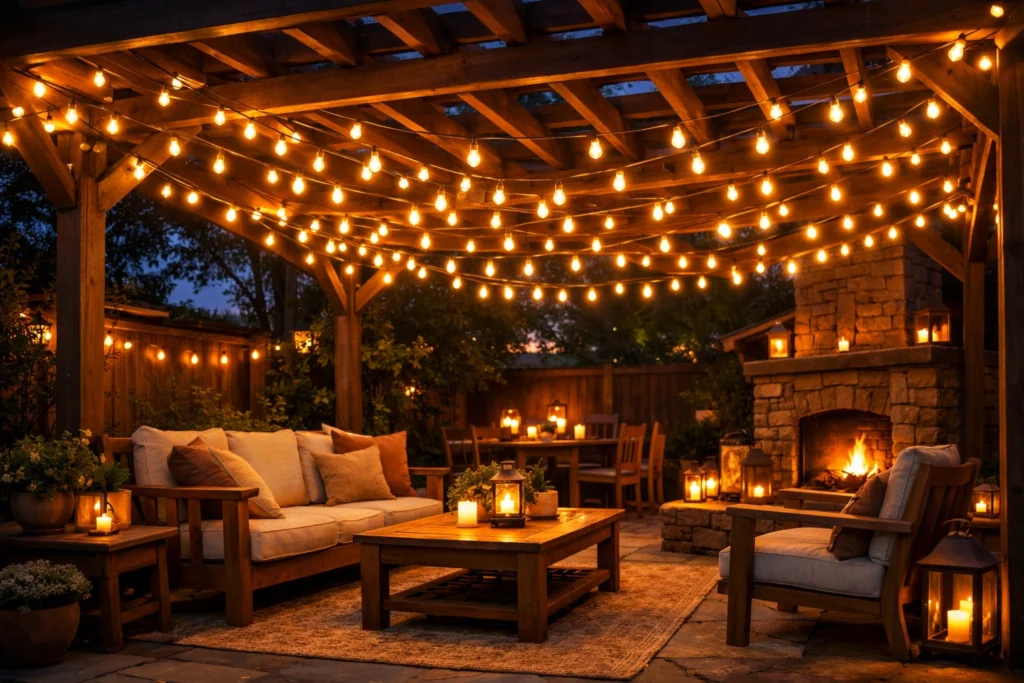
String lights remain the most versatile and beloved option for backyard outdoor lighting ideas. Their gentle glow instantly transforms any space into a festive gathering spot or romantic retreat. Drape them across patios, weave them through pergola rafters, or suspend them between sturdy posts to create an illuminated canopy that mimics a starlit sky.
Edison bulbs deliver vintage charm with their exposed filaments and warm amber tones, perfect for rustic or farmhouse aesthetics. For bohemian vibes, opt for globe string lights or delicate fairy lights that add whimsical sparkle. Commercial-grade string lights withstand weather extremes better than cheaper alternatives and provide years of reliable service. Consider dimmable options that adjust brightness levels throughout the evening, transitioning from dinner illumination to softer late-night ambiance.
Installation success depends on solid anchor points and proper tension. Avoid the connect-the-dots appearance by establishing a clear structure rather than randomly stringing lights between available surfaces. Creating intentional patterns like zigzags or parallel lines adds visual sophistication.
Defining Pathways with Ground-Level Illumination
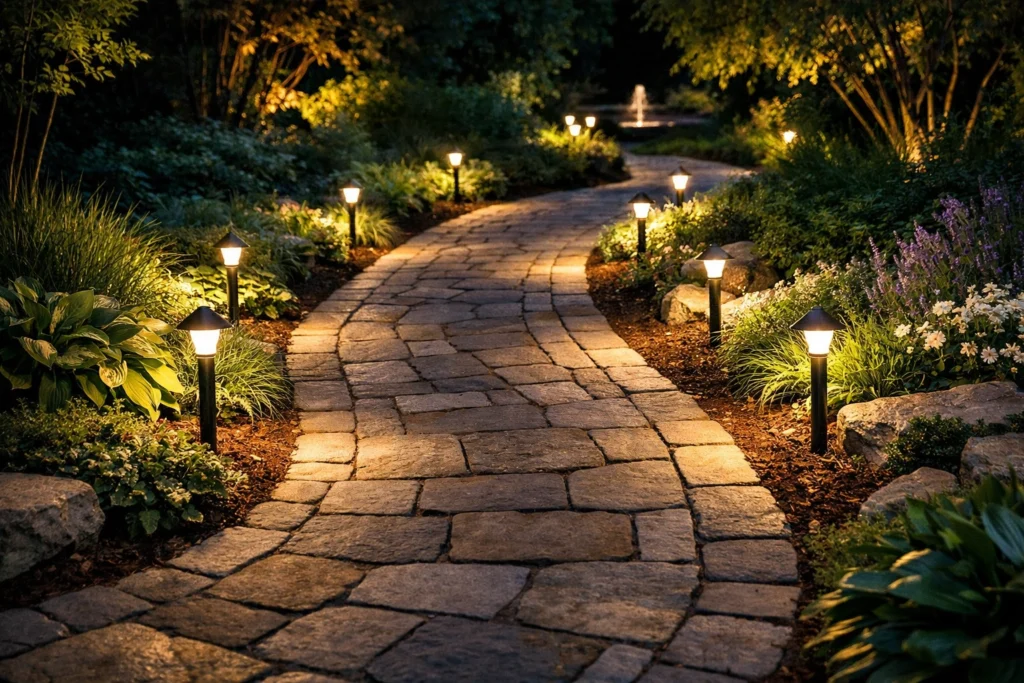
Safety and style converge in pathway lighting solutions that guide movement while enhancing landscape design. Low-voltage LED stake lights line walkways, driveways, and garden borders, preventing trips and falls while subtly showcasing your property’s boundaries and features.
Solar-powered path lights offer installation simplicity since they require no wiring or electrical connections. During daylight hours, integrated solar panels collect energy that powers the lights automatically after sunset. Place them in areas receiving adequate sunlight for optimal performance. For consistently bright illumination regardless of weather conditions, hardwired low-voltage systems provide superior reliability.
Modern path lights come in countless styles, from minimalist contemporary designs to ornate traditional lanterns. Spacing fixtures six to eight feet apart typically provides sufficient coverage without creating excessive brightness that disrupts the natural nighttime environment. Warm white bulbs in the 2700K to 3000K range maintain inviting ambiance rather than harsh clinical brightness.
Elevating Deck Spaces with Built-In Fixtures
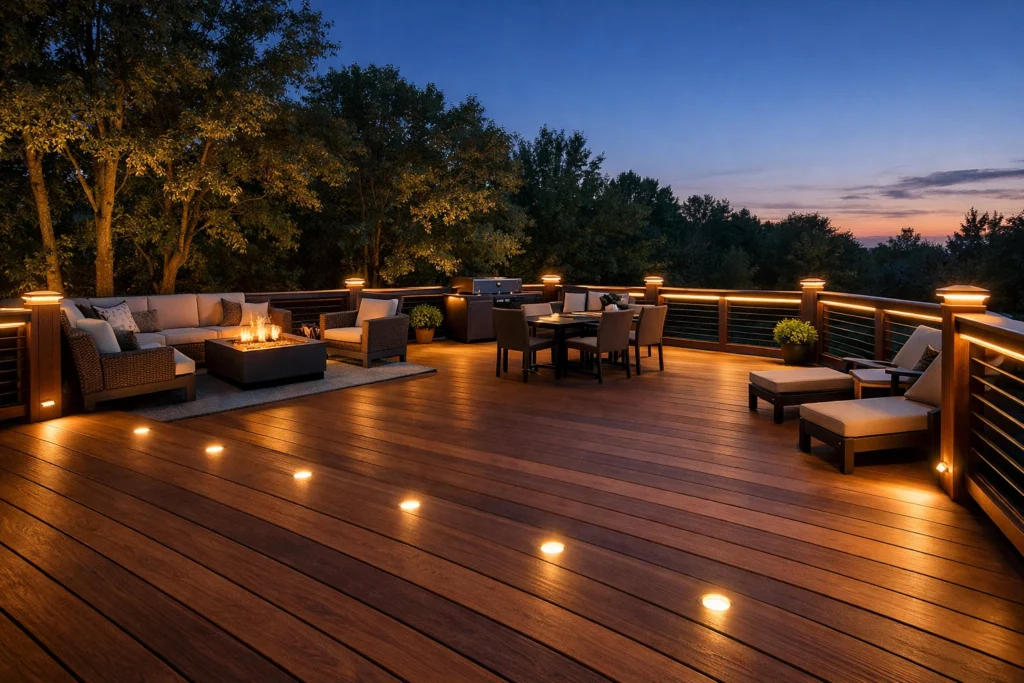
Deck lighting transforms elevated outdoor living areas into sophisticated entertainment zones. Recessed lights installed flush with deck surfaces create clean, unobtrusive illumination that highlights architectural lines without protruding obstacles. Railing lights mount along handrails, providing eye-level visibility while defining the deck’s perimeter.
Post cap lights serve dual purposes, adding decorative elements atop railing posts while casting gentle downward illumination. These fixtures come in solar or low-voltage options, with designs ranging from traditional lantern shapes to sleek modern cubes. Stair riser lights enhance safety on steps and transitions between deck levels, reducing trip hazards during evening use.
Under-rail LED strips offer contemporary appeal, creating glowing lines that outline deck edges and seating areas. This technique works especially well in modern design schemes emphasizing clean geometry and minimalist aesthetics. Combining multiple deck lighting types at different heights creates layered illumination that feels professionally designed.
Showcasing Landscape Features with Spotlighting
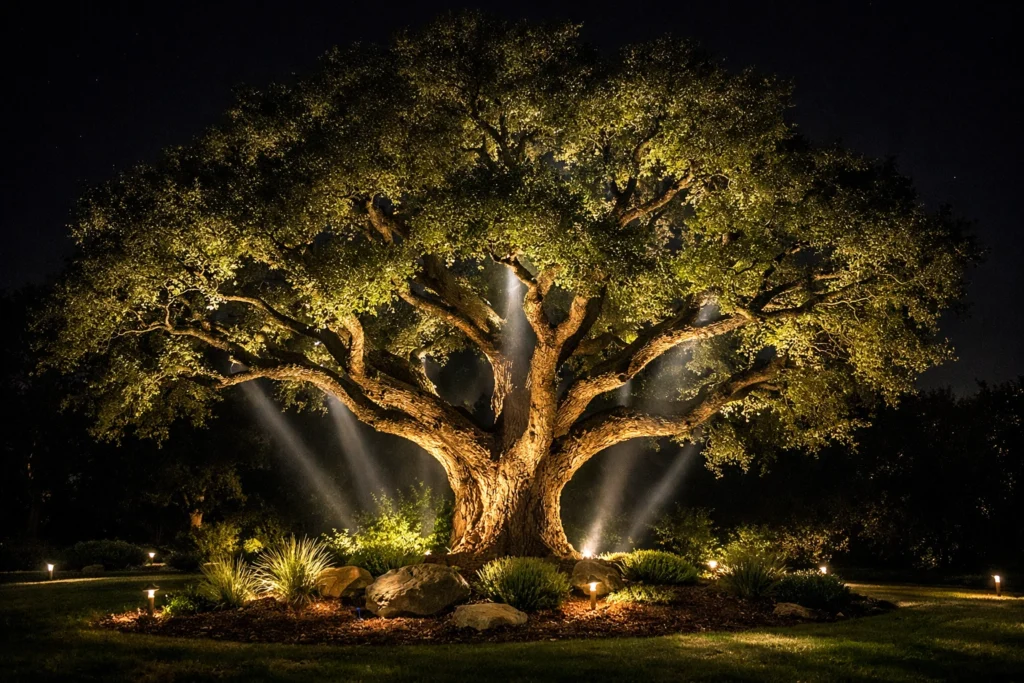
Strategic spotlights direct focused beams that emphasize your yard’s most impressive elements. Uplighting mature trees creates dramatic silhouettes and highlights interesting branch structures. Position fixtures at the tree base, angling beams upward to wash light through the canopy. This technique adds vertical dimension and makes nighttime spaces feel larger and more dynamic.
Directional spotlights also accentuate architectural details on your home’s exterior, water features like fountains or ponds, sculptures, or specimen plants with unique forms or colors. Adjustable fixtures allow seasonal repositioning as plantings mature or design preferences evolve. LED spotlights consume minimal energy while providing intense, focused beams in various color temperatures.
Avoid overlighting, which creates harsh, unflattering effects and disturbs natural darkness. Selective emphasis on a few key features proves more effective than attempting to illuminate every element. Professional landscape designers often recommend the “less is more” approach, where thoughtful placement of a handful of fixtures creates sophisticated results.
Adding Warmth with Fire Features
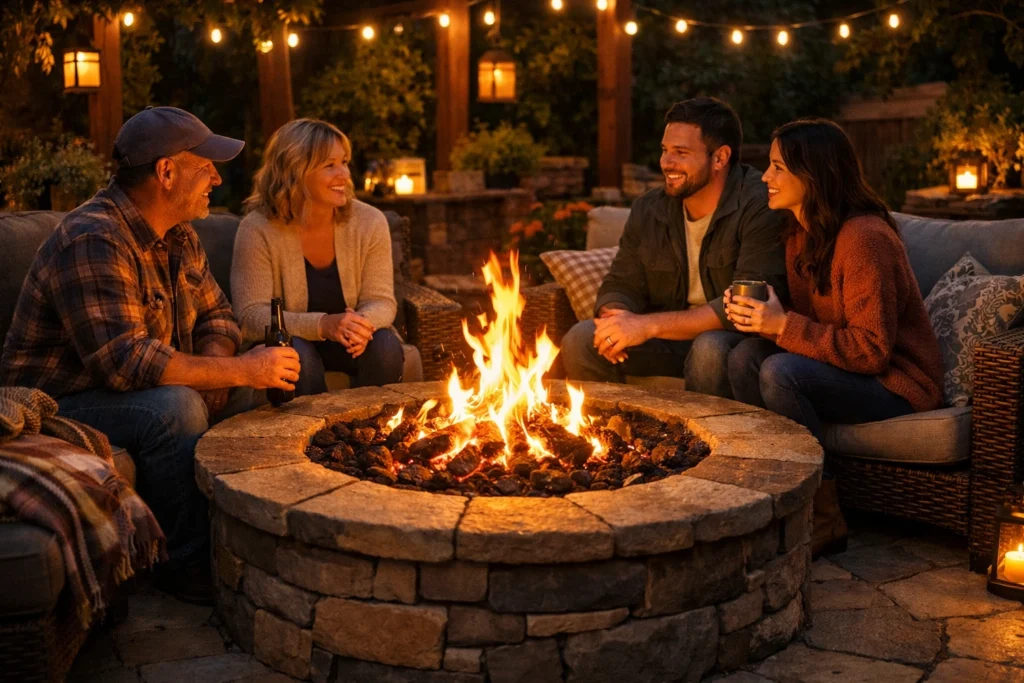
Fire pits and fireplaces function as both light sources and gathering magnets, creating primal appeal that draws people together. The dancing flames provide ambient illumination with constantly shifting patterns that no electric fixture can replicate. Modern fire features range from portable metal bowls to elaborate built-in stone hearths, accommodating various budgets and space constraints.
Gas fire pits offer convenient operation with instant ignition and adjustable flame heights. Wood-burning options provide authentic crackling ambiance and aromatic smoke many people associate with outdoor relaxation. Tabletop fire bowls deliver flame ambiance on smaller patios or balconies where full-sized fire pits won’t fit.
Safety considerations include maintaining proper clearances from structures and vegetation, using fireproof flooring materials, and never leaving flames unattended. Many municipalities regulate outdoor fire features, so verify local codes before installation. When positioned thoughtfully, fire features become natural focal points that organize seating arrangements and establish cozy zones within larger yards.
Incorporating Lanterns for Portable Flexibility
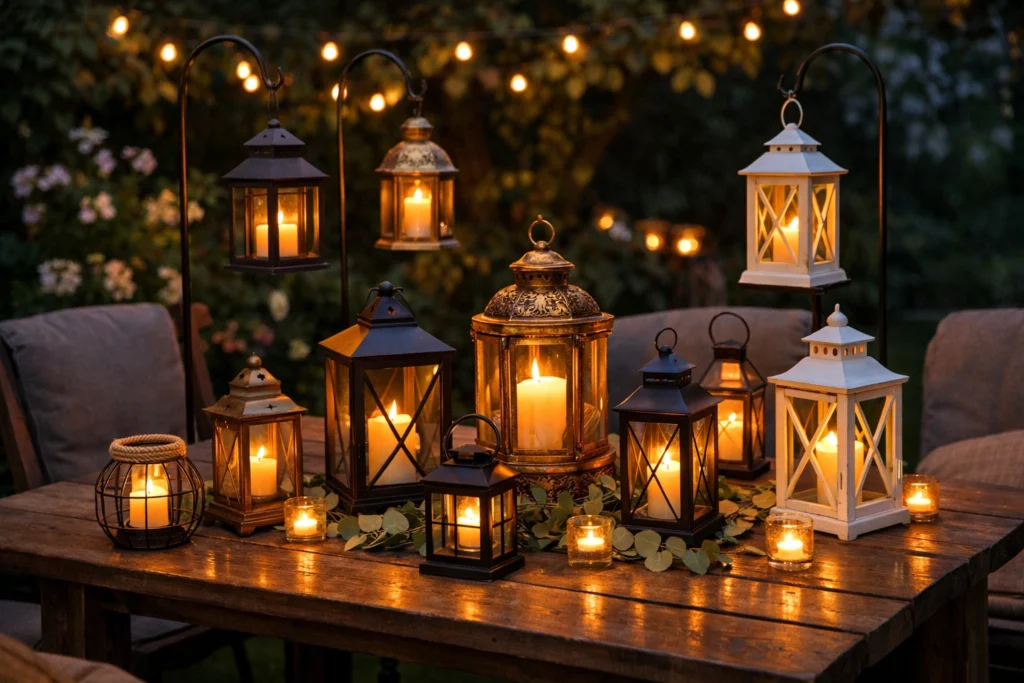
Lanterns combine decorative appeal with practical portability, allowing lighting adjustments as needs change. Battery-operated LED lanterns eliminate candle fire risks while providing long-lasting illumination. Cluster varied sizes on outdoor dining tables, position them along stairways, or hang them from shepherd’s hooks to create glowing markers throughout your landscape.
Solar lanterns charge during the day and automatically illuminate at dusk, offering set-and-forget convenience. Traditional candle lanterns with glass enclosures protect flames from breezes while casting warm, flickering light that enhances intimate settings. Metal, wood, and woven materials each contribute different aesthetic qualities, from industrial chic to coastal casual.
Hanging lanterns suspended from tree branches, pergola beams, or wall-mounted hooks add eye-level interest and illuminate vertical space. Mix lantern styles for collected, personalized looks that feel curated rather than matching and monotonous. This flexibility makes lanterns ideal for renters or anyone who prefers changeable design schemes.
Illuminating Pergolas and Covered Structures
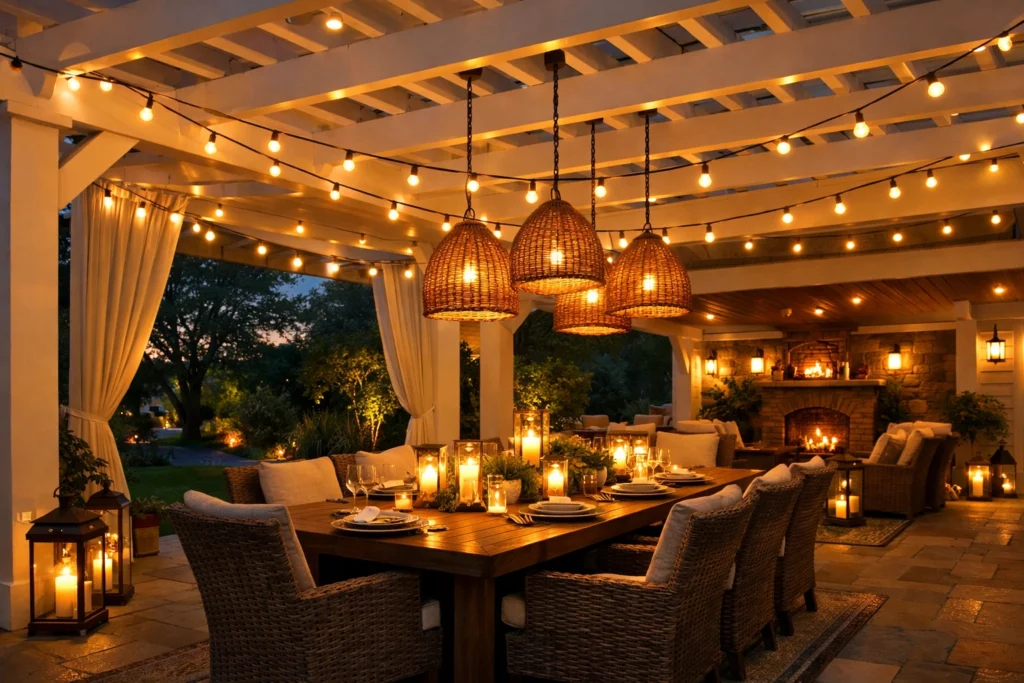
Pergolas benefit from dedicated lighting that extends their usability into evening hours. String lights remain popular choices, creating glowing canopies that define covered areas. Pendant lights suspended from pergola beams provide focused task lighting over dining tables or seating groups, combining functionality with decorative impact.
Recessed lights installed in pergola rafters deliver sleek, contemporary illumination without visible fixtures disrupting clean architectural lines. This approach suits modern design aesthetics emphasizing minimalism and integration. LED strip lighting hidden along beam edges creates soft indirect glow that highlights structure without harsh downlighting.
Color-changing smart bulbs enable mood customization, shifting from bright white for dinner preparation to warm amber for late-night relaxation. Remote controls or smartphone apps make adjustments effortless. Consider the pergola’s primary purpose when selecting fixtures, whether intimate dining requires focused task lighting or lounge seating benefits from softer ambient sources.
Implementing Smart Lighting Technology
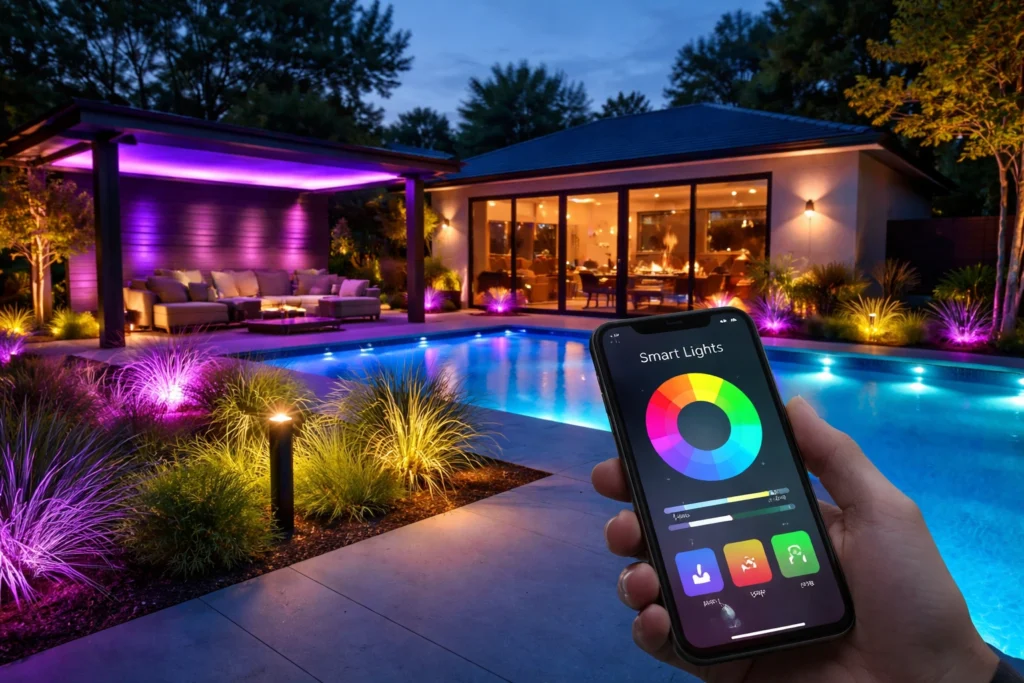
Smart outdoor lighting systems offer unprecedented control and customization through mobile applications or voice commands. Program schedules that automatically turn lights on at sunset and off at bedtime, eliminating manual operation. Adjust brightness levels, change color temperatures, or activate specific zones without leaving your seat.
Integration with home automation systems allows coordinated lighting scenes that respond to various triggers. Motion sensors can activate pathway lights when someone approaches, enhancing security while conserving energy. Geofencing features detect when you’re away, randomizing lighting patterns to suggest occupancy and deter potential intruders.
While smart systems require higher initial investments than traditional fixtures, long-term energy savings and enhanced functionality justify the expense for technology enthusiasts. Ensure compatibility between smart bulbs, controllers, and existing home automation platforms before purchasing. Many systems now use standard protocols enabling mix-and-match component selection rather than locked proprietary ecosystems.
Maximizing Energy Efficiency with Solar Solutions
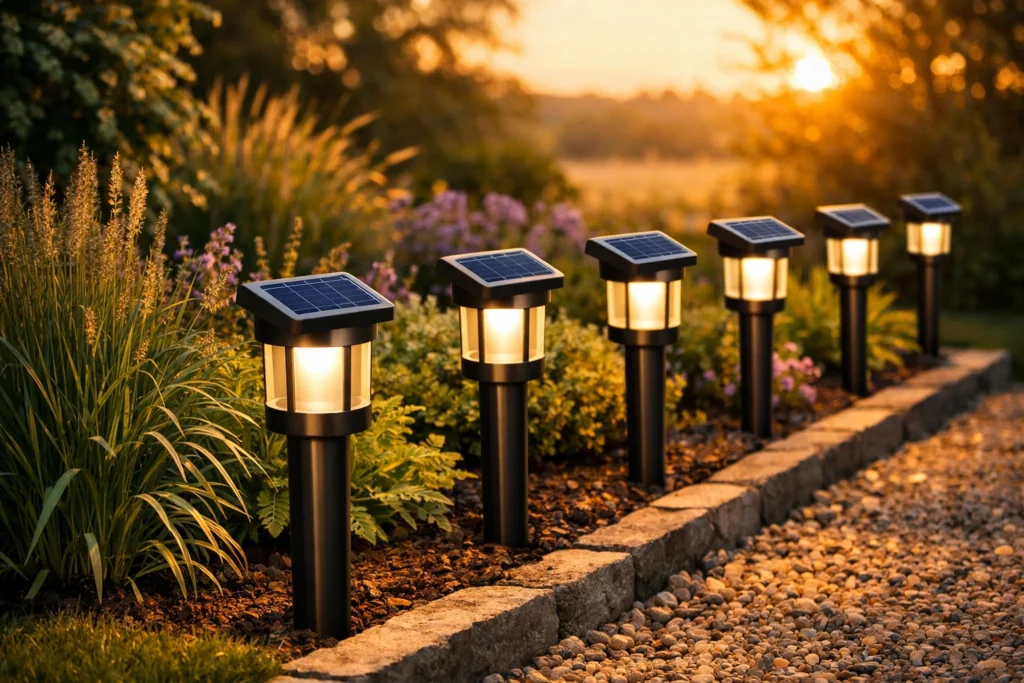
Solar-powered fixtures harness renewable energy, reducing environmental impact and eliminating electrical costs. Advancements in solar technology have dramatically improved performance, with modern panels efficiently collecting energy even during overcast conditions. Batteries store collected power for overnight illumination lasting eight to twelve hours after full charging.
Solar path lights, spotlights, string lights, and decorative fixtures now rival hardwired alternatives in brightness and reliability. Position solar panels where they receive maximum sun exposure, avoiding shaded locations that limit charging capability. Regular cleaning of panel surfaces maintains optimal energy collection by preventing dirt and debris buildup.
The installation simplicity of solar fixtures makes them ideal for DIY projects and rental properties where permanent electrical modifications aren’t permitted. While initial brightness may seem dimmer than wired fixtures, quality solar lights provide adequate illumination for most residential applications. For critical safety areas requiring guaranteed consistent brightness, hybrid approaches combining solar and hardwired fixtures offer practical compromises.
Enhancing Security with Motion-Activated Fixtures
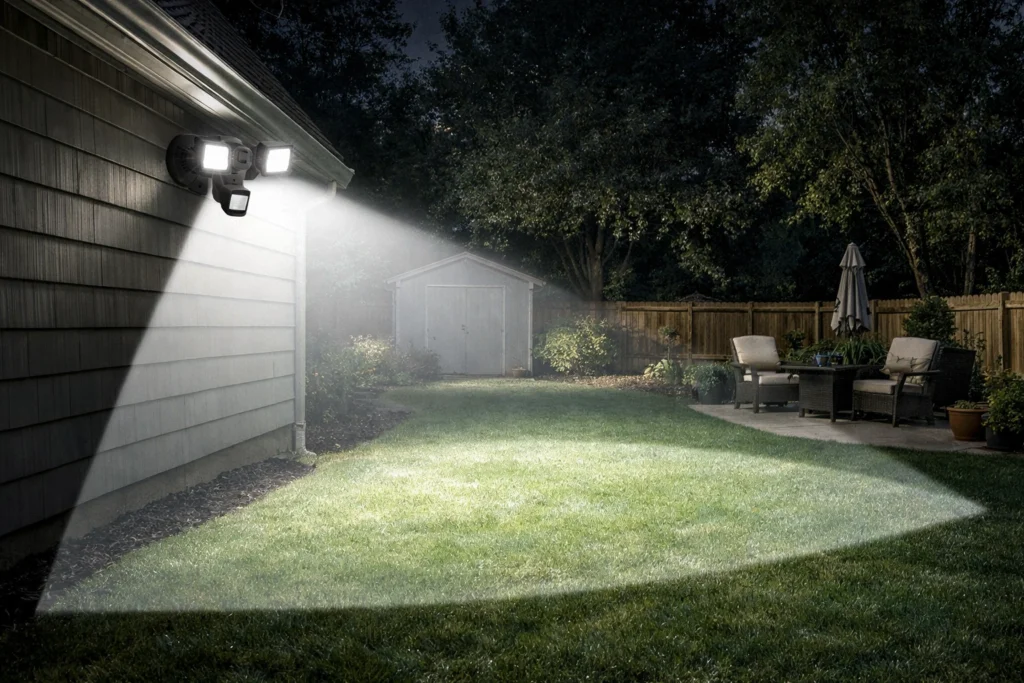
Motion-sensing lights serve dual purposes, illuminating areas when needed while conserving energy during inactive periods. Flood lights mounted near entryways, garages, and dark yard corners activate when detecting movement, startling potential intruders and alerting homeowners to activity.
Adjustable sensitivity settings prevent false triggers from small animals or wind-blown branches while maintaining reliable human detection. Timer controls determine how long lights remain active after motion stops, typically ranging from thirty seconds to several minutes. Photocells ensure motion activation only occurs after dark, preventing unnecessary daytime operation.
While security remains the primary benefit, motion-sensing fixtures also provide practical convenience when carrying items to and from vehicles or navigating outdoor spaces hands-free. Contemporary designs look attractive rather than purely utilitarian, integrating seamlessly into overall landscape lighting schemes. Combining motion-activated security lights with always-on ambient fixtures creates comprehensive illumination addressing both safety and aesthetic goals.
Creating Intimate Spaces with Indirect Lighting
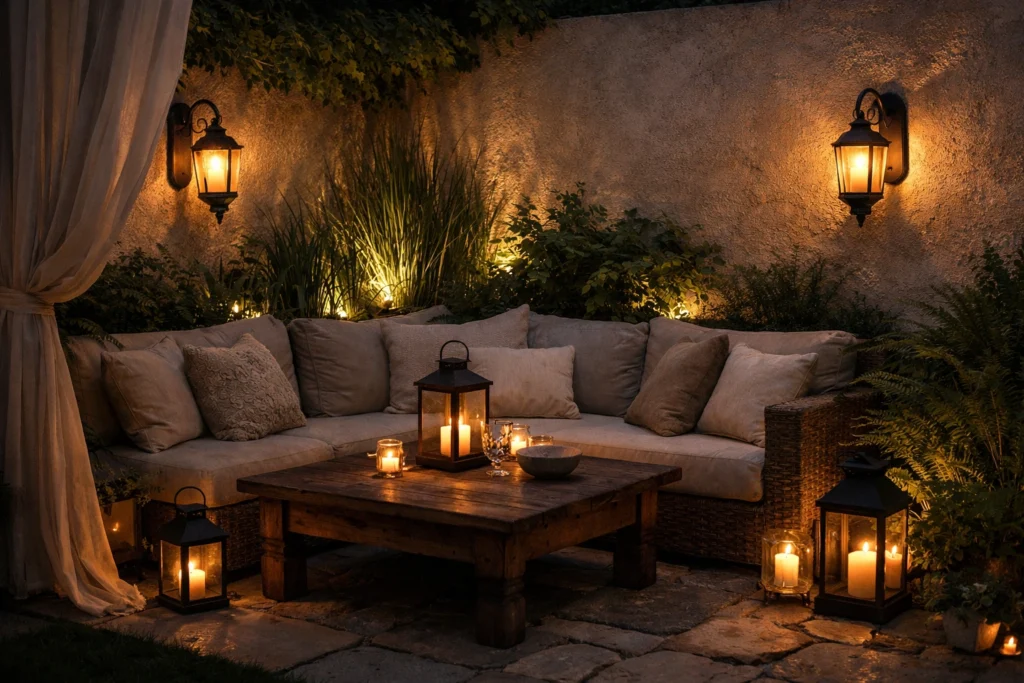
Indirect lighting techniques bounce light off surfaces rather than directing beams straight at people or objects. This approach reduces harsh glare while creating soft, diffused illumination that feels welcoming and sophisticated. Wall sconces angled upward wash light across vertical surfaces, highlighting textures while avoiding direct eye contact with bulbs.
Uplights positioned behind seating areas or large planters cast gentle background glow that defines spaces without overwhelming them. Recessed step lights installed vertically in riser faces provide safety illumination that guides without blinding. These subtle approaches prove especially effective in smaller yards where bright direct lighting feels oppressive.
Indirect methods work particularly well for creating romantic or meditative atmospheres. The resulting shadows and gradations add depth and mystery rather than flattening everything with uniform brightness. Combining indirect ambient sources with a few direct task lights where needed produces balanced schemes supporting various activities and moods throughout the evening.
Incorporating Color with LED Options
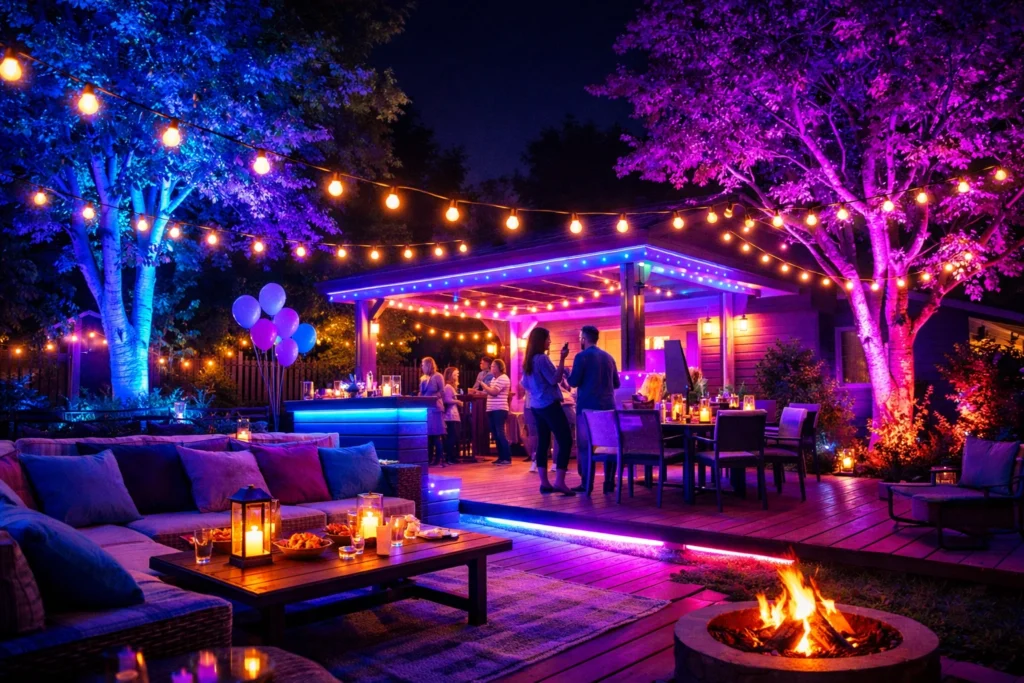
LED technology enables color customization previously impossible with traditional bulbs. RGB LED fixtures produce millions of hues, allowing seasonal decoration or event-specific themes without changing physical fixtures. Transform your backyard into a tropical paradise with turquoise and coral tones, or create patriotic displays with red, white, and blue combinations.
Color-changing string lights, spotlights, and submersible pool lights offer creative possibilities limited only by imagination. Many systems include preset programs that automatically cycle through colors or respond to music rhythms. While novelty colors suit parties and celebrations, everyday use typically benefits from warm whites maintaining timeless appeal.
Quality matters significantly with color LED fixtures, as cheaper products often produce inaccurate hues or inconsistent output. Research brands known for color accuracy and long-term reliability before purchasing. Remember that colored lighting dramatically alters how objects and people appear, so test effects before important events to ensure desirable results.
Highlighting Water Features
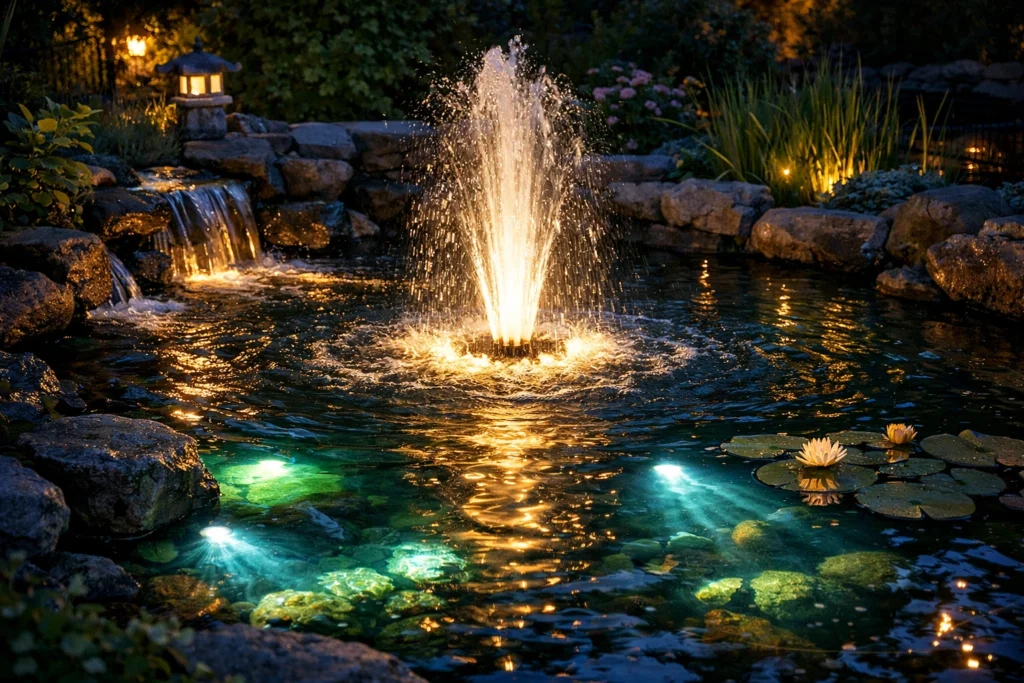
Ponds, fountains, and waterfalls become mesmerizing focal points when properly illuminated. Submersible LED fixtures designed for underwater use create glowing effects that emphasize flowing water and rippling surfaces. Spotlights angled across water features highlight movement and texture while avoiding direct glare into viewing areas.
Floating solar lights drift across pond surfaces, creating dynamic lighting patterns that shift with breezes and currents. Fountain lights integrated within spray nozzles illuminate water jets from within, producing dramatic columns of glowing liquid. Color-changing underwater fixtures enable seasonal variety and special event customization.
Ensure all water feature lighting uses fixtures specifically rated for submersion or water exposure. Standard outdoor-rated lights may not withstand constant moisture contact, leading to premature failure or safety hazards. Professional installation often proves worthwhile for complex water feature lighting requiring electrical connections near water sources.
Utilizing Tiki Torches for Tropical Ambiance
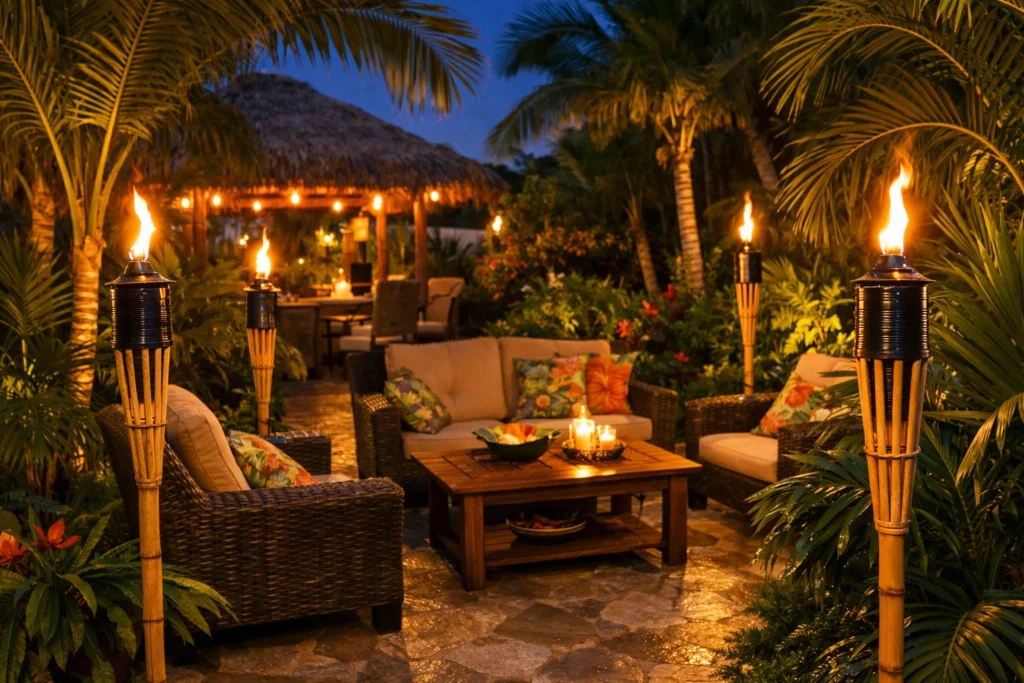
Tiki torches evoke vacation destinations and tropical getaways, making them popular choices for themed outdoor spaces. Traditional bamboo torches filled with citronella oil provide ambient flame light while repelling mosquitoes and other insects. Modern interpretations include metal torches with decorative finishes and tabletop versions for smaller spaces.
Strategic placement around seating areas or along property perimeters creates glowing boundaries that define entertaining zones. Varying torch heights adds visual interest and prevents monotonous uniformity. Most tiki torches use replaceable fuel canisters offering several hours of burn time per filling.
Safety considerations include maintaining clearance from overhead vegetation, positioning torches away from high-traffic areas where they might be knocked over, and extinguishing flames before leaving the area unattended. While tiki torches work wonderfully for parties and special occasions, daily use may prove impractical compared to electric alternatives requiring no fuel replacement or flame monitoring.
Installing Chandelier Statements
Outdoor chandeliers bring unexpected elegance to covered patios and pergolas, transforming ordinary spaces into sophisticated outdoor rooms. Weather-resistant versions use rust-proof materials and sealed electrical components capable of withstanding moisture exposure. Designs range from rustic wrought iron to contemporary geometric metalwork, accommodating diverse aesthetic preferences.
Chandeliers work best centered over dining tables or primary seating areas where they provide functional lighting while serving as decorative focal points. Installation requires secure overhead support capable of bearing fixture weight plus safety margins. Professional mounting ensures proper support and electrical connections meeting local building codes.
Solar-powered chandeliers assembled from individual solar lights offer creative DIY alternatives to expensive hardwired fixtures. These ingenious designs create impressive visual statements at fraction of traditional costs while eliminating electrical complexity. Battery-operated LED versions provide another accessible option for renters or anyone seeking chandelier impact without permanent installation commitment.
Incorporating Candle Ambiance
Nothing replicates the warm, flickering quality of candlelight, making it irreplaceable for creating intimate outdoor moments. Pillar candles in hurricane lanterns provide wind protection while casting dancing shadows. Votive clusters on dining tables establish romantic settings perfect for special occasions.
LED flameless candles offer candlelight aesthetics without fire risks, making them practical for unsupervised use or areas where open flames are prohibited. Quality LED candles feature realistic flickering effects that convincingly mimic real flames. Timer functions automatically activate candles at preset times, eliminating manual operation.
Citronella candles combine ambient lighting with insect-repelling properties, making outdoor time more comfortable during mosquito season. Position candles on stable, fireproof surfaces away from flammable materials and never leave burning candles unattended. Mix real and LED candles for balanced approaches combining authentic ambiance with practical safety.
Designing with Post Lights
Freestanding post lights installed at strategic intervals provide reliable illumination while contributing vertical design elements. Driveway post lights mark property entries and guide vehicle approach. Garden post lights define walking paths while adding decorative interest to landscape beds.
Solar post cap lights mount atop fence posts or deck railings, charging during the day and automatically illuminating at night. Traditional lamp post styles suit colonial or Victorian architecture, while contemporary cylinder designs complement modern homes. Adjustable height posts accommodate varying needs from low pathway markers to taller area lights.
Installation of hardwired post lights requires underground electrical conduit, typically necessitating professional services unless you possess electrical expertise. Solar alternatives eliminate wiring complexity while delivering adequate performance for most residential applications. Consider post light scale relative to surrounding features to ensure appropriate visual balance.
Utilizing Moonlighting Techniques
Moonlighting mimics natural lunar illumination by positioning lights high in trees to shine down through branches and foliage. This subtle technique creates dappled patterns resembling moonlight filtering through leaves. The gentle, naturalistic effect feels less artificial than standard landscape lighting approaches.
Installing fixtures in mature trees requires careful attention to tree health, using non-invasive mounting methods that won’t damage bark or interfere with growth. Professional tree services often handle installations ensuring both proper lighting effects and tree preservation. Fixtures should use shielded bulbs preventing direct glare while directing light downward.
Moonlighting works especially well in yards featuring mature tree canopies where natural overhead structures already exist. The technique enhances existing landscape character rather than imposing foreign elements. Combining moonlighting with ground-level uplighting creates balanced illumination addressing both overhead and lower-level spaces.
Conclusion
Transforming your backyard with thoughtful outdoor lighting extends your living space far beyond daylight hours. Whether you prefer the casual charm of string lights, the sophisticated impact of architectural fixtures, or the natural warmth of fire features, countless options exist for creating personalized outdoor sanctuaries. Successful lighting design layers ambient, task, and accent sources while respecting dark sky principles and energy conservation.
Start by identifying your primary goals, whether enhancing safety, enabling evening entertaining, or simply enjoying your yard after sunset. Experiment with various fixture types and positions before committing to permanent installations. Quality fixtures designed specifically for outdoor use provide years of reliable service while cheaper alternatives often fail prematurely. Remember that effective outdoor lighting creates atmosphere and functionality without overwhelming natural darkness or disturbing neighbors.
Your backyard represents valuable square footage deserving the same design attention as interior rooms. Strategic illumination transforms it from underutilized space into a cherished retreat where memories form and daily stresses fade. With proper planning and quality fixtures, your outdoor lighting investment rewards you with extended usability, enhanced beauty, and increased property value for years to come.
Frequently Asked Questions
What is the most energy-efficient outdoor lighting option?
LED fixtures consume significantly less electricity than traditional incandescent or halogen bulbs while lasting much longer, making them the most energy-efficient choice. Solar-powered lights eliminate electrical costs entirely by harnessing renewable energy, though their performance depends on adequate sun exposure for charging.
How many lumens do I need for pathway lighting?
Pathway lights typically require 100 to 200 lumens per fixture to provide adequate visibility without excessive brightness. Space fixtures six to eight feet apart for continuous illumination along walkways, adjusting distances based on specific fixture output and desired brightness levels.
Can I install outdoor lighting myself or should I hire professionals?
Solar fixtures and battery-operated options offer straightforward DIY installation requiring no electrical expertise. Hardwired systems involving household electrical connections typically require professional installation to ensure code compliance and safety. Low-voltage systems fall somewhere between, often manageable for handy homeowners comfortable following detailed instructions.
What color temperature works best for outdoor lighting?
Warm white bulbs ranging from 2700K to 3000K create inviting, cozy atmospheres most people prefer for residential outdoor spaces. Cooler temperatures above 4000K produce harsh, clinical effects better suited for security applications than entertaining areas. Natural white around 3500K offers neutral compromise suitable for task lighting.
How do I prevent light pollution from my outdoor fixtures?
Choose fixtures with integrated shields directing light downward rather than allowing upward spill into night skies. Install only the illumination necessary for safety and function rather than over-lighting spaces. Use timers or motion sensors ensuring lights operate only when needed, and select warm color temperatures that minimize blue light emission disrupting natural darkness.




One Comment