
12 Home Garden Ideas for a Beautiful Outdoor Retreat
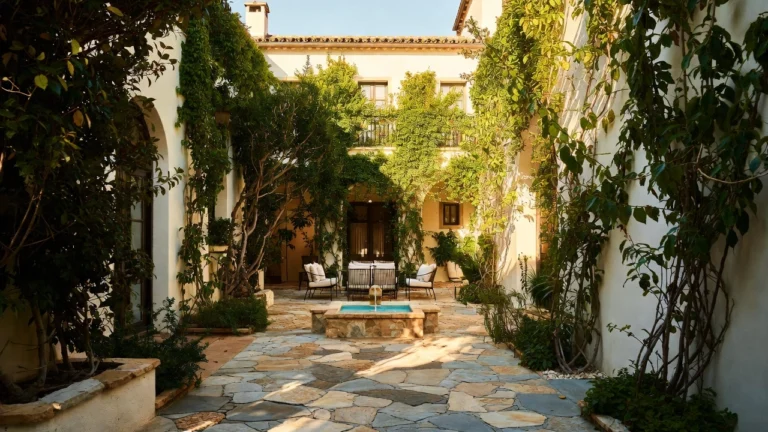
Creating a beautiful home garden transforms ordinary outdoor spaces into personal sanctuaries that reflect your style while providing enjoyment throughout the seasons. Whether you envision a productive vegetable patch, a vibrant flower display, or a peaceful meditation space surrounded by greenery, thoughtful garden design makes these dreams achievable. The best gardens balance aesthetic appeal with practical functionality, creating outdoor areas that invite you to spend time connecting with nature right outside your door.
Gardens serve purposes beyond mere decoration. They provide fresh food, support local wildlife, improve air quality, and offer therapeutic benefits that reduce stress while encouraging physical activity. A well-designed home garden increases property value while creating outdoor living spaces perfect for entertaining, relaxing, or simply observing the changing seasons. The variety of garden styles and approaches means every homeowner can find designs suited to their climate, available space, maintenance preferences, and personal taste.
This comprehensive guide presents twelve home garden ideas that work for properties of all sizes, from sprawling suburban yards to compact urban lots. Each concept offers flexibility for adaptation based on your specific conditions and goals. You’ll discover approaches ranging from traditional cottage gardens overflowing with flowers to sleek contemporary designs featuring architectural plants and clean lines. Whether you’re starting from scratch or reimagining an existing space, these ideas provide inspiration and practical guidance for creating your ideal outdoor retreat.
Cottage Garden Charm with Mixed Plantings
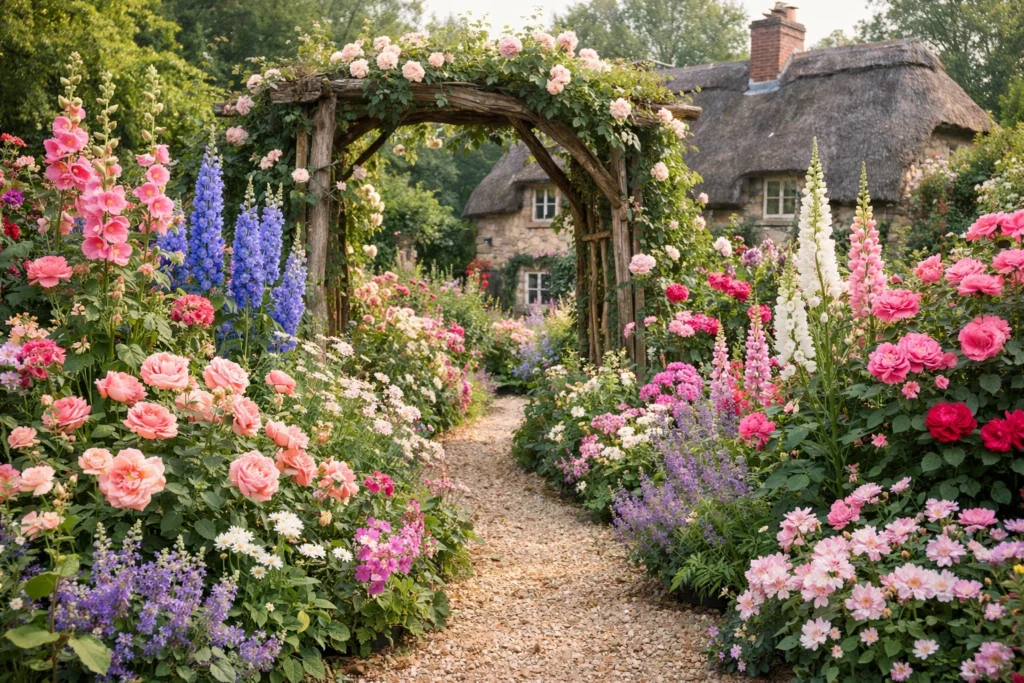
Cottage gardens embody romantic, informal beauty through densely planted beds overflowing with flowers, herbs, and vegetables growing together in apparent randomness that actually follows careful planning. This traditional English style creates lush, abundant displays that attract pollinators while providing cutting flowers and edible plants. The cottage garden aesthetic works beautifully in both rural and suburban settings, softening property lines and architectural elements with billowing plants that spill onto pathways and climb vertical surfaces.
Successful cottage gardens layer plants by height, placing tall specimens like hollyhocks, delphiniums, and foxgloves toward the back, medium growers like roses and lavender in the middle, and low edging plants like catmint and alyssum along borders. Self-seeding annuals including cosmos, calendula, and bachelor’s buttons fill gaps between perennials, creating the spontaneous appearance characteristic of this style. Include traditional cottage garden plants such as peonies, iris, columbine, and sweet peas for authentic period charm, or incorporate modern varieties offering improved disease resistance and extended bloom times while maintaining the style’s essential character.
The cottage garden approach emphasizes abundance and diversity rather than formal structure, making it forgiving for beginning gardeners while offering endless opportunities for experimentation. Curved pathways wind through planting beds, perhaps constructed from brick, gravel, or natural stone. Include a simple bench, arbor, or birdbath as focal points that provide resting spots while supporting the garden’s informal, welcoming atmosphere. This style particularly suits those who enjoy frequent garden interaction, as regular deadheading, dividing, and editing maintain the controlled chaos that defines cottage garden beauty.
Raised Bed Vegetable Gardens for Easy Growing
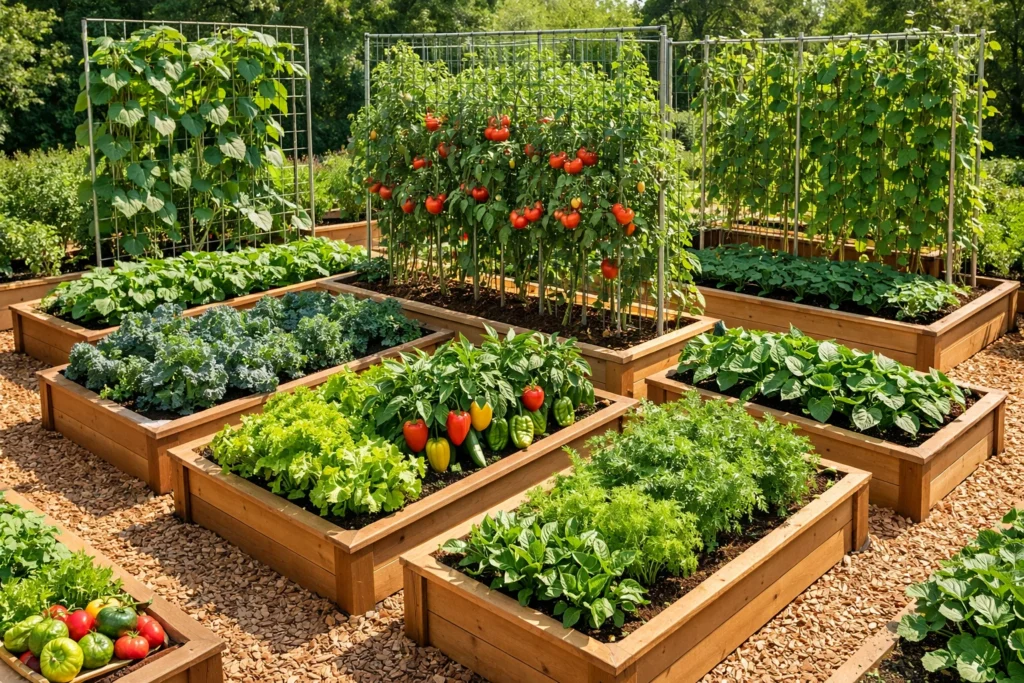
Raised bed vegetable gardens offer numerous advantages over traditional in-ground planting, including improved drainage, better soil quality control, easier weed management, and reduced back strain during planting and harvesting. These elevated growing spaces warm earlier in spring, extending the growing season in cooler climates while providing the perfect depth for root development. Raised beds work exceptionally well for properties with poor native soil, as you can fill them with ideal growing medium without extensive ground preparation.
Construction materials range from untreated cedar or redwood that naturally resists rot, to composite lumber offering longevity without chemicals, to galvanized metal providing contemporary industrial aesthetics. Design beds between three and four feet wide, allowing you to reach the center from either side without stepping on growing areas and compacting soil. Length varies based on available space, though many gardeners find eight to twelve-foot beds manageable for maintenance while providing substantial growing area. Height considerations balance soil volume requirements with construction costs and aesthetic preferences, with twelve to eighteen inches accommodating most vegetables comfortably.
Organize multiple raised beds with adequate spacing between them for wheelbarrow access and comfortable movement during garden tasks. Consider permanent pathways surfaced with mulch, gravel, or pavers that prevent mud tracking while defining the garden’s structure. Implement crop rotation strategies across beds, moving plant families annually to prevent disease buildup and nutrient depletion. Vertical supports like trellises or cattle panels attached to bed edges maximize space by training vining crops including tomatoes, cucumbers, and pole beans to grow upward rather than sprawling across valuable ground area.
Perennial Flower Borders Creating Year-Round Interest
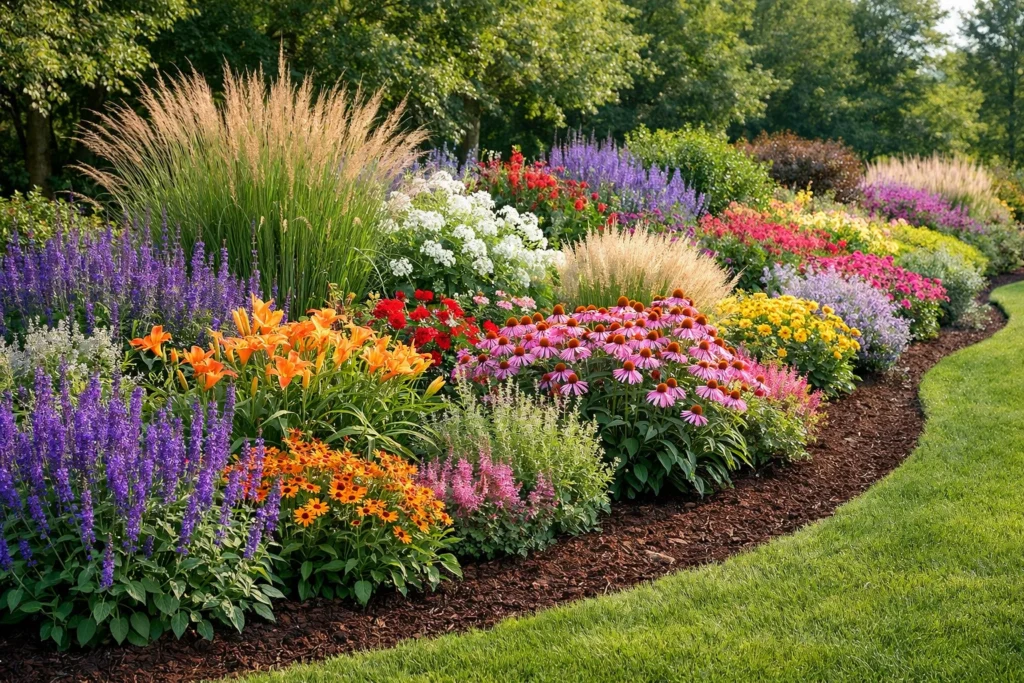
Perennial flower borders provide enduring beauty that returns year after year with minimal replanting, making them ideal for gardeners seeking high impact with reasonable maintenance. These beds typically run along property boundaries, foundations, or walkways, creating transitions between lawn areas and hardscaping while adding color, texture, and seasonal interest. Successful perennial borders feature careful plant selection ensuring something blooms from early spring through late fall, with attention to foliage texture and fall color extending interest beyond flowering periods.
you may also like this:12 Small Balcony Garden Ideas for a Cozy Green Space
Design perennial borders using the thriller, filler, spiller approach adapted from container gardening. Thriller plants provide height and drama, perhaps tall ornamental grasses, coneflowers, or daylilies. Fillers occupy the middle ground with plants like salvia, catmint, or Russian sage that bridge between tall specimens and low edging plants. Spillers along the border’s front soften edges through plants like lady’s mantle, creeping thyme, or low-growing sedums. Repeat key plants throughout the border creating rhythm and unity, spacing groups of three, five, or seven for natural-looking drifts rather than single specimens creating spotty appearances.
Consider bloom time carefully, selecting early bloomers like hellebores and bleeding hearts, midseason performers including peonies and iris, and late-season stars like asters and sedums. Incorporate plants with attractive foliage such as hostas, coral bells, and ornamental grasses that provide structure even when not flowering. Mulch between plants suppresses weeds while conserving moisture and moderating soil temperature. The initial investment in quality perennials pays dividends over years as plants establish and multiply, often providing divisions you can share with friends or relocate to expand your borders.
Contemporary Minimalist Gardens with Architectural Plants
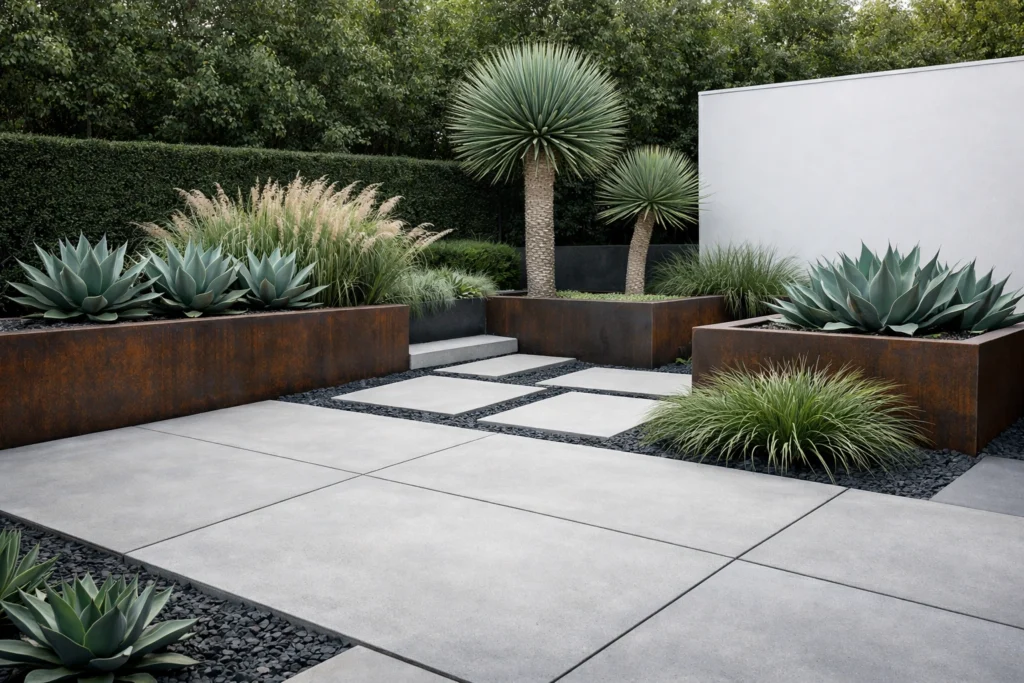
Modern minimalist gardens emphasize clean lines, limited plant palettes, and architectural elements creating sophisticated outdoor spaces that complement contemporary home designs. This approach relies on plant form and texture rather than abundant flowers, featuring specimens with strong silhouettes like agaves, yuccas, ornamental grasses, and carefully pruned shrubs. Hardscaping plays a prominent role through geometric paving patterns, smooth concrete surfaces, and linear water features that contribute to the style’s refined aesthetic.
Color restraint defines minimalist gardens, often limiting plantings to two or three coordinating hues. A monochromatic green palette showcasing varied foliage textures creates serene spaces, while strategic color introduction through single flowering species provides accent without overwhelming the design’s restraint. Materials like weathered steel, smooth river rock, and poured concrete contribute contemporary character while offering durability that reduces maintenance. Lighting becomes a design element rather than afterthought, with fixtures highlighting architectural plants and hardscape features while providing ambiance for evening enjoyment.
The minimalist approach requires precision in plant placement and maintenance to preserve the intended effect. Regular pruning maintains clean lines and prevents plants from obscuring carefully planned compositions. Weed control proves essential, as even minor invasions disrupt the intentional appearance. This style particularly suits busy homeowners who appreciate sophisticated outdoor spaces without demanding extensive ongoing care. The garden functions as an extension of interior living areas, often incorporating outdoor furniture, fire features, or water elements that encourage use while maintaining the design’s essential simplicity.
Wildlife-Friendly Native Plant Gardens
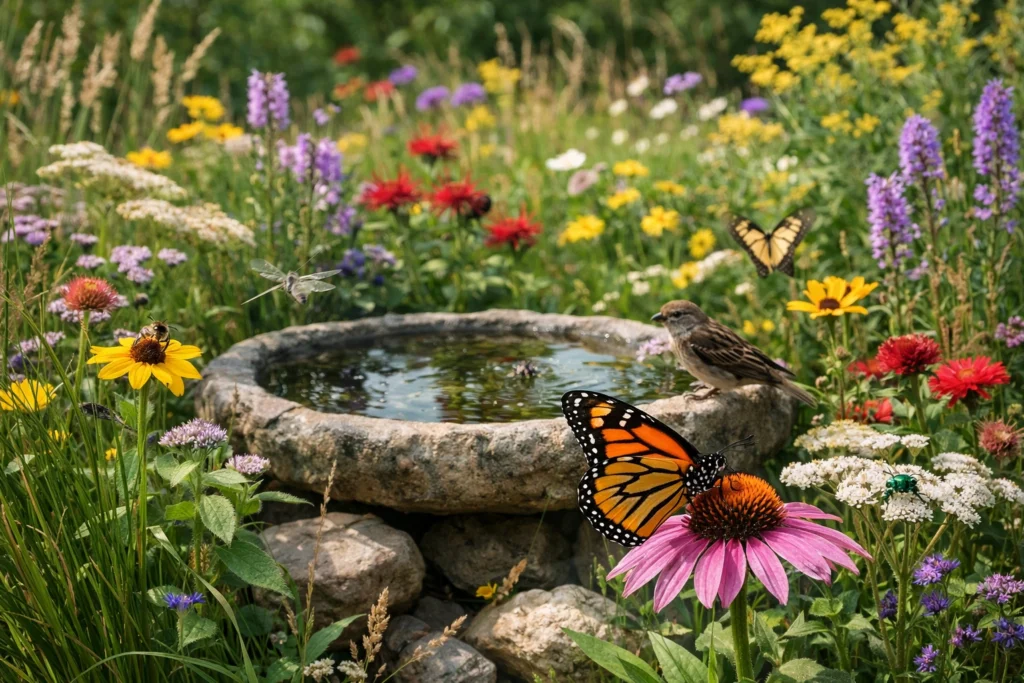
Native plant gardens support local ecosystems by providing food and habitat for birds, butterflies, beneficial insects, and other wildlife while requiring less maintenance than traditional ornamental landscapes. These gardens feature plants that evolved in your specific region, meaning they’re already adapted to local climate, soil conditions, and pest pressures without amendments, irrigation, or chemical interventions. Native gardens celebrate regional character, creating landscapes that feel authentic to their place rather than imported from elsewhere.
Research native plant communities that historically occurred in your area, selecting species appropriate for your specific site conditions regarding sun exposure, moisture levels, and soil type. Many native plants demonstrate remarkable drought tolerance once established, making them excellent choices for water-conscious landscapes. Group plants according to their natural community associations, as species that occur together in nature often share cultural requirements and create authentic-looking plantings. Include host plants for butterfly and moth larvae alongside nectar sources for adult insects, supporting complete life cycles for these important pollinators.
Structure native gardens to provide year-round wildlife value. Dense shrub layers offer nesting sites and winter shelter. Seed-producing perennials and grasses left standing through winter feed birds during scarce months while adding structural interest to dormant season landscapes. Small water features like shallow dishes or recirculating fountains provide essential drinking and bathing opportunities. Resist the urge to tidy native gardens too aggressively; leaf litter and standing stems harbor beneficial insects while protecting plant crowns through winter. This approach celebrates natural processes, creating gardens that change with seasons while supporting biodiversity.
Formal Garden Rooms with Defined Spaces
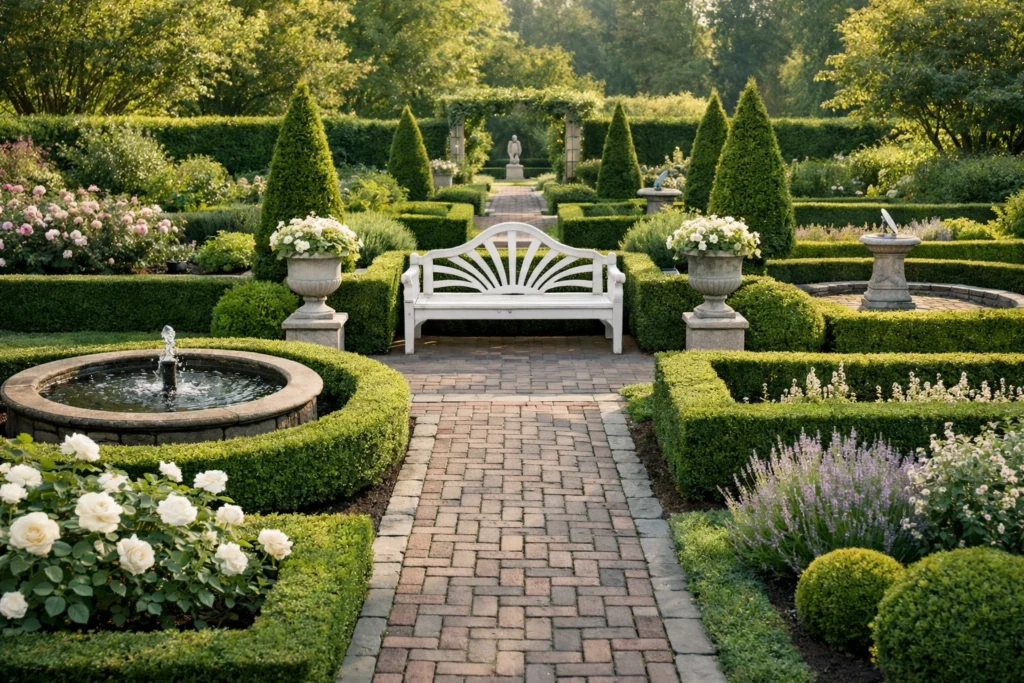
Garden rooms divide larger properties into distinct outdoor spaces, each serving specific purposes while contributing to the whole. This classical design approach creates progression through the landscape, revealing different areas as visitors move through the garden rather than displaying everything at once. Low hedges, walls, fences, or changes in elevation define room boundaries, providing structure that remains attractive even in winter when herbaceous plants die back.
Design each room around a specific purpose or theme. A dining room might feature a patio with table and chairs surrounded by fragrant plants and container gardens. A play space for children could include lawn area, shade trees, and borders of tough, child-friendly plants that withstand occasional trampling. A meditation garden might emphasize evergreen plants, stone elements, and a simple water feature creating peaceful ambiance. A cutting garden dedicated to producing flowers for indoor arrangements would feature rows of productive bloomers planted for ease of harvest rather than aesthetic display.
Pathways connecting garden rooms become important design elements, perhaps following straight formal lines or meandering casually depending on your overall aesthetic preferences. Entrances to different rooms gain emphasis through arbors, gates, or specimen plants that signal transition between spaces. This approach works beautifully for large properties but adapts to modest yards through creative use of partial screens, elevation changes, or even visual tricks like strategically placed mirrors that suggest additional space beyond what actually exists. The room concept encourages thoughtful space utilization, ensuring every area serves a purpose rather than becoming neglected dead zones.
Edible Landscaping Integrating Food and Beauty
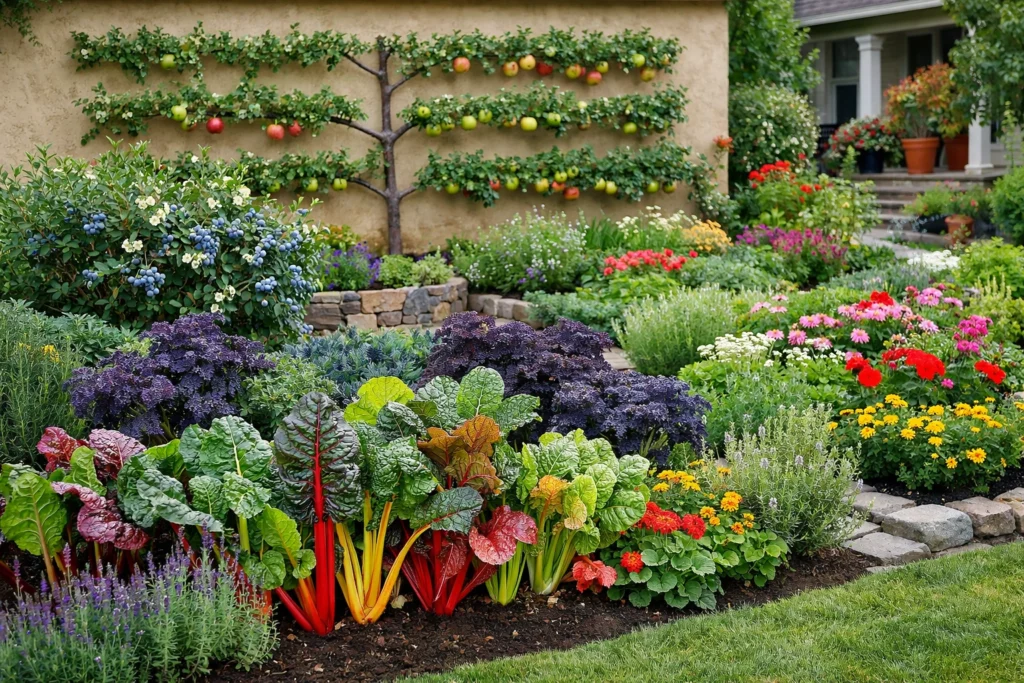
Edible landscaping erases artificial divisions between ornamental and productive gardens, incorporating food-producing plants into front yards, foundation plantings, and decorative borders traditionally reserved for purely ornamental specimens. This approach recognizes that many edibles offer significant ornamental value while providing fresh produce, making them worthy of prominent placement. Blueberry bushes produce delicate spring flowers and brilliant fall color rivaling any ornamental shrub. Strawberries serve as attractive groundcovers. Kale and Swiss chard varieties offer colorful foliage matching ornamental alternatives.
Replace traditional evergreen foundation shrubs with espaliered fruit trees trained flat against walls, saving space while creating living artwork that produces harvests. Edge flower beds with attractive herbs like purple basil, golden oregano, or tricolor sage that contribute color and texture while supplying culinary ingredients. Include edible flowers like nasturtiums, calendula, and violas in mixed borders, where they attract beneficial insects while providing garnishes and salad additions. Vertical structures supporting beans, peas, or cucumbers function as living screens, defining spaces while producing food.
Success with edible landscaping requires planning for harvest access, ensuring you can reach productive plants without trampling neighboring specimens or navigating muddy areas. Consider mature sizes carefully, as some edibles grow larger than typical ornamentals. Group plants with similar water and maintenance needs, separating water-demanding vegetables from drought-tolerant herbs. The edible landscape approach challenges conventional thinking about what belongs in “front yard” versus “backyard,” creating attractive, productive gardens that celebrate food growing as worthy of prominent display.
Rock Gardens Thriving in Challenging Conditions
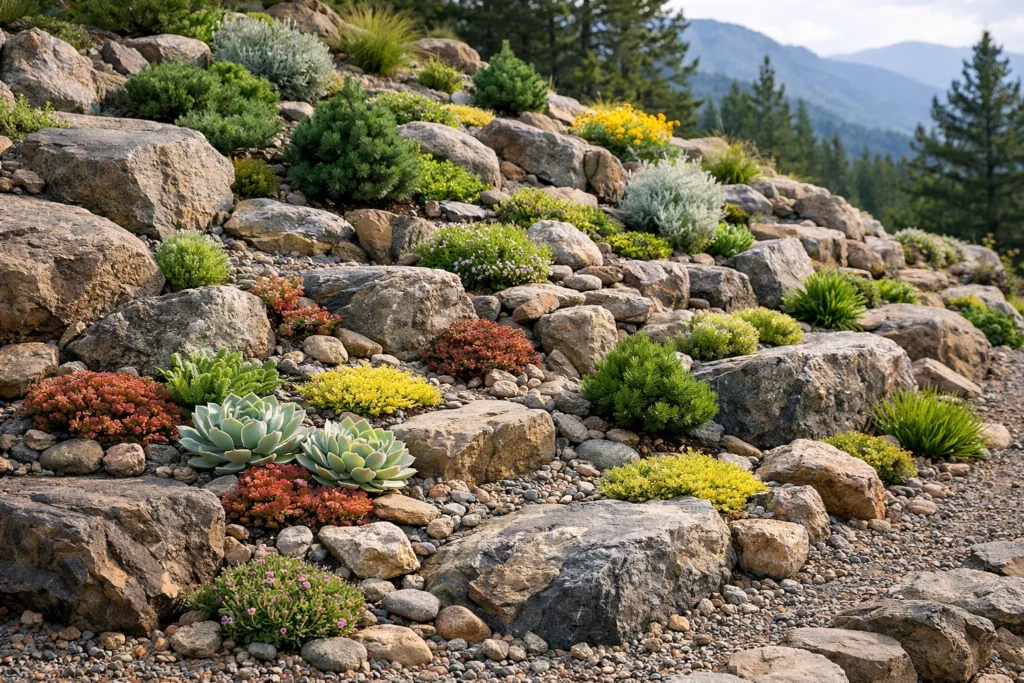
Rock gardens offer solutions for difficult sites including steep slopes, poor soil, and areas with limited water availability. These specialized gardens feature drought-tolerant plants nestled among rocks and gravel, creating naturalistic displays inspired by mountain and alpine environments. The rocks provide functional benefits including erosion control on slopes, heat retention that warms cool microclimates, and drainage improvement for plants requiring excellent air circulation around roots.
Select rocks native to your region when possible, creating authentic-looking compositions while reducing transportation costs and environmental impact. Vary rock sizes from large anchor stones providing structure to smaller specimens filling gaps and defining planting pockets. Position rocks partially buried rather than sitting on the surface, mimicking how they occur in nature while improving stability. Create planting pockets between and behind rocks where soil collects, providing rooting space for alpine plants, succulents, and other rock garden specialists that resent excessive moisture.
Plant selection for rock gardens emphasizes compact varieties that won’t outgrow their spaces or overwhelm neighboring specimens. Alpine plants, sedums, sempervivums, dwarf conifers, and compact perennials like dianthus and thyme work beautifully. Many rock garden plants bloom prolifically despite their small size, creating spectacular spring displays. Mulch planting areas with fine gravel or decomposed granite matching the rock selections, improving drainage while creating cohesive appearances. Rock gardens require minimal maintenance once established, making them ideal for busy gardeners or those managing challenging terrain.
Shade Gardens Transforming Dark Spaces
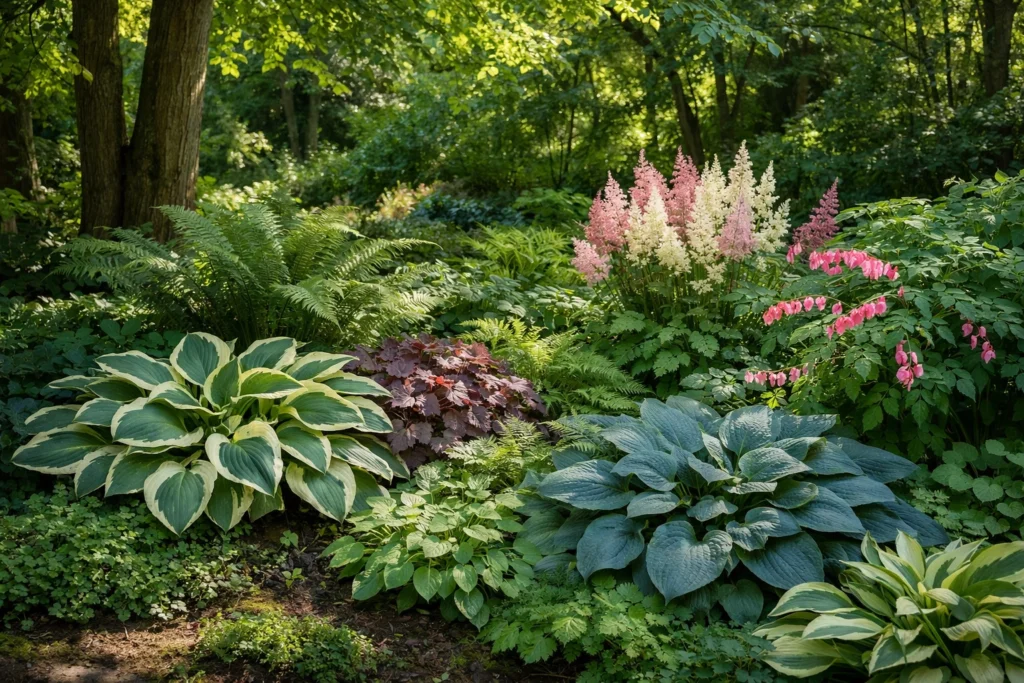
Shade gardens challenge conventional assumptions that beautiful gardens require full sun, showcasing how thoughtful plant selection creates lush, interesting spaces beneath tree canopies or on north-facing exposures. Shade varies from light or dappled shade where sun filters through tree foliage, to partial shade receiving three to six hours of direct sun, to full shade rarely experiencing direct sunlight. Understanding your specific shade conditions guides plant selection, as requirements vary significantly across this spectrum.
Foliage becomes the primary attraction in shade gardens, with flowers providing accent rather than dominating as they do in sunny borders. Hostas offer remarkable variety in size, color, and texture, from miniatures measuring inches across to giants spanning several feet. Ferns contribute delicate texture and architectural presence while tolerating conditions from moist to relatively dry. Coral bells provide colorful foliage in purple, silver, amber, and lime shades along with delicate flower spikes. Shade-blooming perennials including astilbe, bleeding heart, brunnera, and woodland phlox add seasonal color to the foliage foundation.
Improve shade garden soil with generous organic matter additions, as tree roots often deplete nutrients while competing with understory plantings. Mulch helps retain moisture and moderate temperature, particularly important in dry shade beneath established trees. Work with existing conditions rather than fighting them; embrace shade garden opportunities instead of struggling to grow sun-loving plants in inappropriate locations. The resulting spaces offer cool retreats during hot weather, showcasing subtle beauty that rewards close observation in ways that sun-drenched flower borders cannot match.
Water-Wise Xeriscaping for Sustainable Beauty
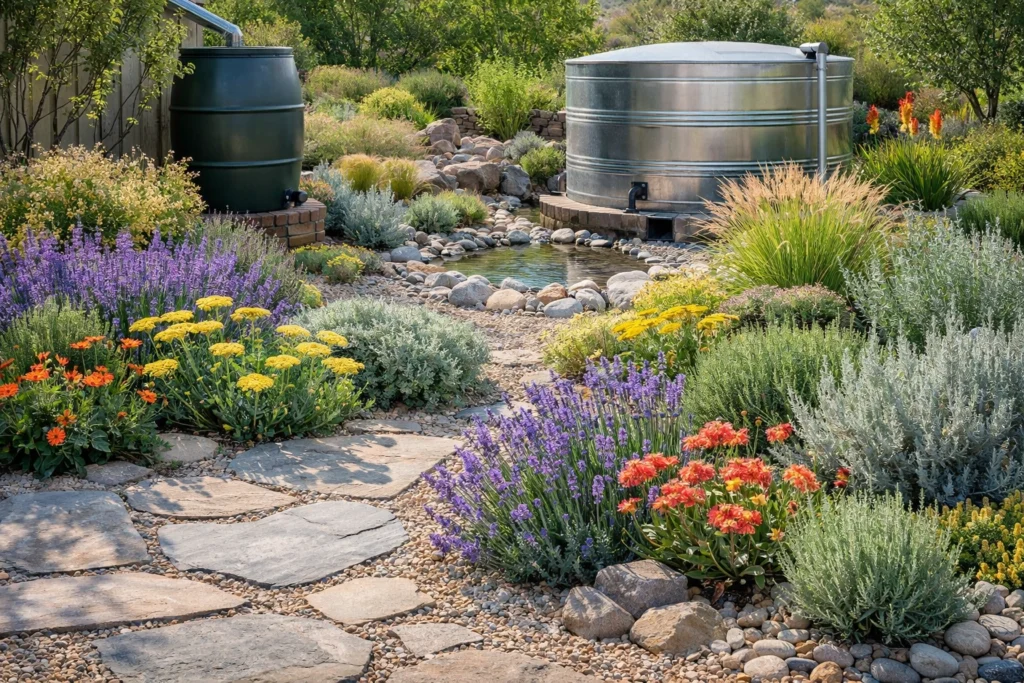
Xeriscaping creates beautiful, low-maintenance gardens using drought-tolerant plants and water-conserving techniques, particularly valuable in arid climates or for environmentally conscious gardeners anywhere. This approach doesn’t mean lifeless gravel expanses dotted with cacti; properly designed xeriscapes rival any traditional garden for beauty while using seventy-five percent less water. The principles apply broadly, benefiting gardens in all climates through reduced irrigation needs and increased resilience during dry periods.
Group plants according to water requirements, creating hydrozones that separate thirsty specimens from drought-tolerant varieties. This allows targeted watering of plants genuinely needing supplemental moisture while allowing adapted plants to thrive with natural rainfall. Choose regionally appropriate plants, recognizing that “drought-tolerant” species vary by location. Mediterranean plants like lavender and rosemary thrive in California but may struggle in humid southern climates where different drought-tolerant natives prove more successful.
Improve soil with compost and other organic matter, increasing water retention and root depth that improves drought tolerance. Apply mulch generously, reducing evaporation and moderating soil temperature. Design hardscaping thoughtfully, using permeable paving allowing water infiltration rather than runoff. Consider collecting rainwater for irrigation, storing nature’s free resource for use during dry periods. Xeriscaping doesn’t eliminate irrigation completely during establishment, but once mature, these gardens thrive with minimal supplemental water while providing habitat, beauty, and enjoyment without resource-intensive maintenance.
Sensory Gardens Engaging All Five Senses
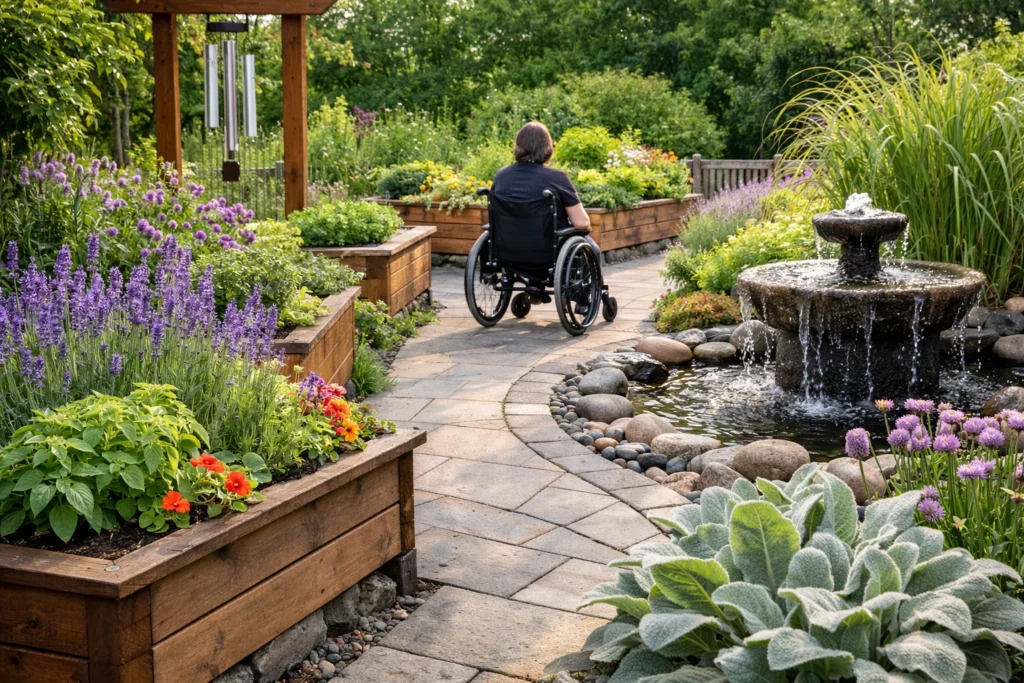
Sensory gardens intentionally stimulate sight, sound, scent, taste, and touch, creating immersive experiences that engage visitors completely. These specialized gardens offer particular benefits for children, elderly individuals, and those with visual or cognitive impairments, though everyone appreciates gardens that appeal to multiple senses simultaneously. Thoughtful plant selection and garden element incorporation create spaces promoting mindfulness and present-moment awareness through sensory engagement.
Visual interest extends beyond flowers to include foliage color and texture, berries, interesting bark, and structural elements creating year-round appeal. Incorporate plants with fragrant flowers like roses, lilacs, and sweet alyssum alongside aromatic foliage including lavender, rosemary, and scented geraniums that release fragrance when brushed. Sound comes from rustling grasses, wind chimes, water features, and plants that attract songbirds through food and shelter. Edible plants provide taste experiences, from sweet berries to savory herbs and tart edible flowers.
Tactile elements encourage touching, perhaps including lamb’s ear with fuzzy leaves, ornamental grasses with silky plumes, or interesting bark textures on trees and shrubs. Create accessible pathways allowing everyone to navigate the garden comfortably, with wider dimensions and smooth surfaces accommodating wheelchairs and walkers. Position sensory plants at varied heights, including some in raised beds or containers bringing them within easy reach of seated visitors. Label plants with large print or braille, identifying specimens while educating about their sensory properties. The sensory garden approach enriches any garden, transforming passive observation into active engagement with the natural world.
Moon Gardens Glowing in Evening Light
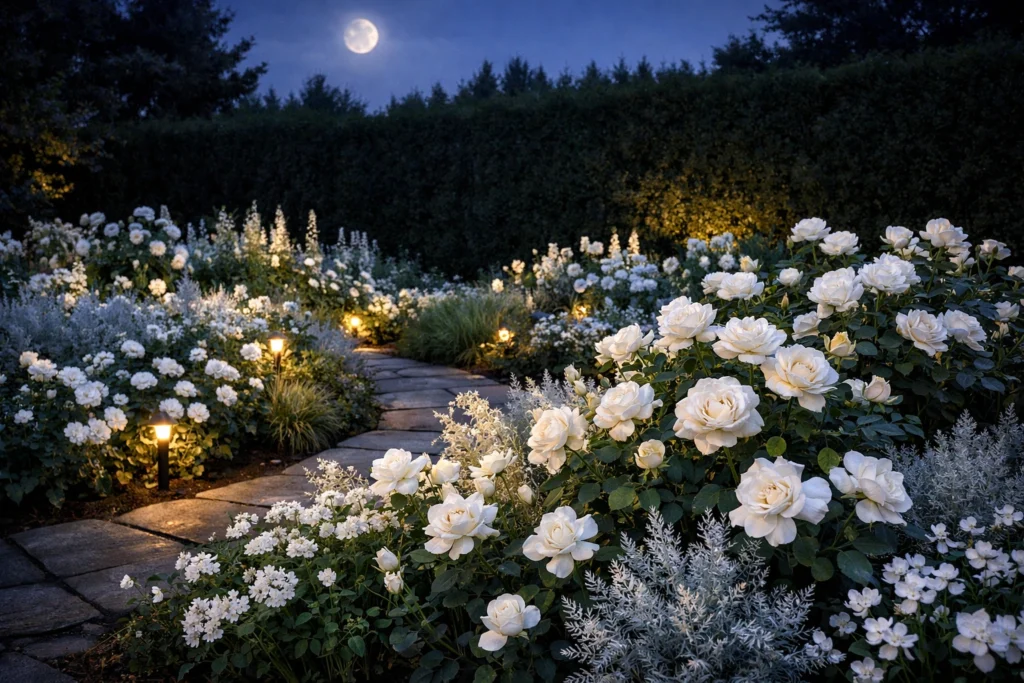
Moon gardens feature white and silver-foliaged plants that glow luminously in evening light, creating magical spaces perfect for enjoying after sunset. These specialized gardens suit evening entertaining, provide focal points visible from indoor living spaces after dark, and offer refuge for gardeners who work during daylight hours. White flowers continue releasing fragrance into evening, attracting night-pollinating moths while providing perfume that enhances the moonlight garden experience.
Select plants with white blooms like white roses, gardenias, moonflower vines, nicotiana, and white varieties of familiar flowers including petunias, impatiens, and cosmos. Include silver-foliaged plants like dusty miller, artemisia, lamb’s ear, and Russian sage that reflect moonlight even when not flowering. Position moon garden plants where they’ll receive ambient light from streetlights, landscape lighting, or spill from indoor fixtures, enhancing the reflective effect. Dark backgrounds like evergreen hedges or painted fences increase contrast, making white elements appear even more luminous.
Incorporate seating areas within or adjacent to moon gardens, encouraging lingering during evening hours. Add subtle lighting that enhances rather than overwhelms the natural moonlight effect, perhaps uplighting select specimens or installing low pathway lights ensuring safe navigation. Include night-blooming flowers like evening primrose or four o’clocks that literally open as sun sets, providing progressive interest as daylight fades. The moon garden concept works beautifully as a standalone feature or incorporates into existing gardens by dedicating specific areas to evening enjoyment, expanding when and how you use outdoor spaces.
Conclusion
Creating beautiful home gardens transforms outdoor spaces into personal retreats that reflect individual style while serving practical purposes from food production to wildlife habitat. The twelve ideas presented demonstrate remarkable variety available to homeowners, from traditional cottage gardens to contemporary minimalist designs, from productive edible landscapes to serene shade gardens. No single approach suits everyone; the ideal garden reflects your specific property conditions, available maintenance time, aesthetic preferences, and how you envision using outdoor spaces.
Beginning gardeners should start modestly, perhaps implementing one or two concepts that resonate most strongly before expanding ambitions. Gardening skills develop through experience; mistakes provide valuable learning opportunities while successes build confidence for increasingly ambitious projects. Established gardeners might use these ideas to refresh tired landscapes, adding new elements that renew enthusiasm while building on existing successes. Remember that gardens evolve continuously, changing with seasons, years, and your own developing vision.
The greatest gardens balance aesthetic beauty with ecological responsibility, supporting local wildlife while conserving resources through thoughtful design and plant selection. They provide spaces for physical activity, stress relief, and connection with natural rhythms that enrich daily life in ways extending far beyond mere decoration. Whether you maintain a few containers on a small patio or cultivate acres of diverse plantings, gardening offers profound satisfactions that reward every effort invested. Use these ideas as starting points for creating the outdoor retreat you’ve been imagining, adapting concepts to your unique situation while discovering the deep pleasures of shaping living landscapes.
Frequently Asked Questions
What is the easiest type of home garden for beginners?
Container gardens and raised bed vegetable gardens offer the most beginner-friendly options, providing controlled growing conditions with manageable scope. Containers limit space commitments while allowing easy corrections if initial plant choices prove unsuitable. Raised beds offer improved soil and drainage while defining garden boundaries clearly. Both approaches minimize weeding compared to in-ground gardens and provide opportunities to learn gardening fundamentals without overwhelming complexity. Start with easy-to-grow plants like tomatoes, lettuce, herbs, or flowering annuals that tolerate minor mistakes while providing rewarding results that build confidence.
How much does it cost to start a home garden?
Home garden costs vary dramatically based on scope and approach, ranging from under one hundred dollars for modest container or raised bed gardens to several thousand dollars for extensive landscape transformations. Budget-conscious gardeners can start with seeds, recycled containers, and homemade compost, investing primarily time rather than money. Phased installation spreading projects across multiple seasons manages costs while allowing course corrections based on early experiences. Prioritize soil improvement and perennial plants offering long-term value over extensive hardscaping or expensive annuals requiring replacement. Many gardening supplies and even plants are available through free exchanges, community gardens, or creative reuse.
What plants require the least maintenance in home gardens?
Native plants adapted to your specific region generally require minimal maintenance once established, as they’ve evolved to thrive in local conditions without supplemental water, fertilizer, or pest control. Perennials offer lower maintenance than annuals, returning yearly without replanting. Drought-tolerant plants including many Mediterranean herbs, ornamental grasses, and succulents need little attention beyond occasional trimming. Groundcovers like creeping thyme, sedum, or native violets suppress weeds while requiring minimal care. Trees and shrubs, though requiring larger initial investments, provide structure with relatively little ongoing maintenance compared to intensive flower borders or vegetable gardens.
How do I design a garden layout for my yard?
Start by assessing existing conditions including sun patterns throughout the day, soil type and drainage, slopes or elevation changes, and views both from the house outward and into the property from surrounding areas. Identify how you want to use outdoor spaces, whether for entertaining, food growing, children’s play, or peaceful retreat. Sketch rough plans on paper or use free online garden planning tools, positioning major elements like patios, paths, and large plantings first before filling details. Consider mature plant sizes to avoid overcrowding, and plan for year-round interest rather than focusing only on peak summer appearance. Visit public gardens and tour neighborhoods noting what appeals to you, adapting successful ideas to your specific conditions.
Can I have a beautiful garden without a lot of sun?
Absolutely. Shade gardens showcasing foliage plants like hostas, ferns, and coral bells create lush beauty rivaling any sunny border. Many flowering plants including astilbe, bleeding heart, hydrangeas, and woodland perennials thrive in shade while providing seasonal color. Shade gardens often require less maintenance than sun-loving alternatives, as reduced evaporation means less frequent watering and slower weed growth. Focus on layering plants with varied foliage textures and colors, incorporating interesting hardscaping, and celebrating the cool, peaceful atmosphere shade naturally provides. Understanding your specific shade conditions from light dappled shade to deep shade guides appropriate plant selection for success.





One Comment