
13 Stunning Outdoor Jacuzzi Ideas for Backyard Luxury
Transforming your backyard into a personal wellness retreat begins with thoughtful jacuzzi placement and design. An outdoor hot tub offers more than simple relaxation; it creates a destination within your property where therapeutic benefits meet aesthetic excellence. Whether you envision soaking under starlit skies, entertaining friends in a resort-style setting, or creating a private sanctuary for stress relief, the right jacuzzi design elevates your outdoor living experience dramatically.
Modern outdoor jacuzzis have evolved far beyond basic portable tubs positioned on concrete slabs. Today’s installations incorporate sophisticated design elements including architectural integration, landscape harmony, and technological innovations that extend usability across seasons. From sleek contemporary installations with infinity edges to rustic cedar-surrounded retreats nestled among natural boulders, the possibilities reflect diverse tastes and property styles.
This comprehensive guide presents thirteen stunning outdoor jacuzzi ideas that balance visual impact with practical functionality. Each concept addresses specific design challenges while showcasing how strategic planning transforms ordinary backyards into extraordinary spa environments. You’ll discover placement strategies, material selections, privacy solutions, and finishing touches that create cohesive outdoor spaces worthy of luxury resorts. Let’s explore how the perfect jacuzzi installation can become the centerpiece of your backyard oasis.
Sunken Deck Integration with Seamless Transitions
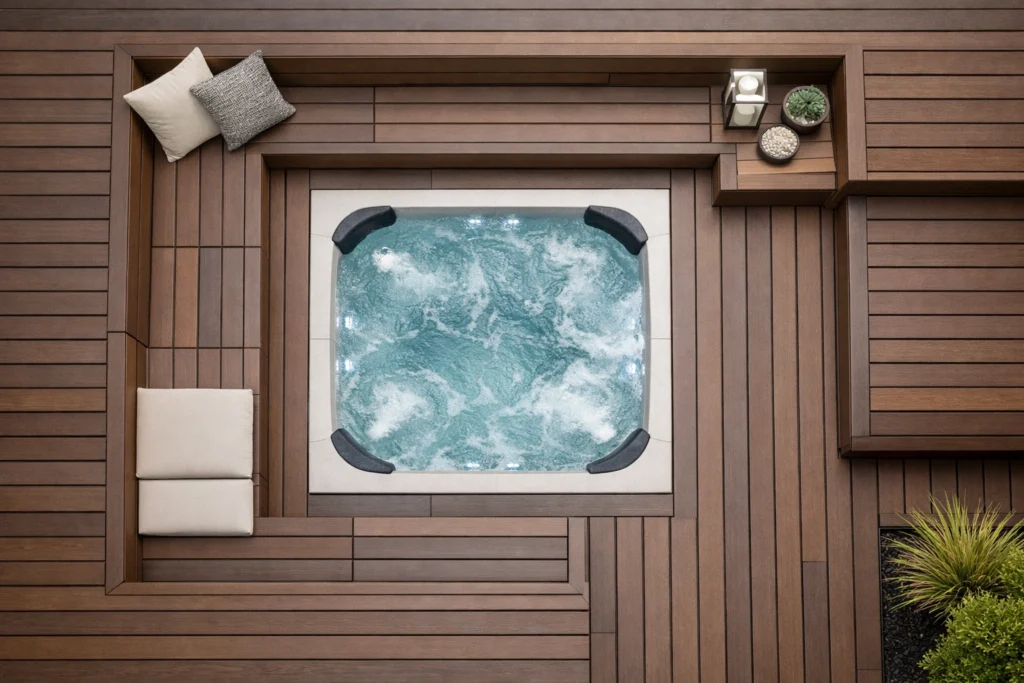
Sunken jacuzzi installations create sophisticated visual flow by positioning the spa flush with deck surfaces rather than sitting atop them. This design approach requires careful structural planning but delivers remarkably elegant results. The jacuzzi rim aligns precisely with decking height, eliminating the typical step-up access while creating seamless transitions between lounging and soaking areas.
Construction involves building the deck around and slightly above the jacuzzi shell, with the waterline sitting just below deck level. Wide surrounding decks provide generous space for towels, beverages, and relaxation between soaking sessions. Composite or tropical hardwood decking materials withstand constant moisture exposure without warping or deteriorating, maintaining their appearance through years of wet foot traffic and water splashing.
The sunken approach works beautifully for properties with natural grade changes, turning potential elevation challenges into design advantages. Position the installation where terrain naturally drops, building the deck into the hillside to create multi-level outdoor living zones. This configuration also improves safety by eliminating high edges that pose falling risks, particularly important for households with children or elderly users. Add built-in bench seating around the perimeter, integrated planters, and concealed storage for chemicals and equipment to maximize the sophisticated appearance.
Gazebo and Pergola Covered Retreats
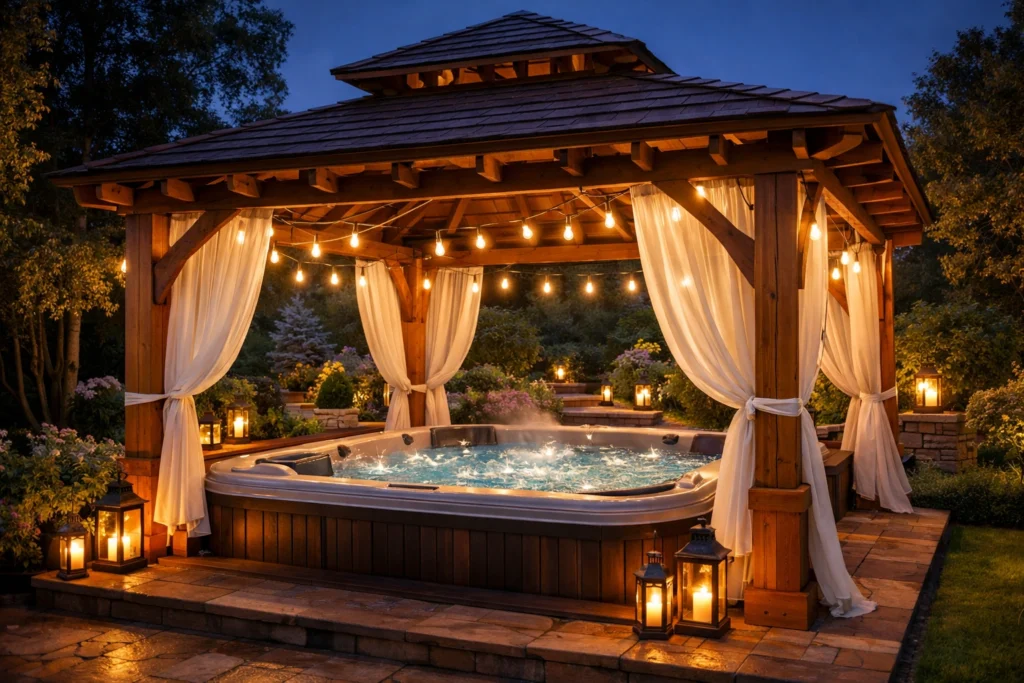
Overhead structures transform open-air jacuzzis into defined destinations that provide weather protection and architectural interest. Gazebos create fully enclosed spa rooms featuring solid roofs that shield from rain and snow while maintaining outdoor connectivity through open sides or removable panels. Pergolas offer partial coverage through slatted roofs that filter sunlight, provide climbing surfaces for flowering vines, and establish spatial boundaries without complete enclosure.
Wooden gazebo structures in cedar, redwood, or pressure-treated pine complement natural landscape settings while offering customization through stain colors and architectural details. Metal pergolas in powder-coated aluminum or steel deliver contemporary aesthetics with minimal maintenance requirements. Both options support integrated lighting, speakers, and even ceiling fans that enhance comfort during warmer months.
you may also like this:12 Outdoor Sofa Ideas for Comfort and Style Outdoors
Strategic placement matters enormously with covered jacuzzi installations. Position the structure to capture desirable views while blocking unsightly elements like neighboring properties or utility areas. Orient the opening toward sunset views for spectacular evening soaks, or face sheltered directions that reduce wind exposure in colder climates. Incorporate privacy screens on exposed sides using lattice panels, outdoor curtains, or strategic plantings. The overhead structure also provides mounting points for ambient string lights, lanterns, or recessed fixtures that create magical evening atmospheres perfect for relaxation and entertaining.
Natural Stone Surrounds with Landscape Integration
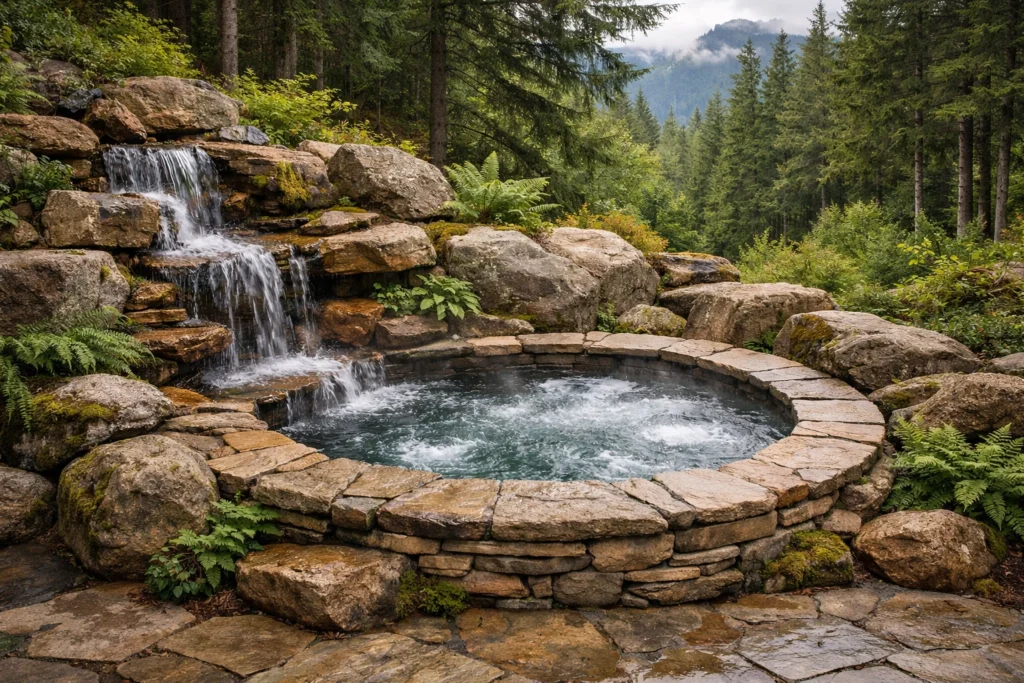
Stone-surrounded jacuzzis blend spa installations into natural landscape settings through careful material selection and placement. Large boulders, stacked flagstone, or cut stone pavers create organic transitions between manicured yards and wilderness-inspired spa areas. This approach works exceptionally well for properties with existing rock features, sloped terrain, or rustic architectural styles.
Natural stone offers remarkable variety in color, texture, and scale. Pennsylvania bluestone provides cool gray tones with slightly rough surfaces that prevent slipping. Arizona flagstone brings warm rust and tan hues that complement desert landscapes. River rock creates smooth, rounded edges that feel comfortable underfoot. Granite, limestone, and sandstone each contribute unique characteristics that can match or contrast with home exteriors and existing hardscaping.
Installation technique significantly impacts the final appearance. Dry-stack methods create informal, cottage-style looks with visible gaps between stones. Mortared installations deliver more finished, formal aesthetics with uniform joint lines. Combine stone types and installation methods within a single project, perhaps using large boulders as natural backrests with mortared flagstone pathways leading to the spa. Integrate native plants between stone elements, allowing ferns, ornamental grasses, or alpine varieties to soften hard edges and enhance the natural feel. Add a small waterfall feature using the same stone materials to create soothing background sounds that mask neighborhood noise.
Infinity Edge Designs with Spectacular Views
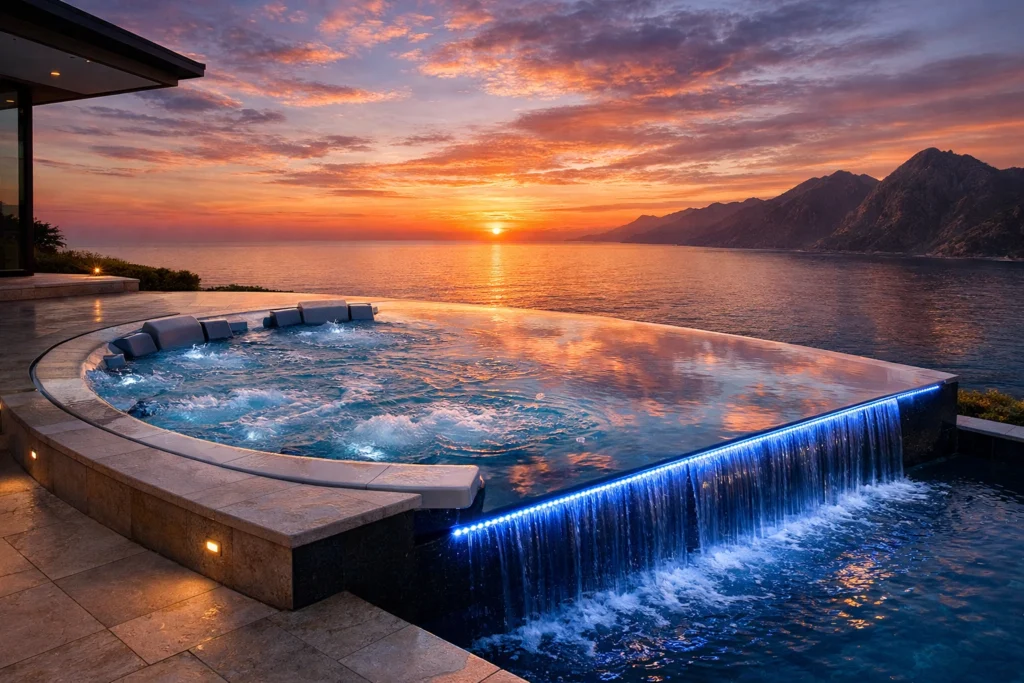
Infinity edge jacuzzis, also called vanishing edge or negative edge spas, create stunning visual effects by allowing water to spill over one or more sides into catch basins below. The overflow edge appears to merge with distant horizons, particularly dramatic when positioned to overlook valleys, oceans, lakes, or city skylines. This luxurious design element transforms functional hot tubs into architectural statements that rival high-end resort installations.
The engineering behind infinity edges requires precise calculations and professional installation. The catch basin must accommodate overflow water volume, while circulation systems continuously return collected water to the main spa. Edges need perfect leveling to ensure even water flow across the entire span without dry spots or excessive spillage. Despite the technical complexity, the resulting effect justifies the investment for properties with spectacular views.
Placement strategy maximizes impact with infinity designs. Position the vanishing edge toward the most impressive vista, whether that’s a natural landscape, water feature, or dramatic drop-off. The non-infinity sides can nestle into hillsides, decks, or stone surrounds that provide access and seating. Coordinate infinity edge materials with the catch basin and surrounding areas; matching stone or tile creates cohesive appearances. Underwater lighting positioned near the overflow edge makes the waterfall effect visible after dark, creating ethereal glowing cascades that enhance evening ambiance. Consider the view from inside your home too, ensuring the installation looks equally impressive from interior windows as from the yard itself.
Rooftop and Elevated Platform Installations
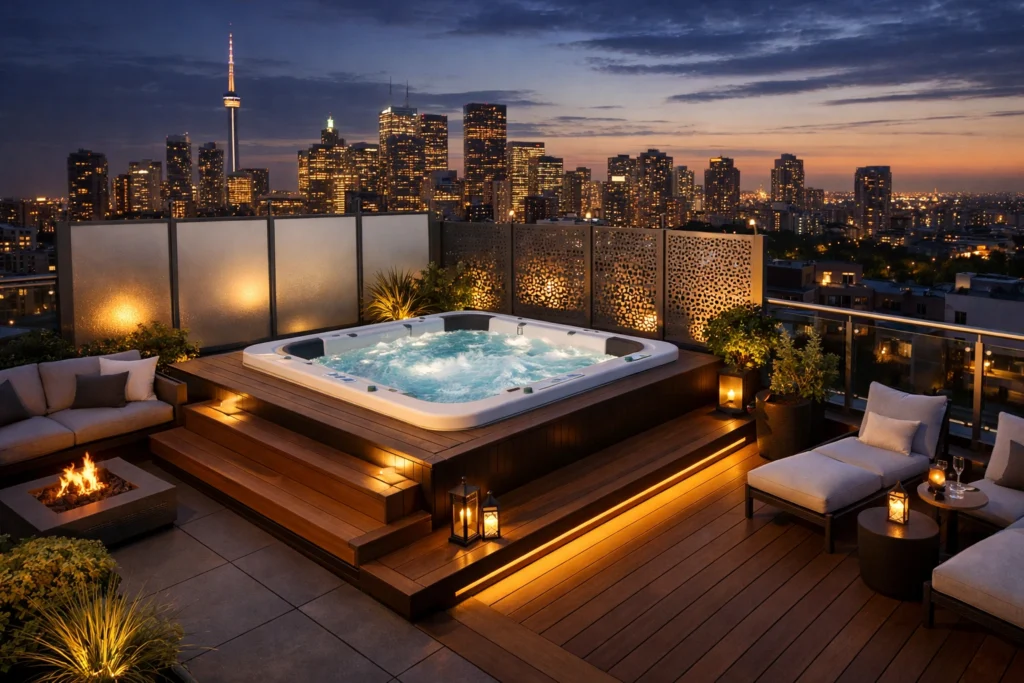
Urban properties and homes with limited yard space find perfect solutions through rooftop jacuzzi installations. Elevated platforms create private retreats above street level, offering city views, increased privacy, and efficient use of otherwise underutilized space. Rooftop spas particularly suit townhomes, condominiums, or properties where ground-level yards are small or nonexistent.
Structural engineering becomes paramount with elevated installations. Rooftops must support significant weight including the empty jacuzzi shell, water capacity, equipment, decking, and user load. Professional structural assessments determine whether existing frameworks can handle the combined weight or require reinforcement. Access routes need adequate width and clearance for equipment delivery and eventual replacement, potentially requiring crane lifts for installation and removal.
Design elevated jacuzzis as complete outdoor rooms rather than isolated features. Surrounding decks provide space for lounge chairs, dining areas, and planters that create rooftop gardens. Privacy screens in frosted glass, metal panels, or living walls block neighboring sight lines while maintaining openness to sky views. Wind exposure increases at elevation, so incorporate windbreaks through strategic screen placement or glass barriers that don’t obstruct views. Built-in storage conceals equipment and supplies without cluttering the space. Safety railings meeting local building codes become essential design elements; choose materials and styles that complement the overall aesthetic rather than appearing as afterthoughts.
Enclosed Glass Room Four-Season Installations
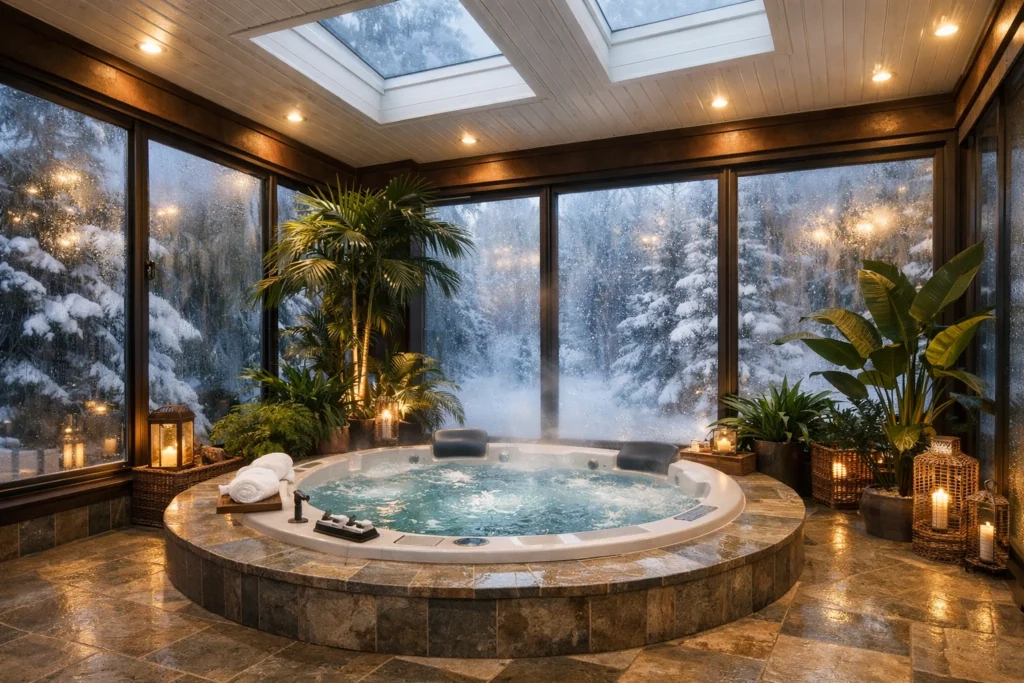
Glass-enclosed jacuzzi rooms extend spa usability throughout the year by providing weather protection while maintaining outdoor visibility and natural light. These structures function as sunrooms or conservatories specifically designed around hot tub installations, offering climate control that makes winter soaking comfortable even in harsh weather regions.
Construction ranges from simple three-season rooms with removable panels to fully insulated four-season spaces with heating, ventilation, and humidity control. Floor-to-ceiling windows on multiple sides preserve the outdoor experience while blocking wind, rain, and snow. Roof options include solid insulated panels for maximum climate control or glass skylights that maintain overhead openness. Sliding or folding glass walls allow complete opening during pleasant weather, transitioning the enclosed space into a covered patio.
Moisture management becomes critical in enclosed jacuzzi installations. Proper ventilation prevents condensation buildup that damages structures and encourages mold growth. Exhaust fans, operable windows, and dehumidification systems work together maintaining healthy humidity levels. Choose moisture-resistant materials for floors, walls, and furnishings; ceramic tile, sealed concrete, and marine-grade woods withstand constant exposure. The enclosed environment also allows year-round use of amenities that outdoor exposure would damage, including electronics, artwork, and plush seating that creates true spa room atmospheres. Position the glass room to capture the best seasonal views, whether that’s fall foliage, winter snow scenes, spring blooms, or summer greenery.
Multi-Level Deck Configurations with Spa Integration
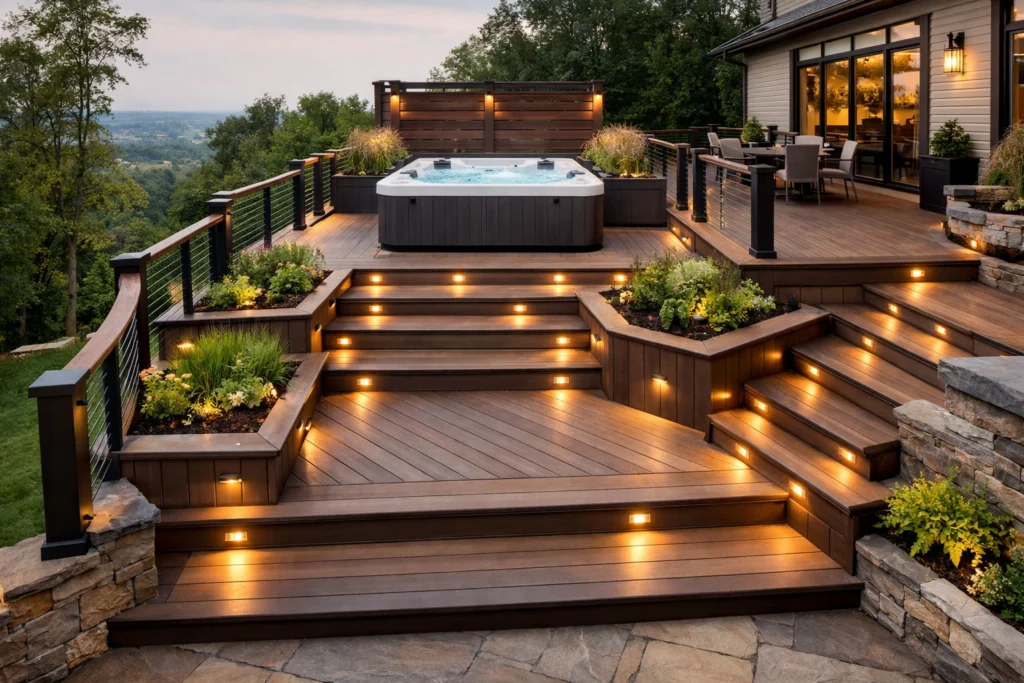
Multi-level deck designs create dynamic outdoor living spaces where jacuzzis occupy dedicated platforms that separate spa functions from other activities. This approach works beautifully for sloped properties where natural grade changes inspire tiered construction, or flat lots where intentional level changes add visual interest and functional zoning.
The spa typically occupies the highest or lowest deck level depending on desired privacy and views. Upper level placement provides better vistas and increased seclusion from ground-level activities and neighboring properties. Lower level positioning creates intimate grottos tucked beneath upper decks, offering cozy enclosure and protection from overhead elements. Mid-level placement splits the difference, providing moderate elevation with easy access from both upper and lower zones.
Connect deck levels through wide staircases that double as casual seating during gatherings, or design gradual ramps that improve accessibility for users with mobility limitations. Incorporate planters at level transitions, using tall ornamental grasses or columnar shrubs that emphasize vertical dimension while providing natural privacy screening. Built-in benches along railings create perching spots for guests mingling near the spa without overcrowding the hot tub itself. Lighting each level independently allows customizable ambiance; bright task lighting for dining areas, soft accent lighting for spa zones, and pathway lighting for safe navigation between levels. The multi-level approach also naturally separates wet spa areas from dry lounging zones, preventing water tracking across entire deck surfaces.
Pool and Spa Combined Installations
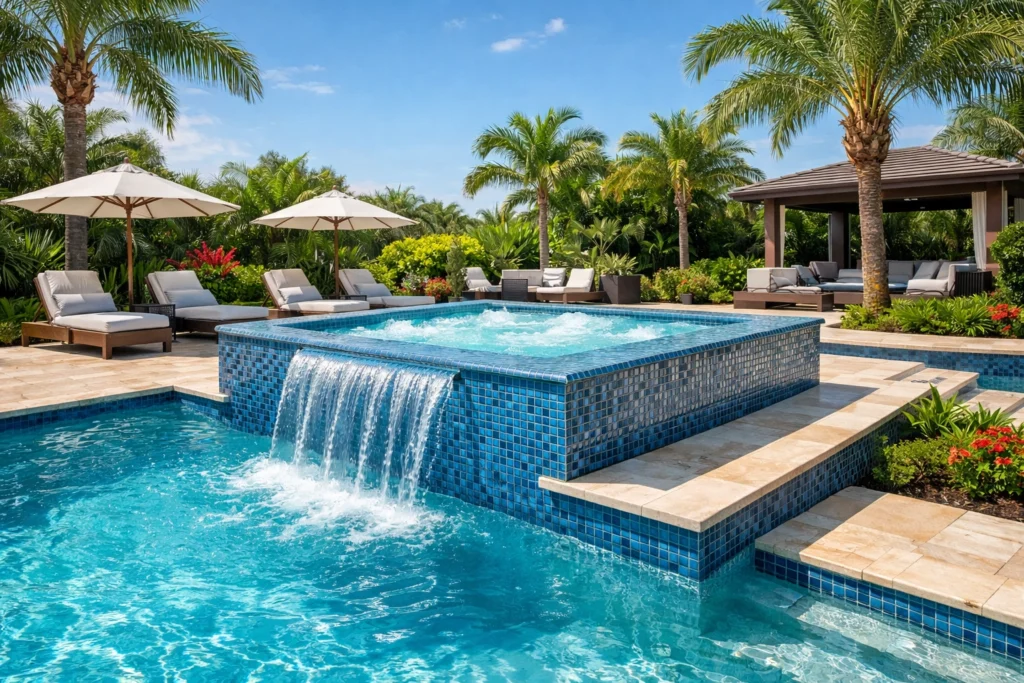
Integrating jacuzzis with swimming pools creates comprehensive aquatic centers that serve diverse recreational and therapeutic purposes. The combination allows cool-water swimming exercise followed by warm-water muscle relaxation, appealing to fitness enthusiasts and wellness-focused homeowners. Shared filtration and heating systems can reduce equipment costs and operational expenses compared to completely separate installations.
Design approaches range from spillover spas where heated jacuzzi water cascades into adjacent pools, to completely independent hot tubs positioned nearby with complementary styling. Spillover configurations create visual unity through the connecting water feature while allowing different temperature settings for each vessel. Independent installations provide more operational flexibility but require coordinated aesthetics through matching tile, coping materials, and surrounding hardscape.
Position the jacuzzi at pool level or elevated several feet above, with the spillover creating a waterfall feature. The elevated approach allows seated spa users to view pool activities while the water feature provides pleasant background sound. Shared equipment pads house pumps, heaters, and filters for both features, requiring adequate space and noise buffering from outdoor living areas. The pool-spa combination particularly suits families with varied recreational preferences, offering something for every age and activity level. Include shallow sun shelves, deep ends for diving, and the therapeutic spa, creating a comprehensive backyard water park that rivals community recreation centers.
Rustic Cedar and Wood-Clad Designs
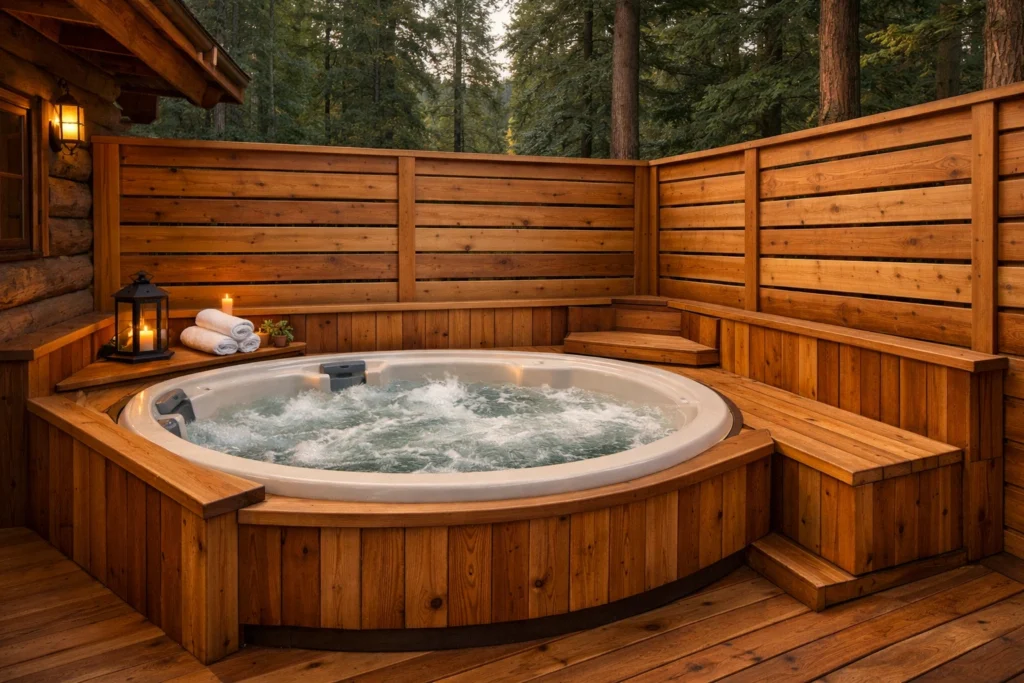
Wood-surrounded jacuzzis create warm, natural aesthetics that complement rustic architecture and wooded settings. Cedar remains the premium choice for spa surrounds due to its natural resistance to moisture, insects, and decay. The wood’s aromatic oils repel pests while its tight grain structure withstands constant water exposure without excessive warping or splitting.
Custom cedar surrounds transform basic acrylic spa shells into integrated landscape features. Vertical or horizontal slat installations conceal the spa exterior while providing accessible panels for maintenance. Corner benches, built-in steps, and surrounding deck extensions all crafted from matching cedar create cohesive installations where the spa feels like a permanent architectural element rather than a placed product. Natural cedar weathers to silvery gray patinas over time, or periodic sealing maintains the original honey tones.
The rustic wood aesthetic pairs beautifully with natural stone pathways, split-rail fencing, and native plantings that enhance the cabin or cottage feel. Incorporate additional wood elements like pergola structures, privacy screens, or equipment enclosures all in matching cedar for complete visual unity. Add metal accents in oil-rubbed bronze or hammered copper for fixtures, lighting, and hardware that complement wood tones without competing for attention. The natural materials also suit mountain properties, lake houses, and countryside estates where blending with surrounding nature takes priority over contemporary design statements.
Contemporary Minimalist Concrete Platforms
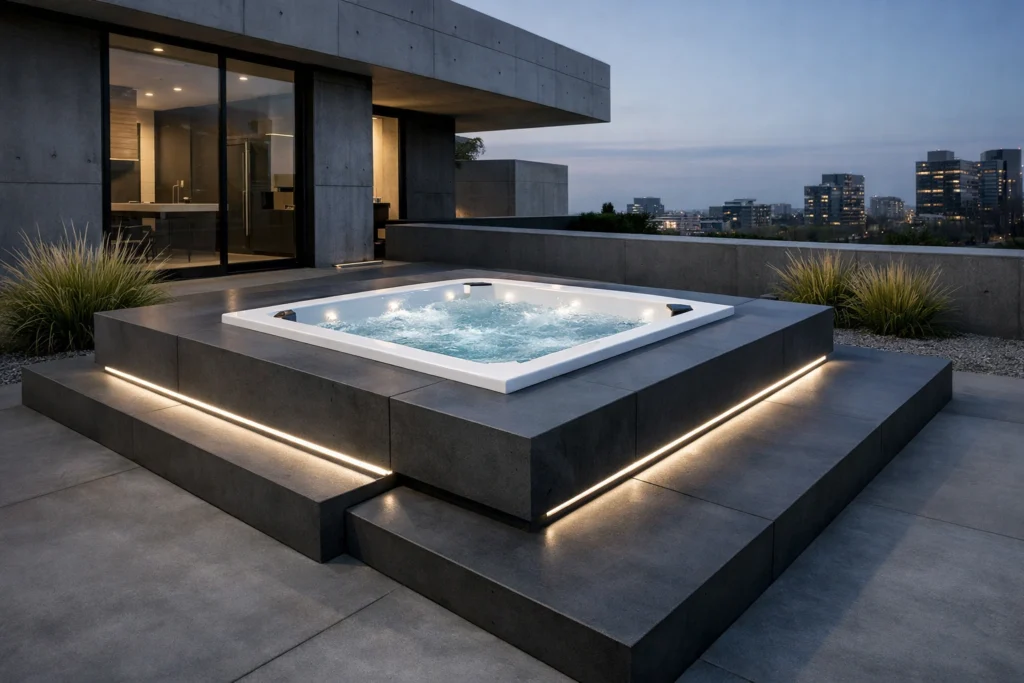
Poured concrete surrounds deliver sleek, modern aesthetics ideal for contemporary architecture and minimalist design preferences. Smooth-troweled finishes in charcoal gray or custom tint colors create seamless platforms that emphasize the spa itself rather than elaborate surroundings. The monolithic appearance suits urban settings, modern farmhouses, and properties where clean lines and restrained palettes define the design vocabulary.
Concrete offers remarkable versatility through finishing techniques. Polished concrete reflects light and reveals aggregate patterns for visual texture within the minimalist framework. Exposed aggregate creates subtle surface interest and improved slip resistance. Stamped patterns can mimic stone, wood, or geometric designs while maintaining concrete’s durability and cost advantages. Integral color mixing ensures tones penetrate throughout the material rather than surface treatments that wear away.
Design concrete platforms with intentional geometric precision. Square or rectangular pads with sharp corners emphasize the architectural approach. Include raised walls on one or more sides creating built-in benches or privacy screens, perhaps with cutouts that frame specific views. Integrate LED strip lighting within concrete edges for dramatic nighttime effects that outline the spa area with subtle illumination. The minimalist approach extends beyond the immediate spa surround; simplify plantings to architectural species like bamboo, ornamental grasses, or sculptural agaves. Choose furniture in equally restrained designs with metal frames and solid-color cushions that maintain the contemporary aesthetic.
Garden Room Integration with Lush Plantings
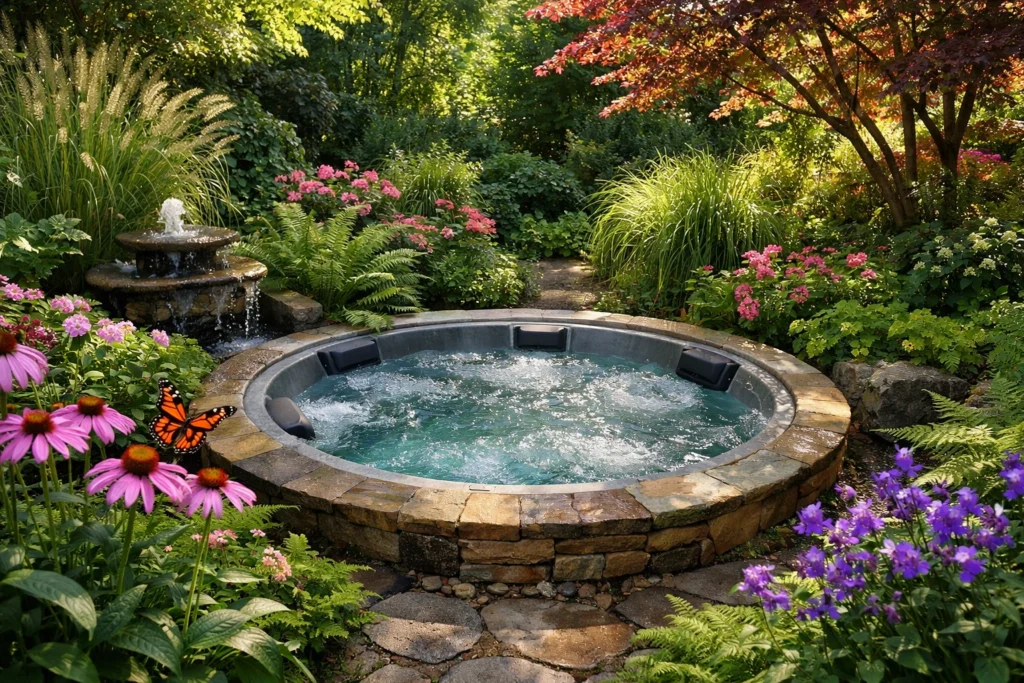
Garden-style jacuzzi installations nestle spas within abundant plantings that create private, nature-immersed retreats. Tall ornamental grasses, flowering shrubs, and small trees surround the spa on multiple sides, establishing living walls that provide privacy, soften hardscape elements, and attract beneficial wildlife. This approach transforms functional hot tubs into destination gardens where therapeutic soaking occurs within flourishing landscapes.
Plant selection balances aesthetic goals with practical considerations. Evergreen species maintain privacy year-round in climates with distinct seasons. Flowering varieties add seasonal color and fragrance that enhance the sensory spa experience. Avoid plants that drop excessive leaves, flowers, or seed pods requiring constant spa cleaning; choose species with minimal debris. Position taller plantings as background layers with progressively shorter varieties toward the foreground, creating depth and preventing the closed-in feeling that uniform heights produce.
Incorporate multiple plant types for textural variety. Broad-leafed hostas contrast with needle-like ornamental grasses. Smooth-barked Japanese maples juxtapose against rough-barked river birches. Include fragrant species like gardenias, jasmine, or lavender positioned where breezes carry scents toward spa users. Integrate container gardens that can be rearranged seasonally, swapping spring bulbs for summer tropicals and fall mums. The lush garden setting also attracts butterflies, hummingbirds, and songbirds that provide entertainment during daylight soaks. Include a small water feature like a bubbling fountain among the plantings to complement the jacuzzi while creating continuous soothing sounds.
Fire Feature Adjacent Installations
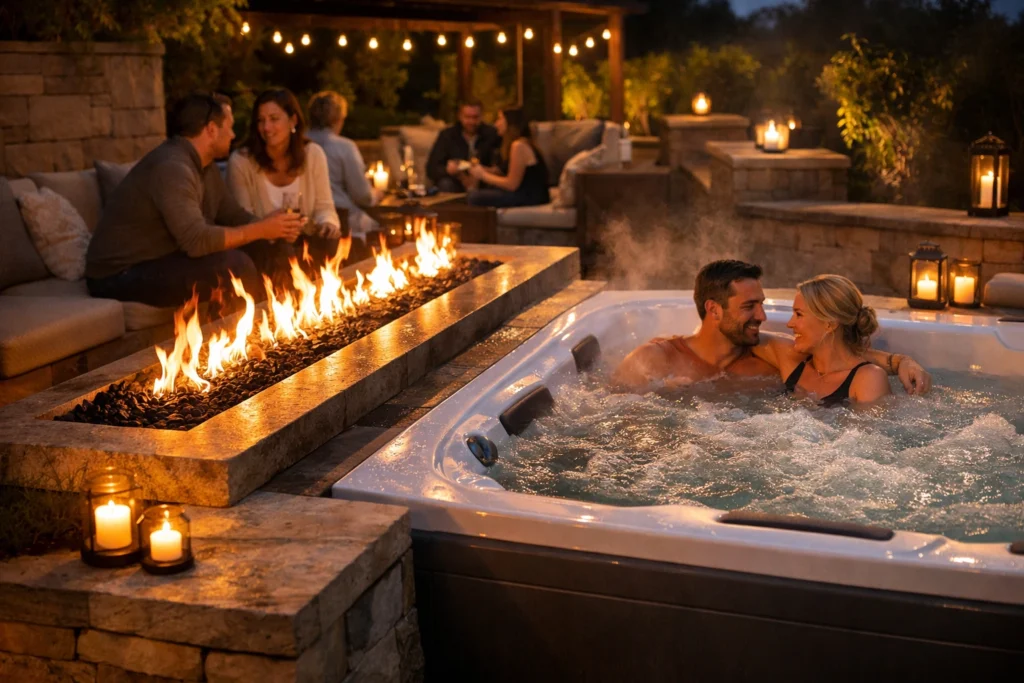
Positioning jacuzzis near fire pits or outdoor fireplaces creates compelling focal points that extend outdoor season usability. The temperature contrast between hot spa water and cold air becomes less dramatic when radiant heat from fire features warms the surrounding environment. Dual-element designs allow gathering around fires before or after soaking, creating complete outdoor entertainment zones.
Safety considerations govern placement distances between fire and water features. Maintain adequate separation preventing sparks or excessive heat from reaching the spa shell or equipment. Local building codes specify minimum clearances; consult regulations before finalizing layouts. Position seating areas between the fire and spa so users can enjoy both elements simultaneously, perhaps soaking while watching flames or warming by the fire while waiting for the spa to heat.
Fire feature styles should complement overall design aesthetics. Contemporary installations might pair sleek linear fire tables with modern acrylic spas and metal accents. Traditional settings could combine stone fire pits with rustic wood-surrounded jacuzzis. Combine fire and water in single integrated features, perhaps with fire bowls positioned on spa edges or incorporated into spillover designs where flames and water create dramatic juxtapositions. The combined installations work beautifully for evening entertaining, providing activity centers beyond simple conversation. Guests can circulate between warming by the fire, cooling in the spa, and lounging on surrounding furniture without leaving the outdoor entertainment zone.
Entertainment-Focused Designs with Integrated Technology
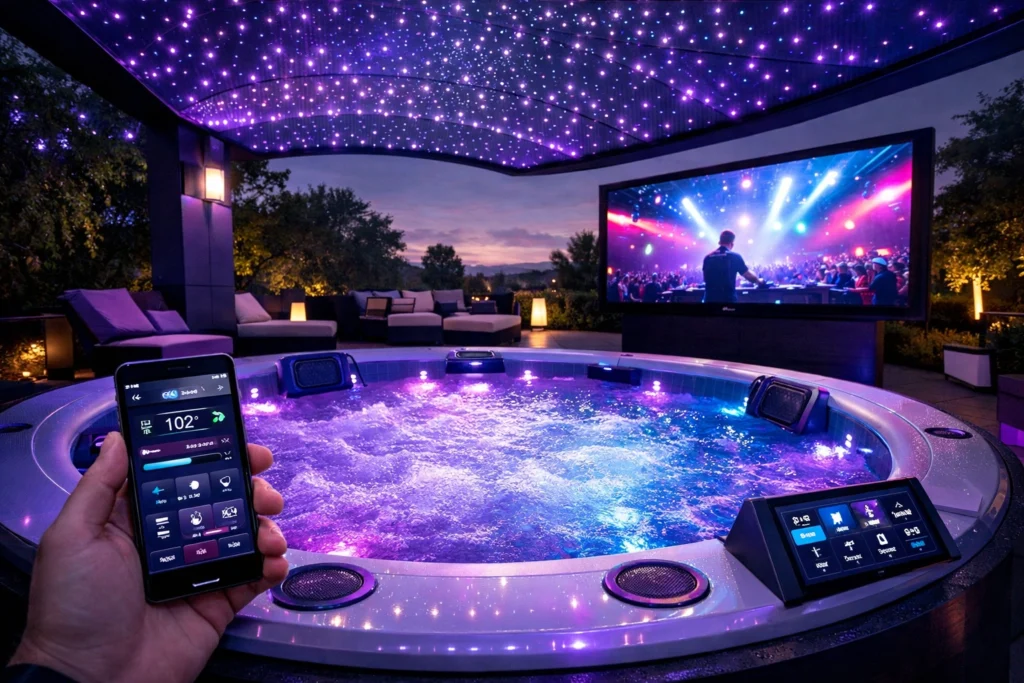
Technology-enhanced jacuzzis transform simple soaking into multimedia experiences through integrated audio, video, and lighting systems. Waterproof speakers provide music streaming from smartphones or dedicated systems. Underwater LED lighting creates color-changing ambiance controllable through apps or remotes. Some installations even include weatherproof televisions or projection systems for outdoor movie nights from the spa.
Quality audio systems specifically designed for outdoor wet environments resist moisture damage while delivering clear sound across broad frequency ranges. Position speakers strategically around the spa perimeter for surround sound effects without overwhelming adjacent properties with noise pollution. Bluetooth connectivity eliminates complicated wiring while allowing easy control of volume and content selection.
Lighting design extends beyond basic illumination to create programmable scenes that set specific moods. Bright white light might suit evening gatherings requiring visibility for conversation and beverage service. Soft blue or purple tones create relaxing atmospheres for quiet meditation or romance. Color-changing sequences add entertainment value during parties. Combine spa lighting with surrounding landscape illumination, pathway lights, and architectural accent lighting controlled through single systems that coordinate entire outdoor environments. Smart home integration allows voice control, automated scheduling, and remote operation from anywhere, perhaps heating the spa and starting music before arriving home from work.
Conclusion
Creating stunning outdoor jacuzzi installations requires balancing aesthetic vision with practical functionality. The thirteen ideas presented here demonstrate how thoughtful design transforms basic hot tubs into backyard destinations that enhance property values while improving daily quality of life. Whether you’re drawn to naturalistic garden integration, contemporary minimalist platforms, or technology-rich entertainment centers, success comes from coordinating spa placement with architectural context, landscape character, and intended usage patterns.
Location selection establishes the foundation for all design decisions. Consider sun exposure, privacy requirements, view orientation, and access from the home. Material choices communicate design intent while addressing durability and maintenance realities. Natural stone and wood create organic warmth; concrete and metal deliver modern sophistication. Structural elements like decks, pergolas, and enclosures provide weather protection and spatial definition that extend usability across seasons.
The perfect outdoor jacuzzi becomes more than a feature; it transforms into an experience. Therapeutic benefits combine with social opportunities and private relaxation within settings that reflect personal style. Investment in quality design and professional installation pays dividends through decades of enjoyment. Start with clear vision for how you’ll use your outdoor spa, then select design elements that support and enhance those activities. The result will be a backyard luxury that provides wellness, entertainment, and beauty for years to come.
Frequently Asked Questions
What is the ideal size for an outdoor jacuzzi installation?
Jacuzzi size depends on available space and user capacity needs. Standard residential spas accommodate four to six people comfortably, measuring roughly seven feet square. Smaller two-person models work for compact yards or couples, while eight-person spas suit frequent entertainers. Ensure surrounding deck or patio space equals or exceeds the spa footprint, providing room for access, seating, and movement. Measure carefully including equipment access requirements before purchasing.
How much does professional outdoor jacuzzi installation typically cost?
Complete outdoor jacuzzi installations including the spa, delivery, site preparation, electrical work, and basic surrounds range from ten thousand to thirty thousand dollars for mid-range projects. Budget installations with minimal site work might cost six thousand to eight thousand dollars. Luxury installations featuring custom decks, landscaping, structures, and premium spas can exceed fifty thousand dollars. Obtain multiple quotes comparing similar scope elements rather than choosing based solely on total price.
What maintenance does an outdoor jacuzzi require?
Regular maintenance includes testing and balancing water chemistry weekly, cleaning filters monthly, and draining completely for deep cleaning quarterly. Add sanitizers like chlorine or bromine several times weekly depending on usage frequency. Check and clean the cover regularly to prevent deterioration. Professional annual service should inspect equipment, test heating elements, and verify proper operation. Consistent maintenance extends spa lifespan and ensures safe, clean water for all users.
Can outdoor jacuzzis be used year-round in cold climates?
Quality jacuzzis with adequate insulation and powerful heaters operate year-round in most climates. The contrast between hot water and cold air actually enhances the experience for many users. Ensure proper freeze protection for plumbing if temperatures drop below freezing when the spa sits unused. Insulated covers prevent excessive heat loss when not in use. Some users add enclosures or windbreaks making winter soaking more comfortable in extremely cold or windy regions.
What permits and regulations apply to outdoor jacuzzi installations?
Most jurisdictions require building permits for permanent jacuzzi installations including electrical work and structural elements like decks. Setback requirements dictate minimum distances from property lines. Electrical codes mandate GFCI protection and proper grounding. Fencing regulations may require barriers preventing unsupervised child access. Contact local building departments early in planning to understand specific requirements for your area. Professional installers typically handle permit applications as part of their service.



One Comment